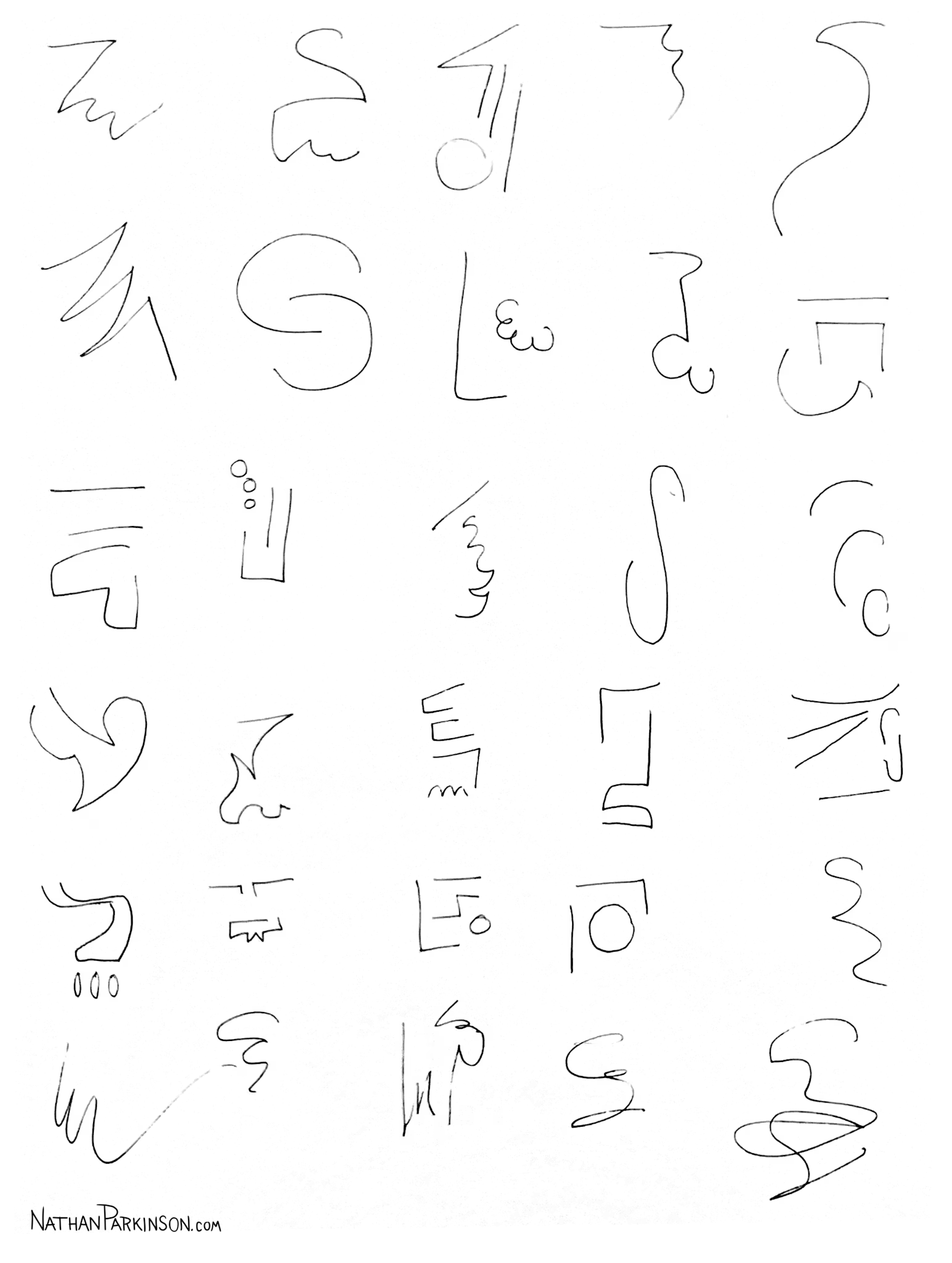
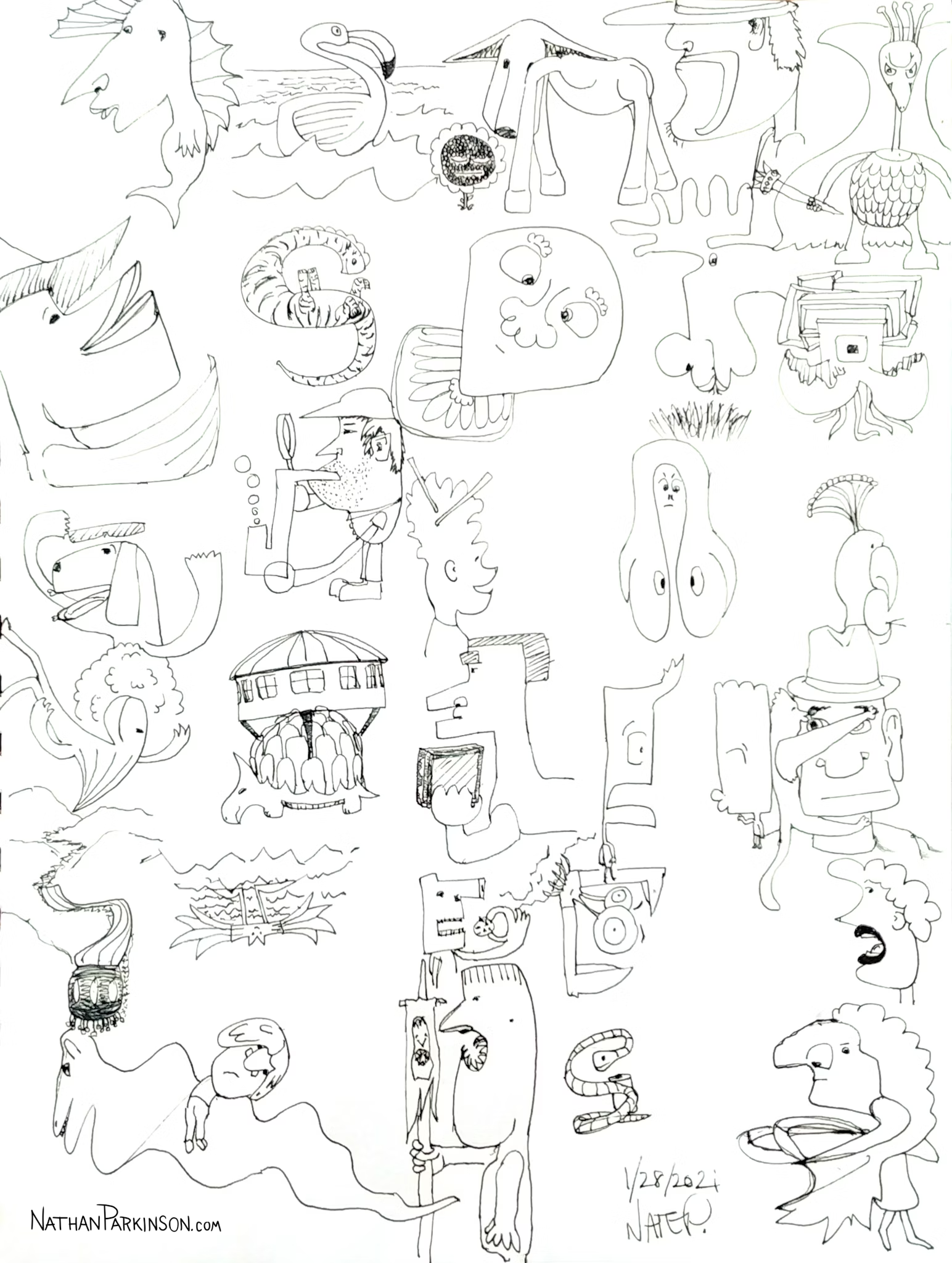
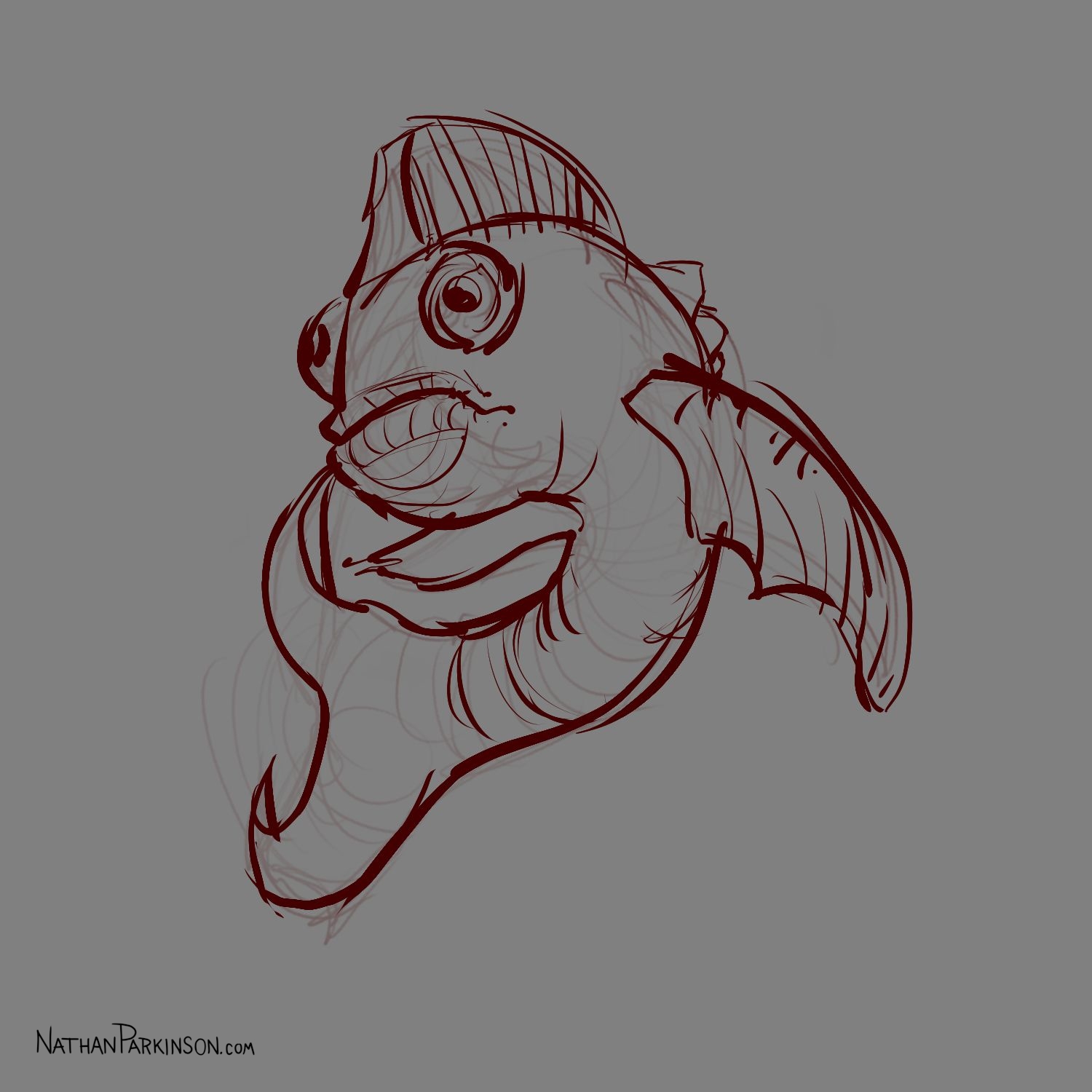
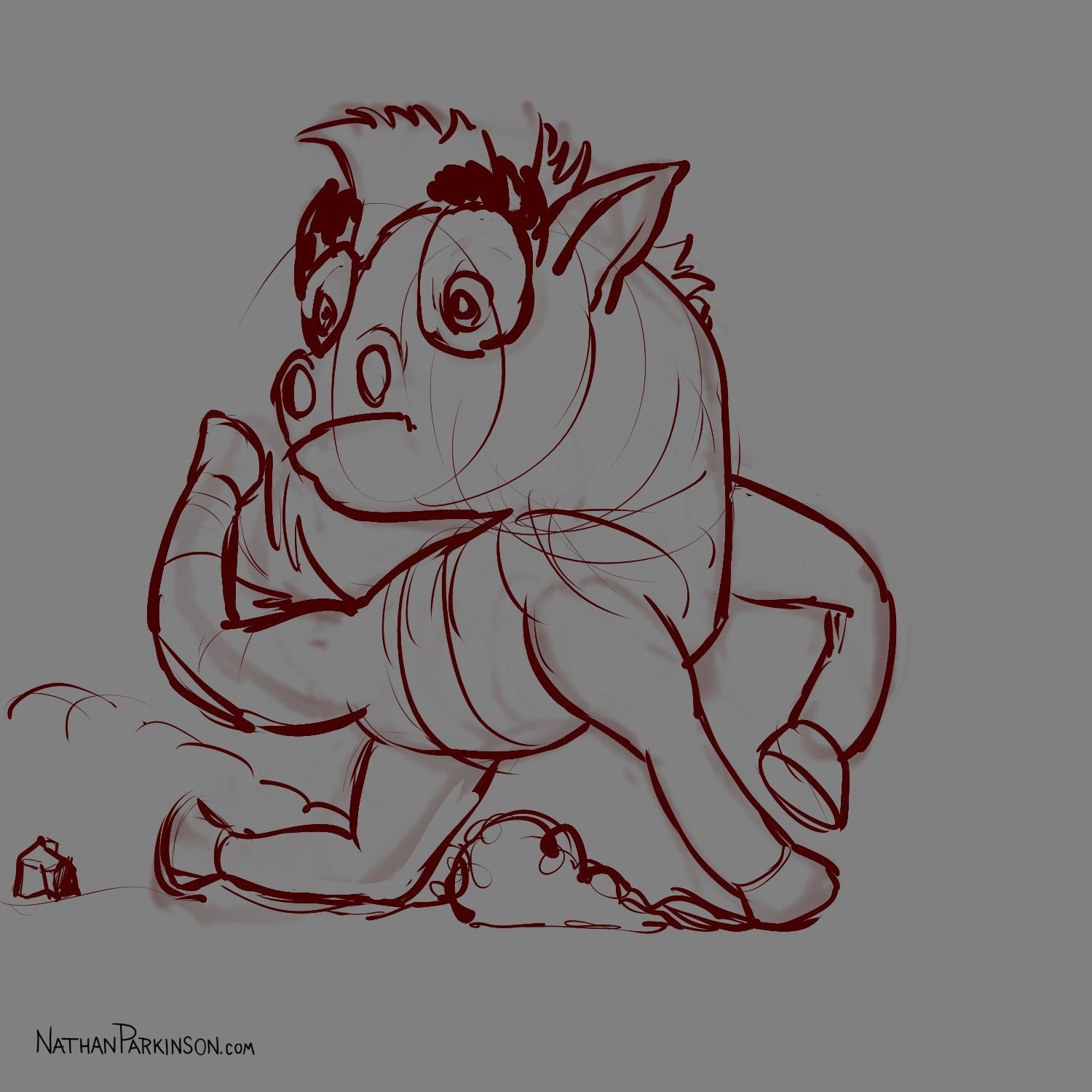
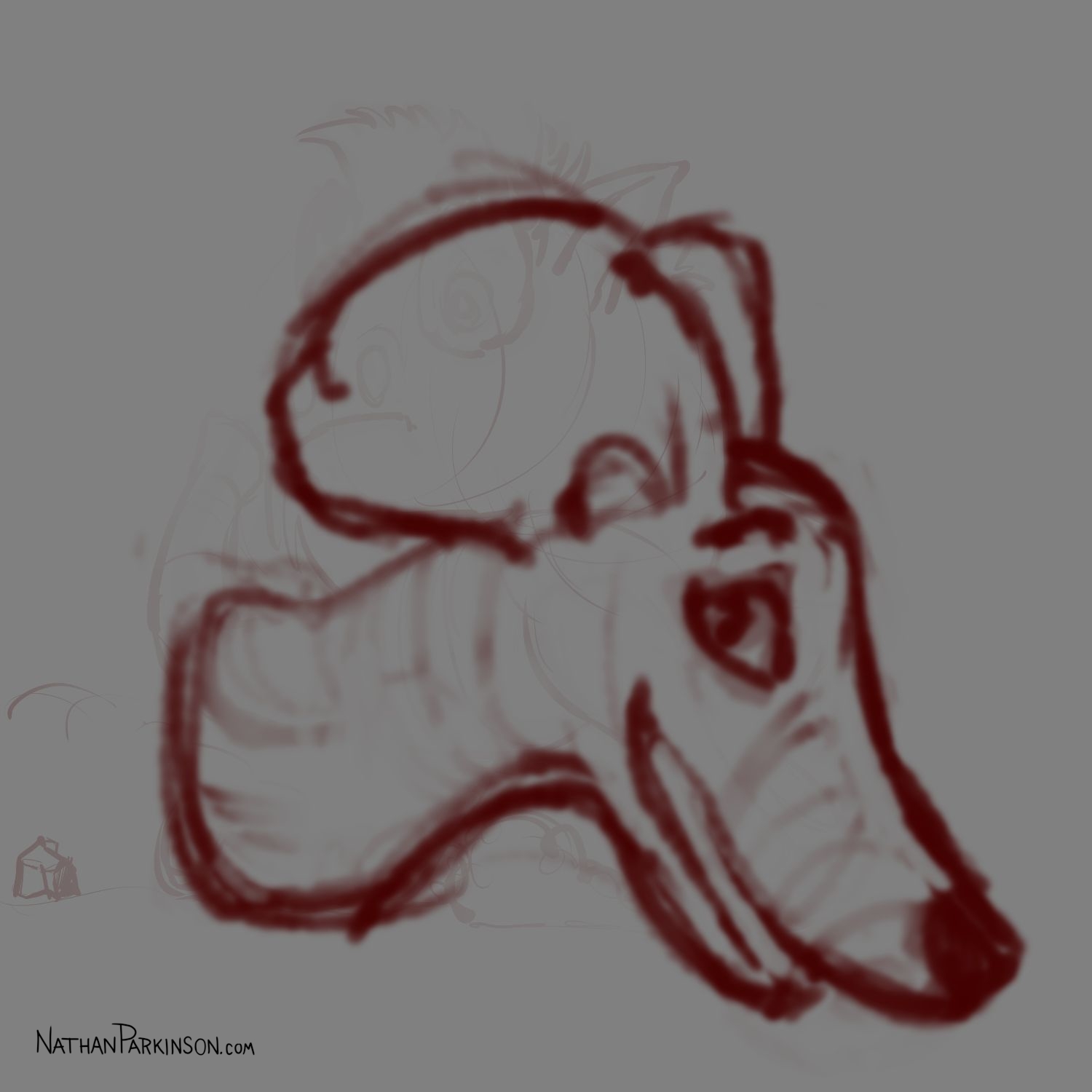
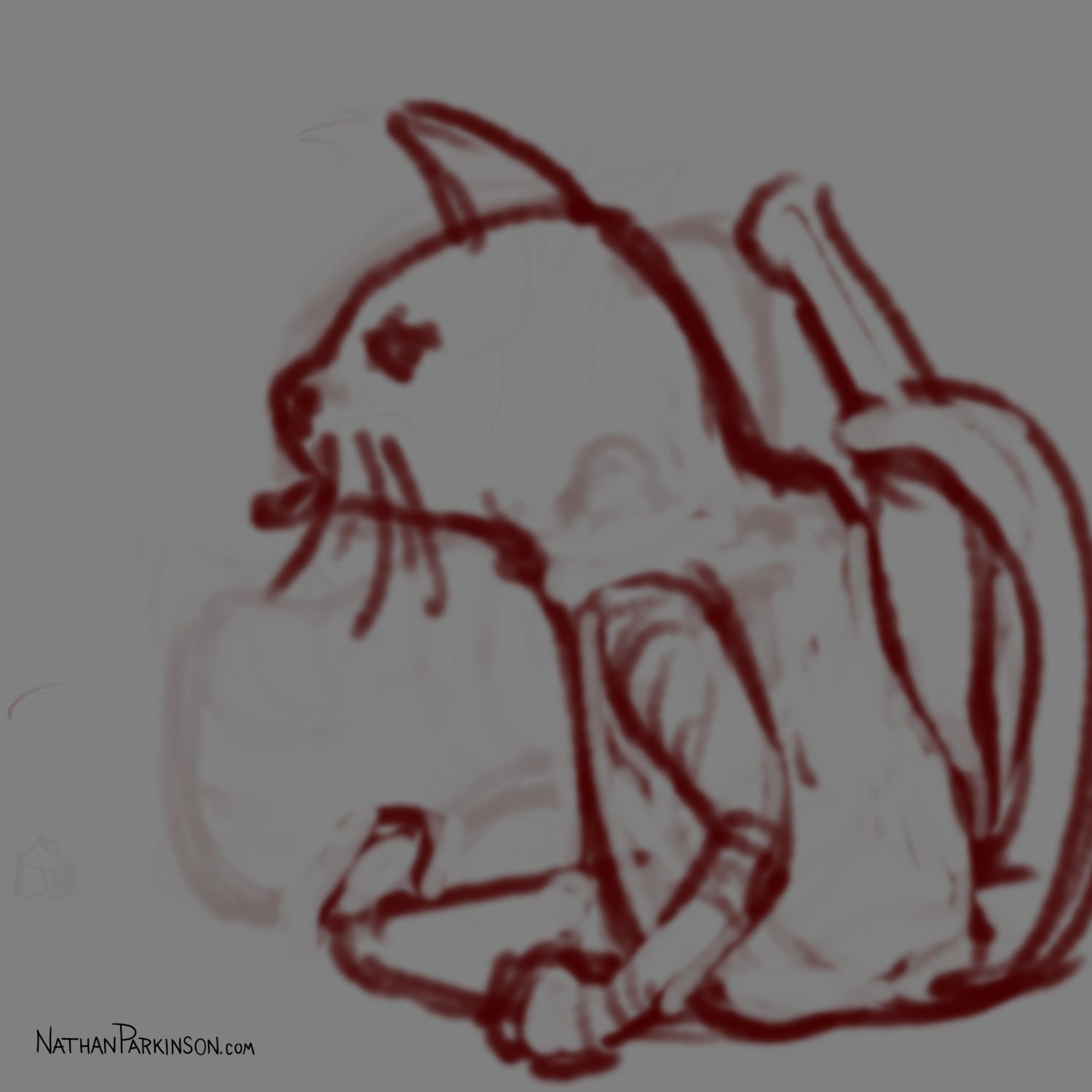
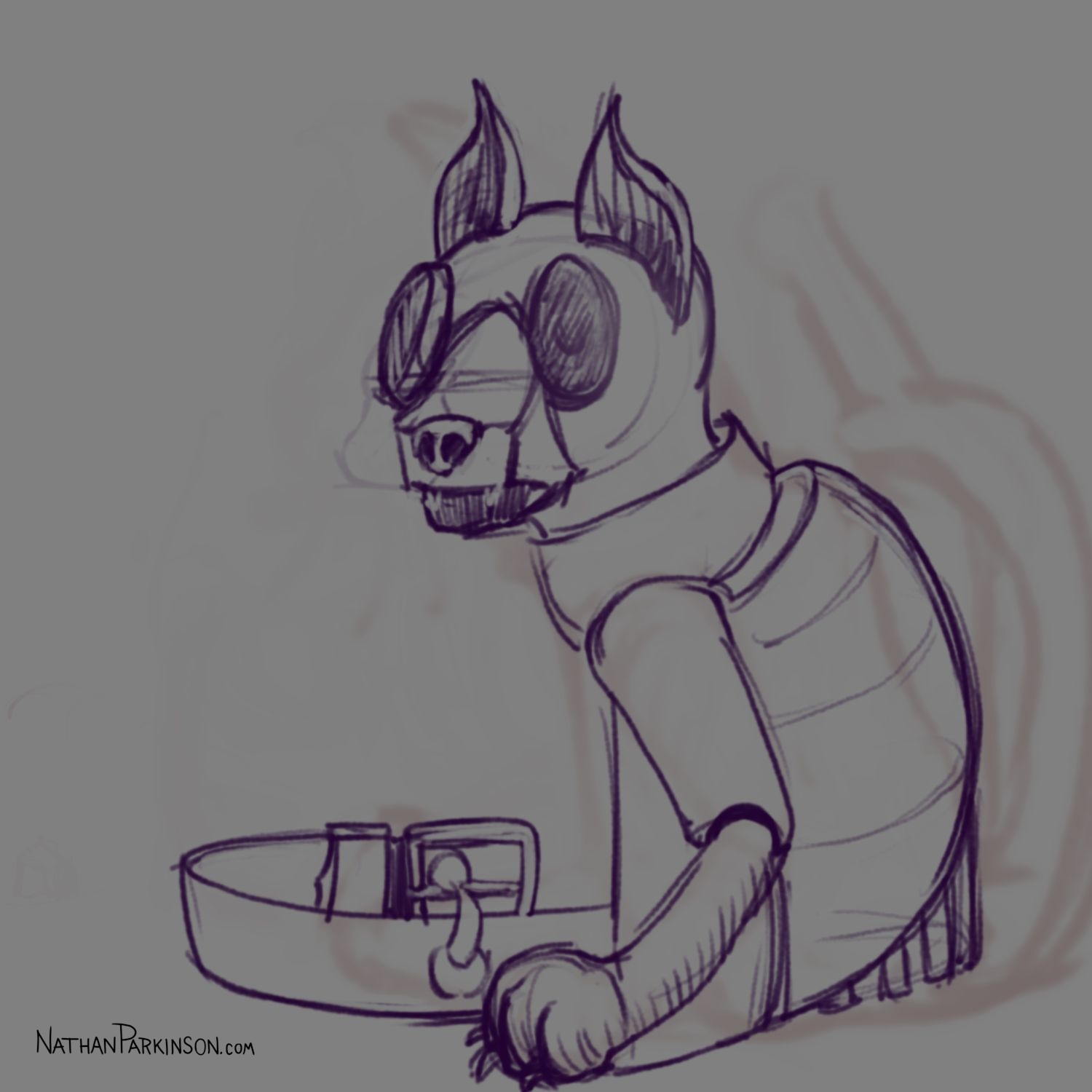
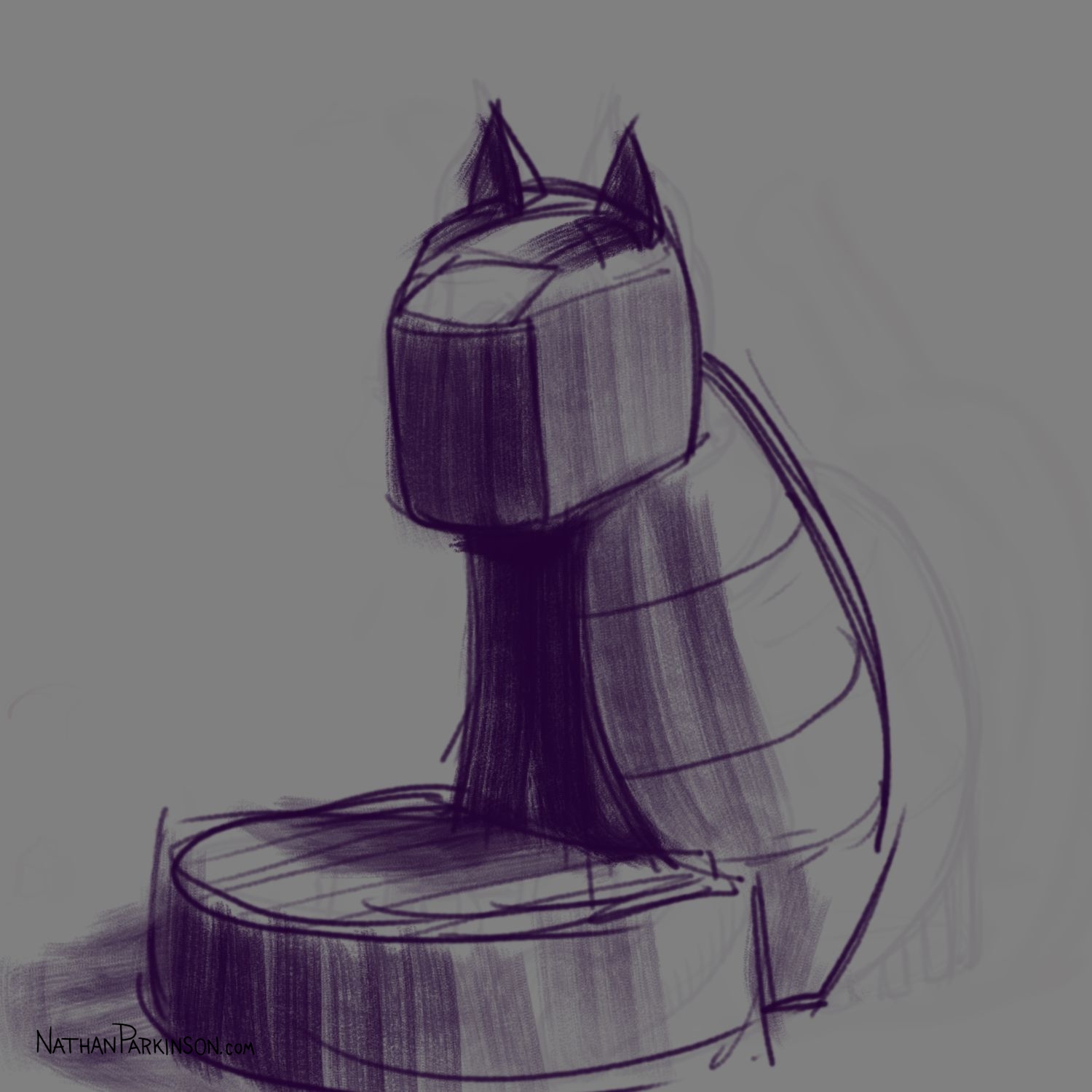
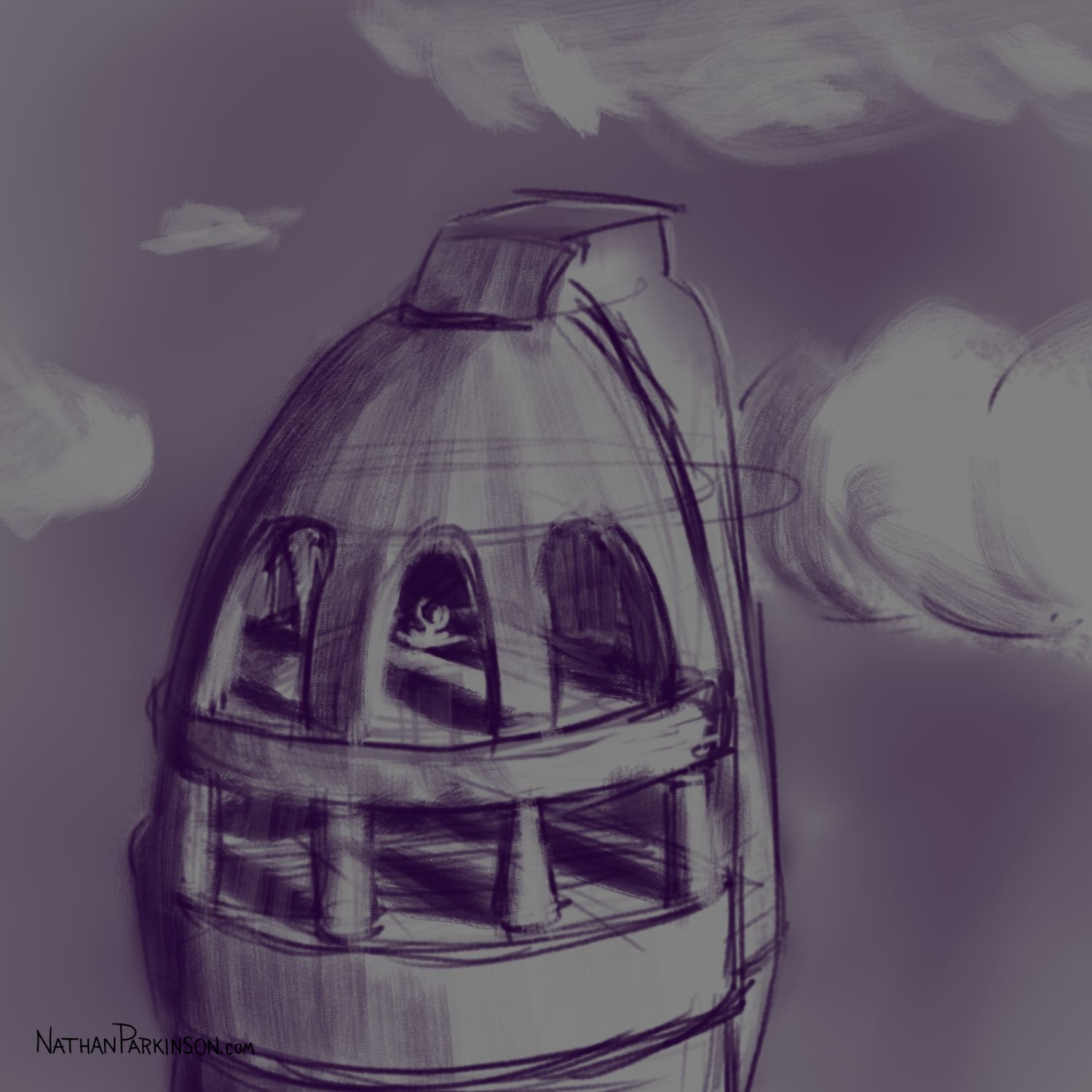
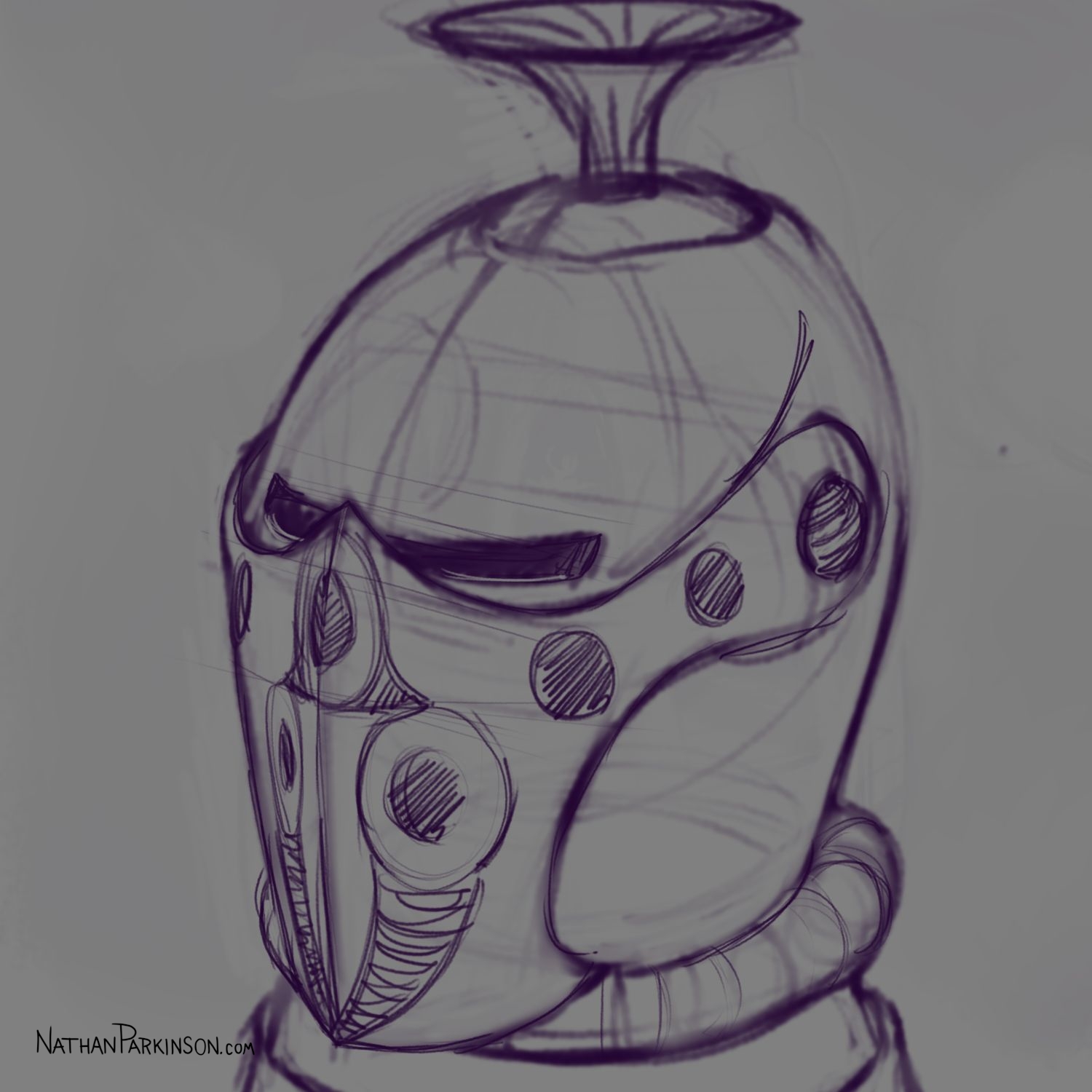
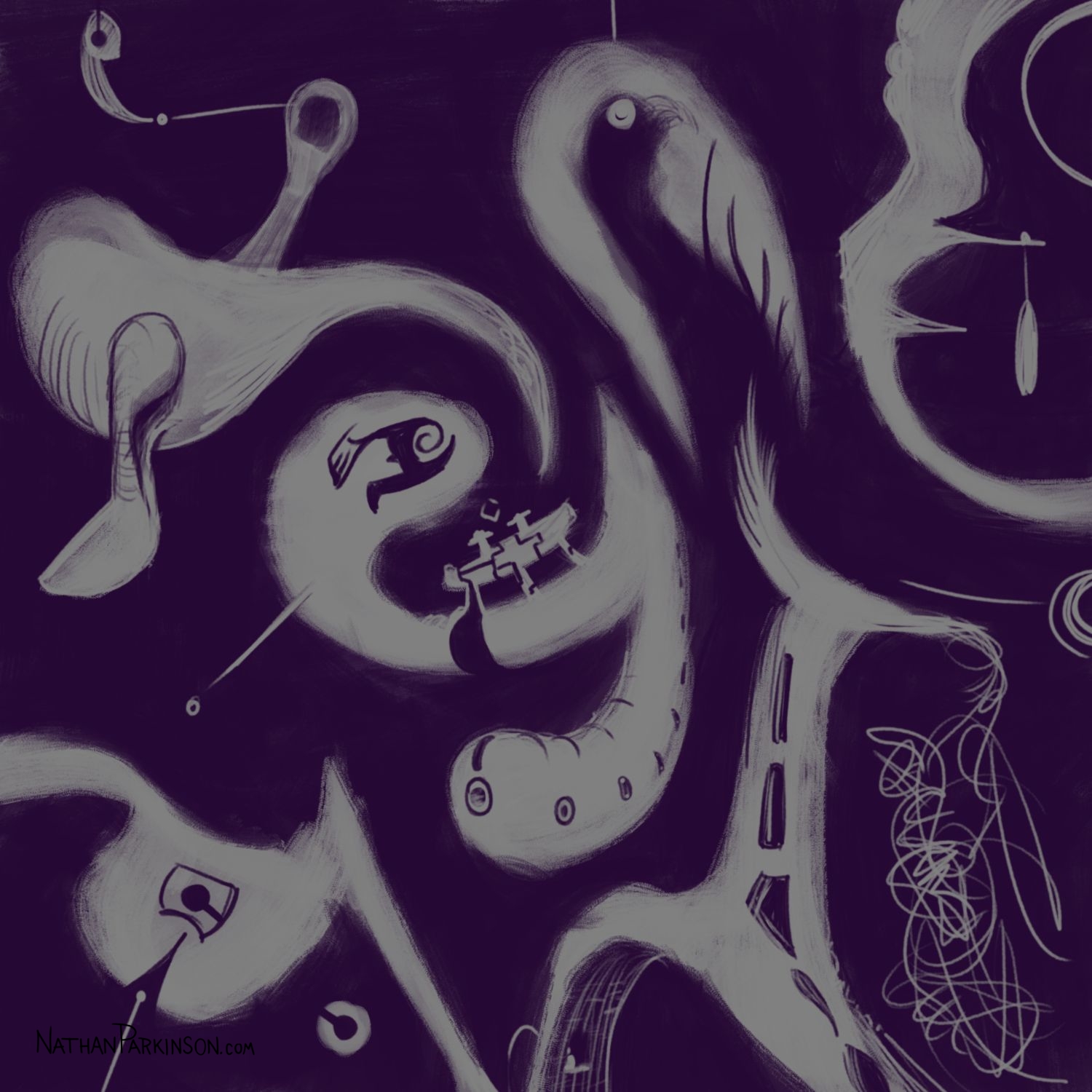
I recently purchased Tim McBurnie’s Line and Color Academy through which I will be developing a new line and colour illustration style. One assignment has been to draw my Like List (all the stuff I enjoy drawing). I think I managed to capture about 95% of my written list on this page. I’m very satisfied with the result; ’twas a fun challenge.
Back in January I joined the Mighty Artisan community. It’s been a great experience of giving and receiving feedback and being able to interact with other artists seriously pursuing growth and creative fulfilment. Having a place to share the artistic journey with other visual artists of all kinds has helped me identify weaknesses in my mindset and skills and gain some clarity in more effective approaches.
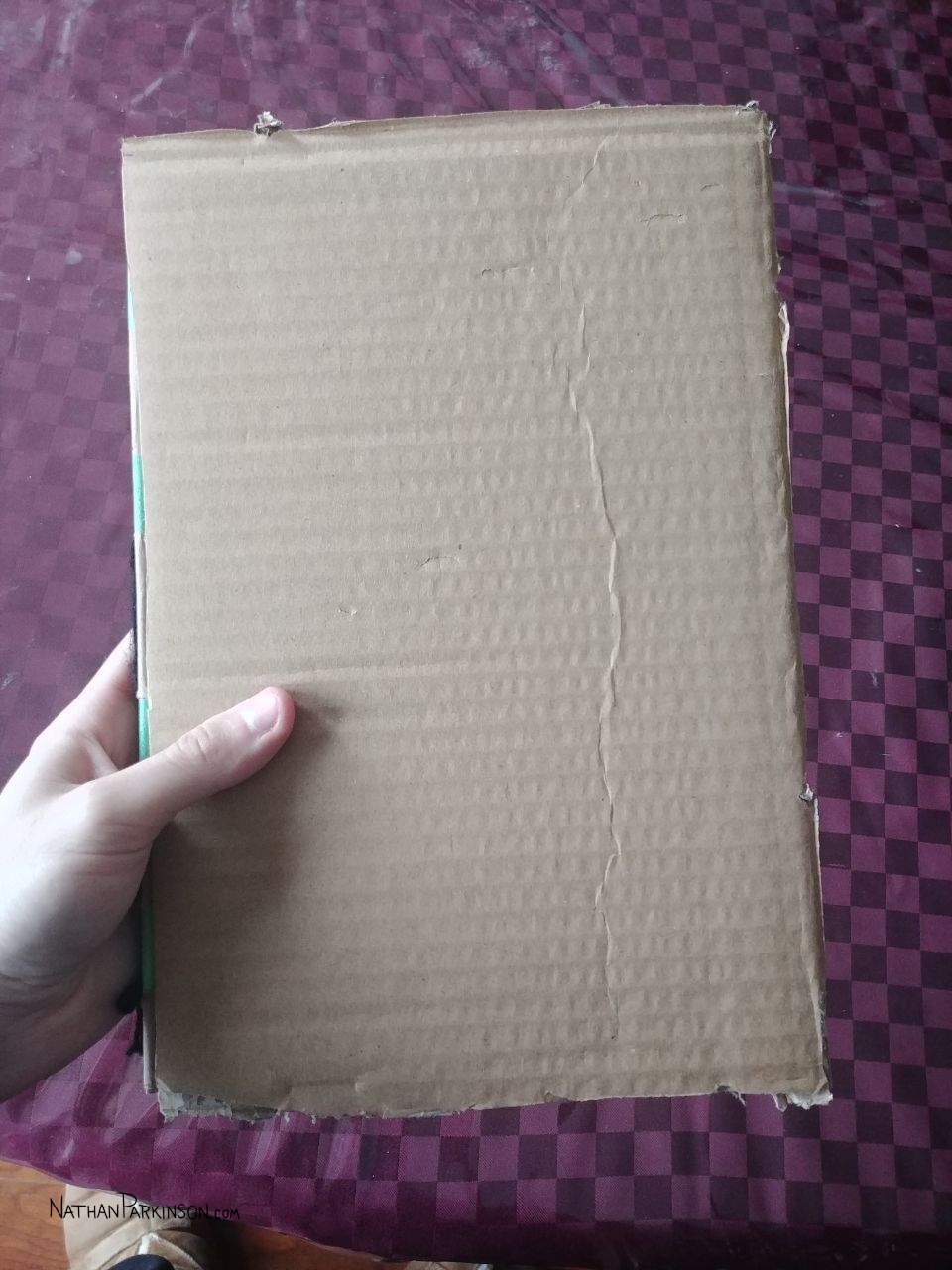
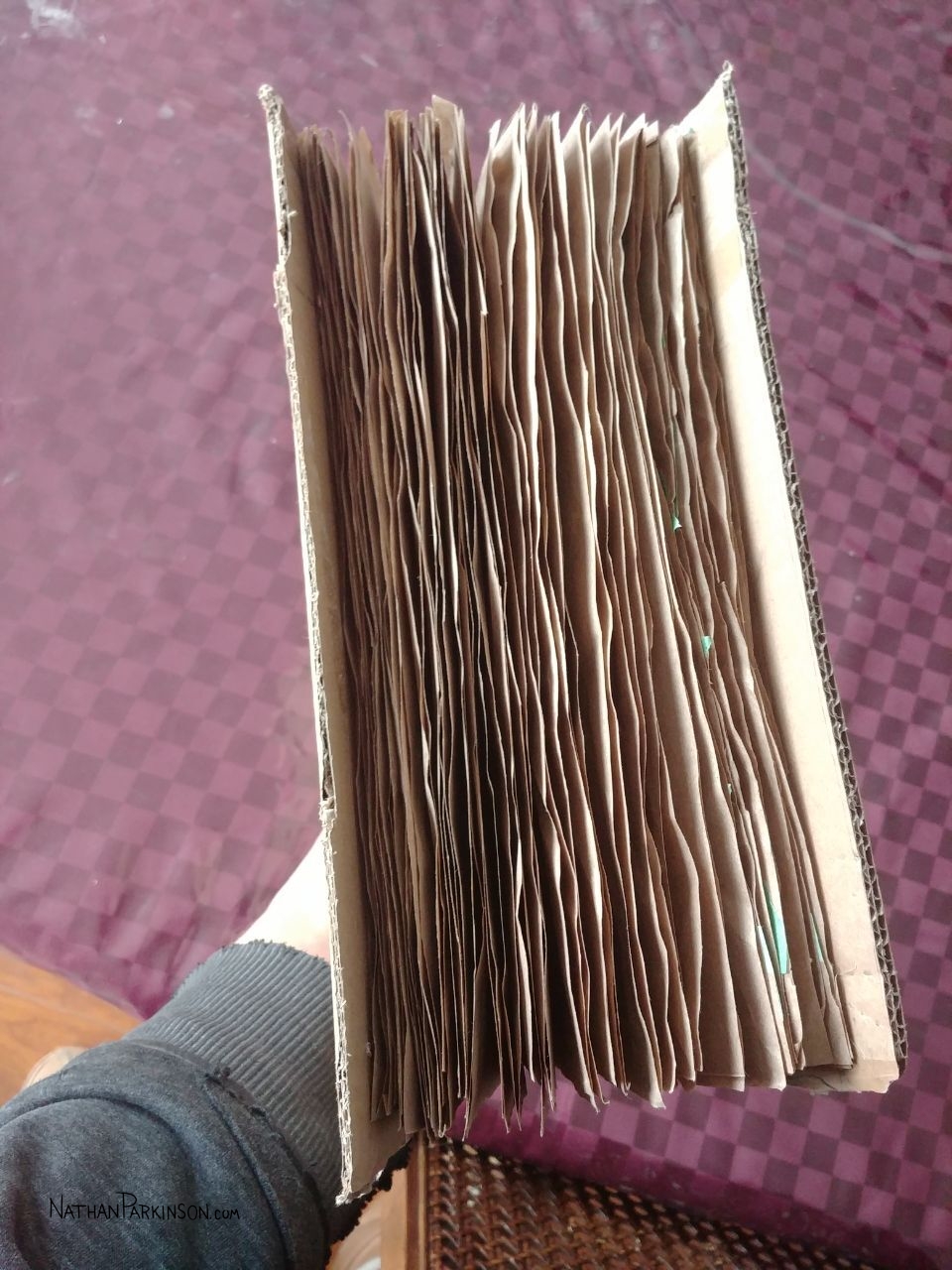
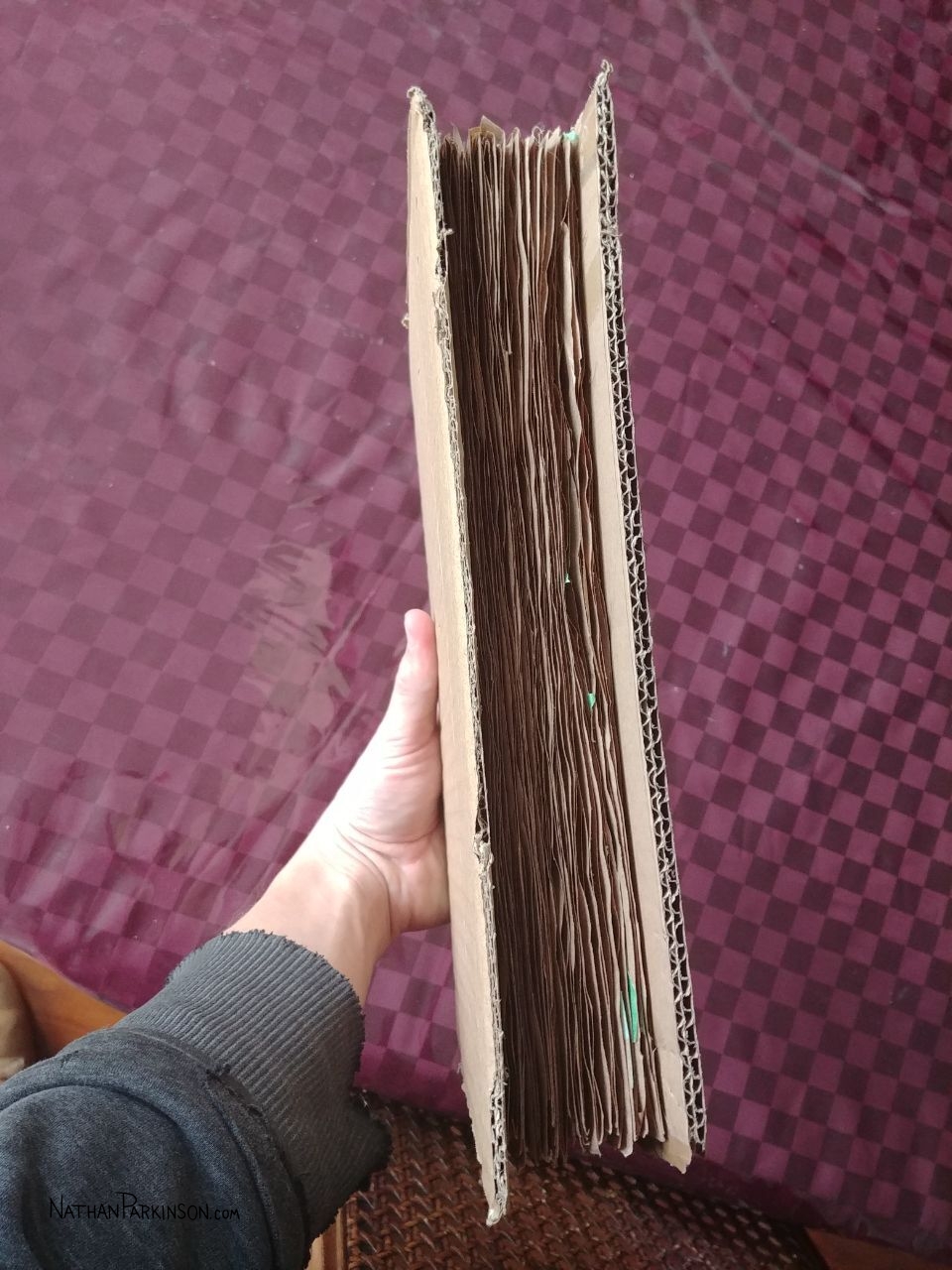
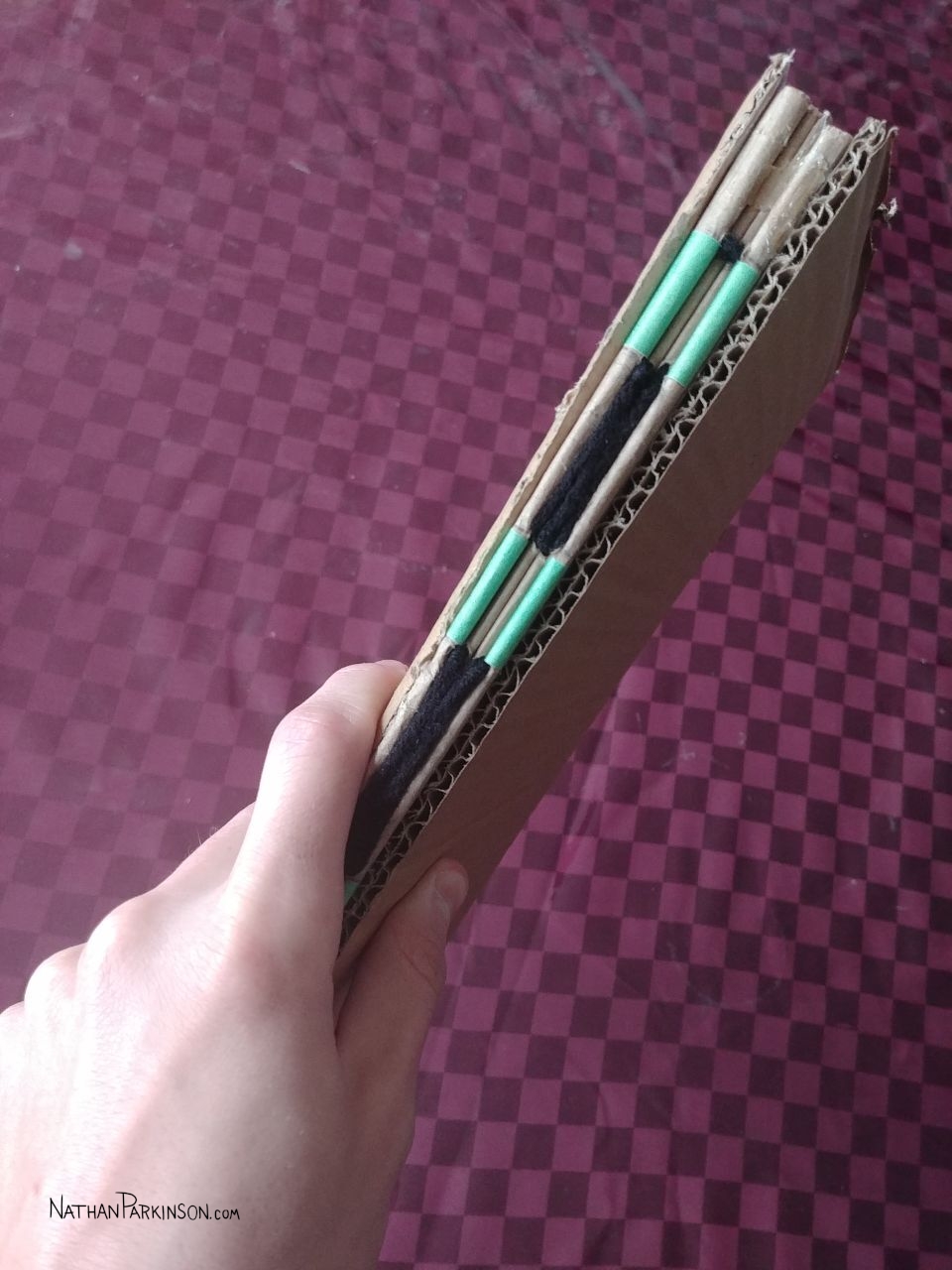
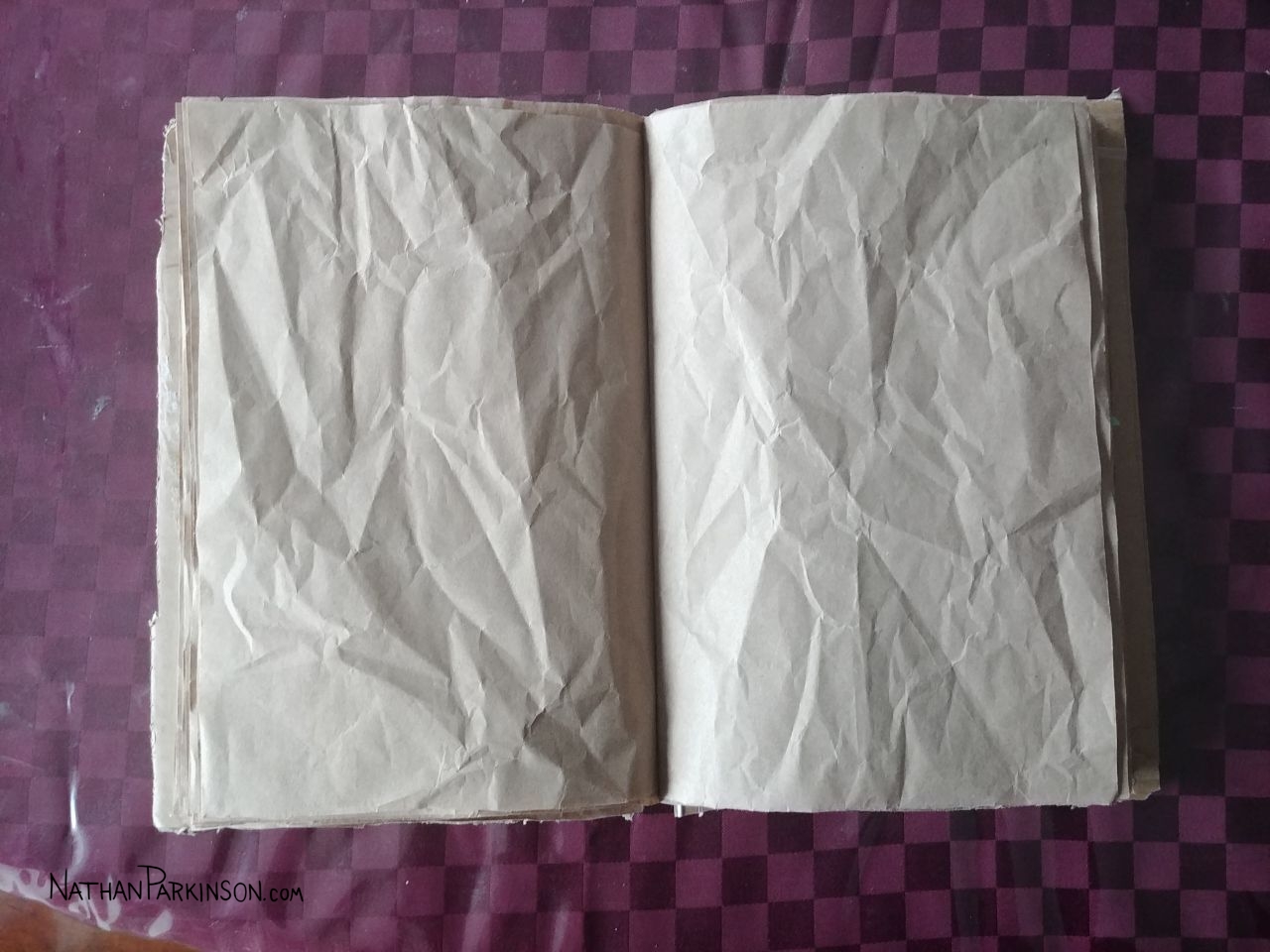
I recently bought some new sketchbooks. The books arrived with a load of packing paper all crumpled up and I thought it would be fun to scrap together one more sketchbook from the packaging itself. I cut and bound the paper into a book and capped it off with a nice hard cover from the cardboard box it all came in. I’m pretty happy with the result. A toast to more gesture drawing and human creativity.
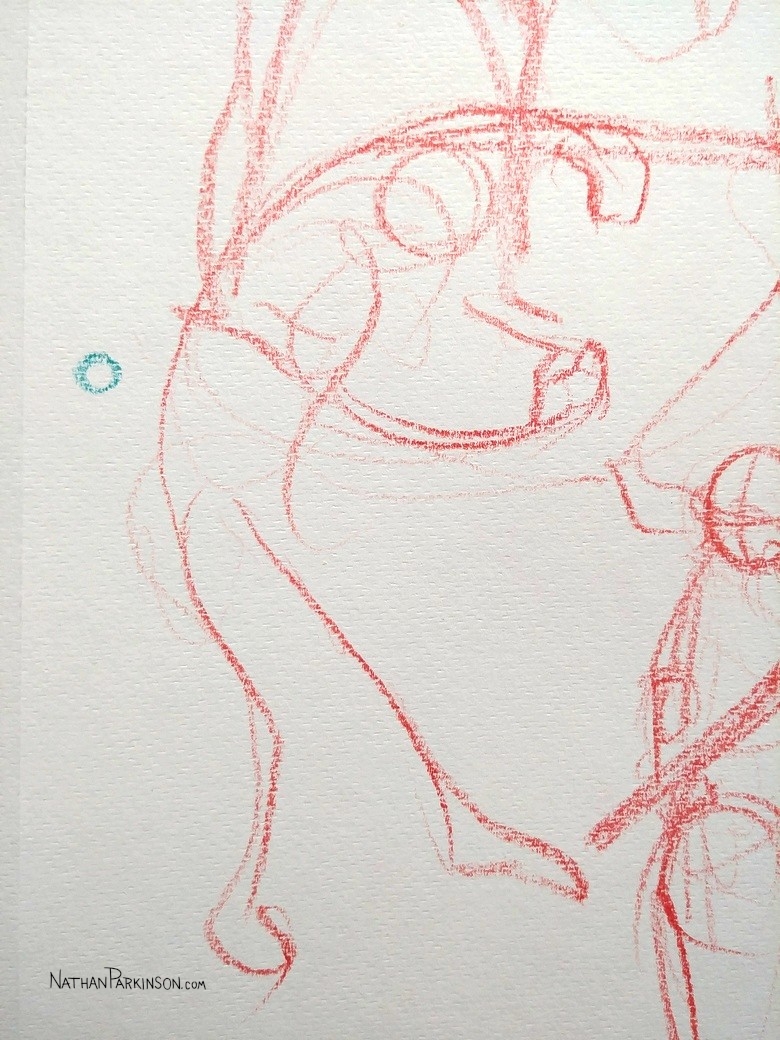
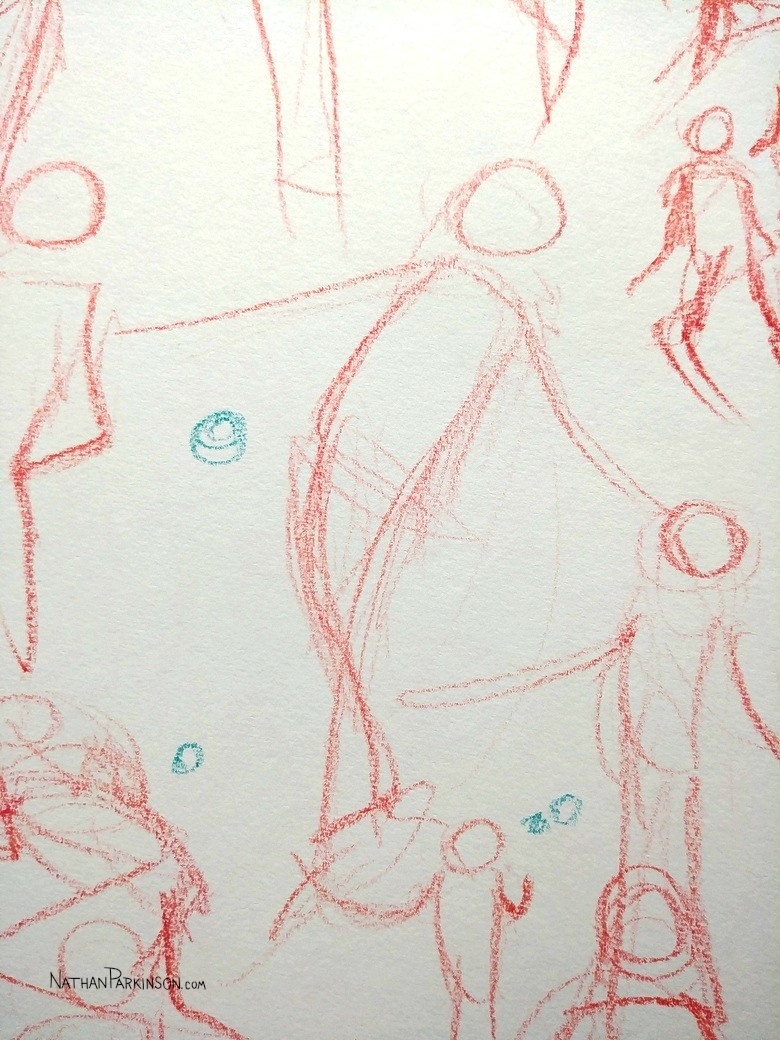
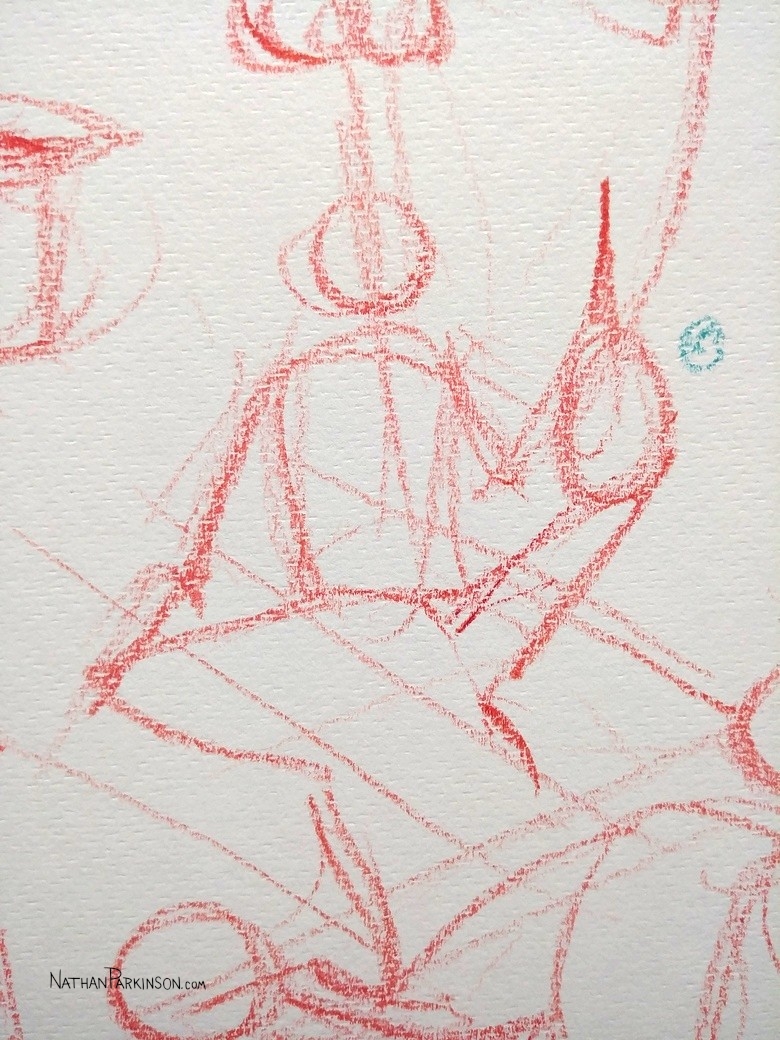
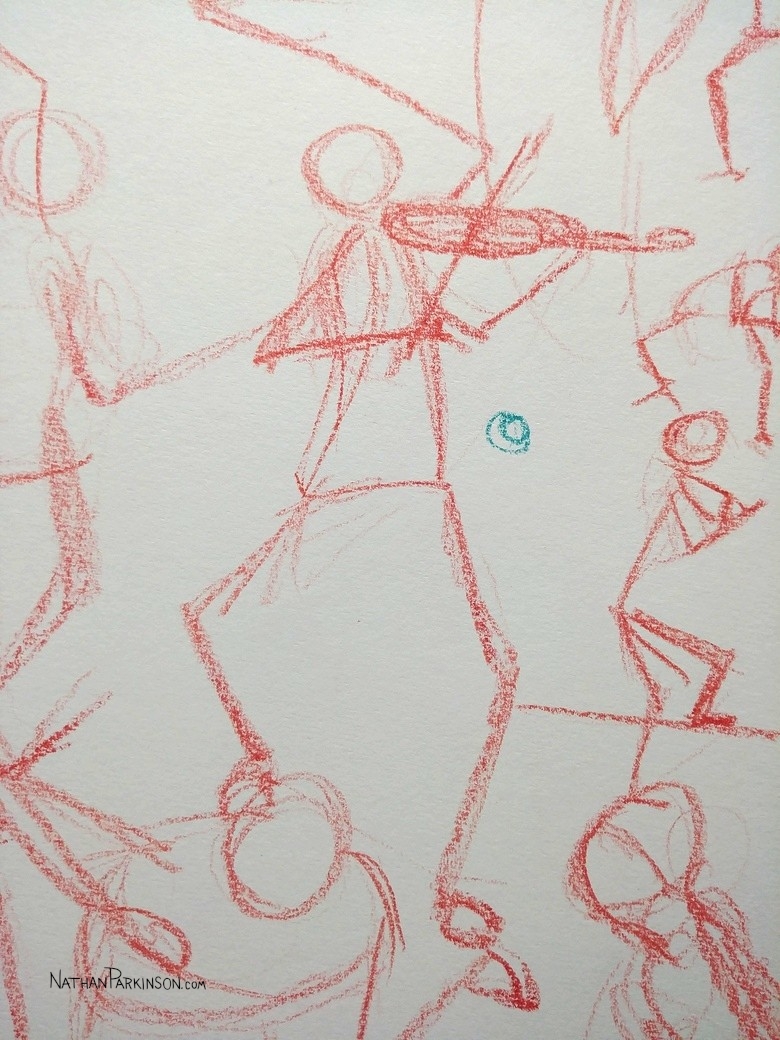
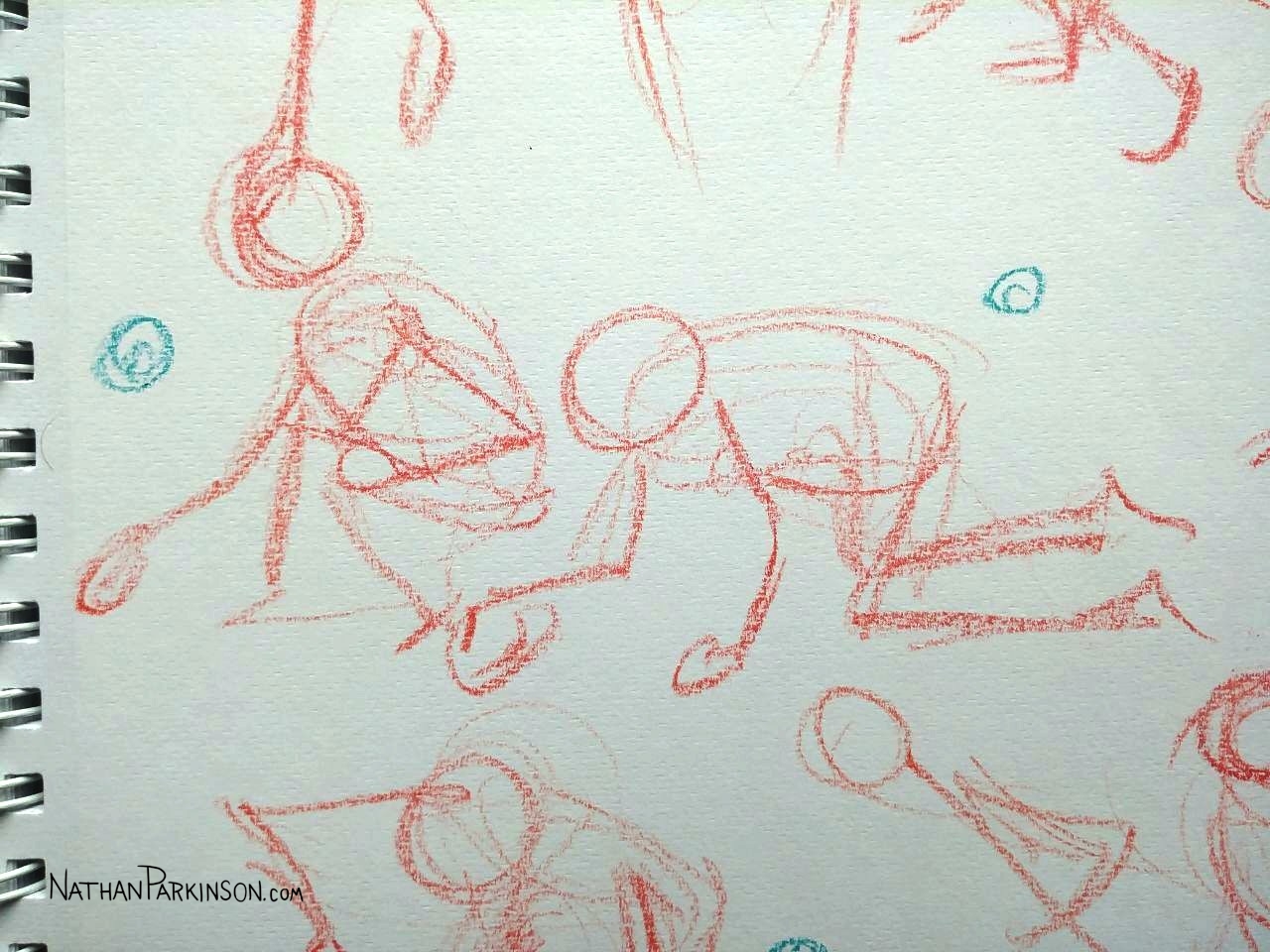
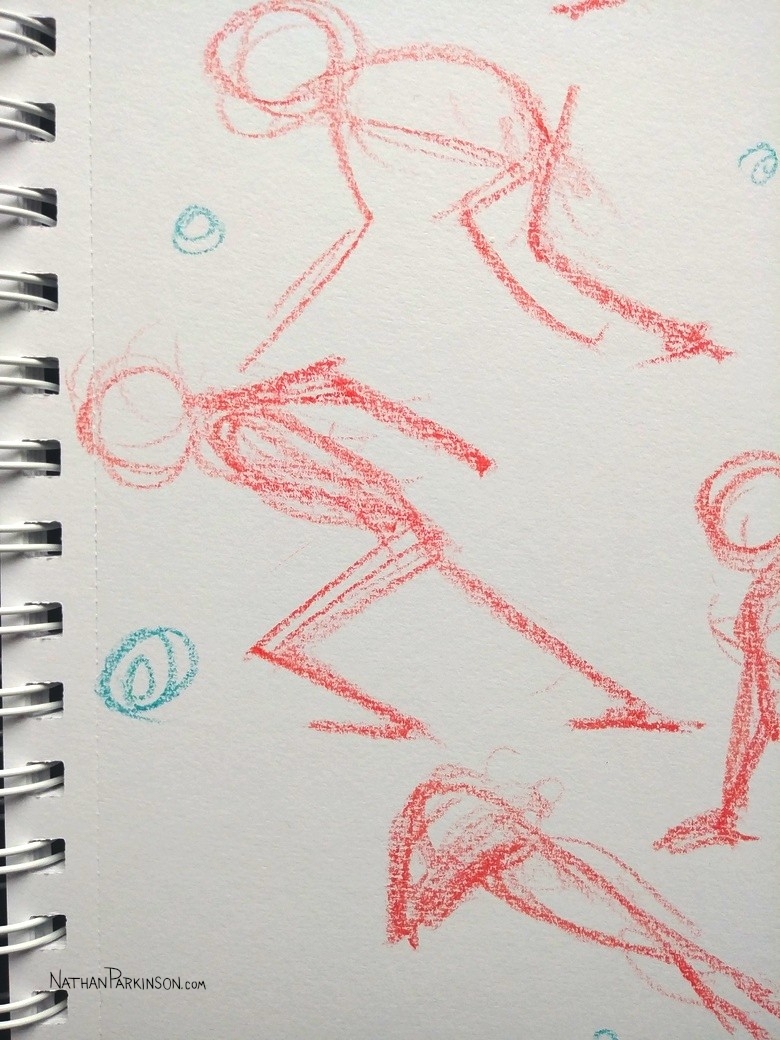
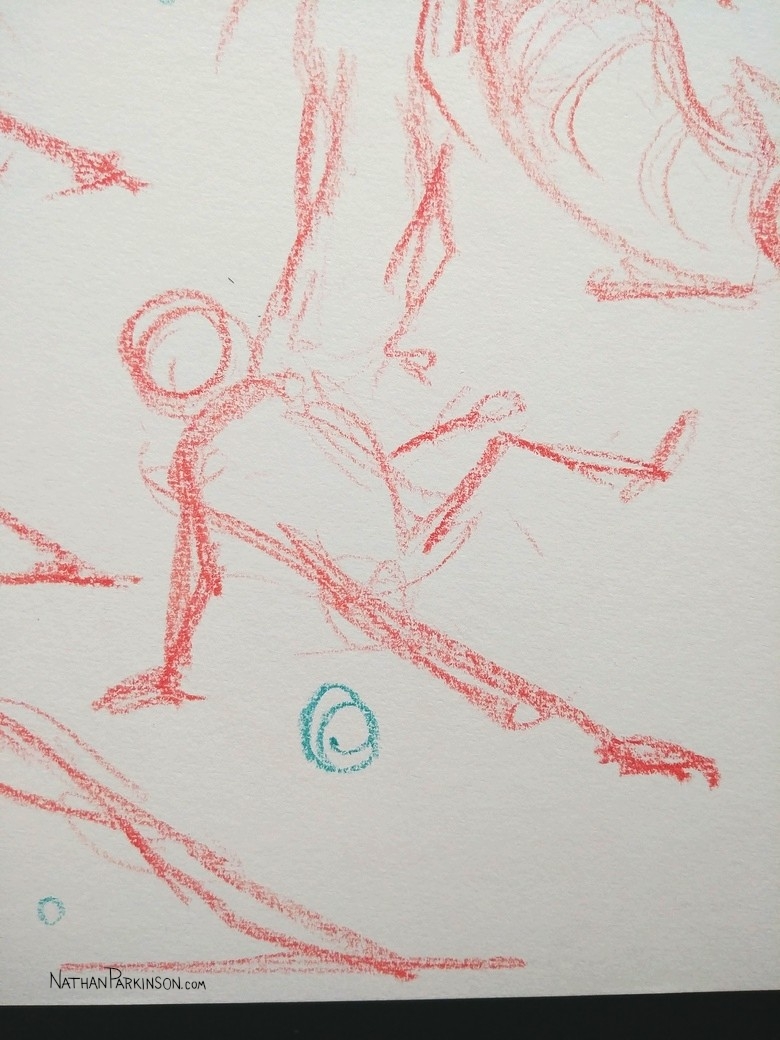
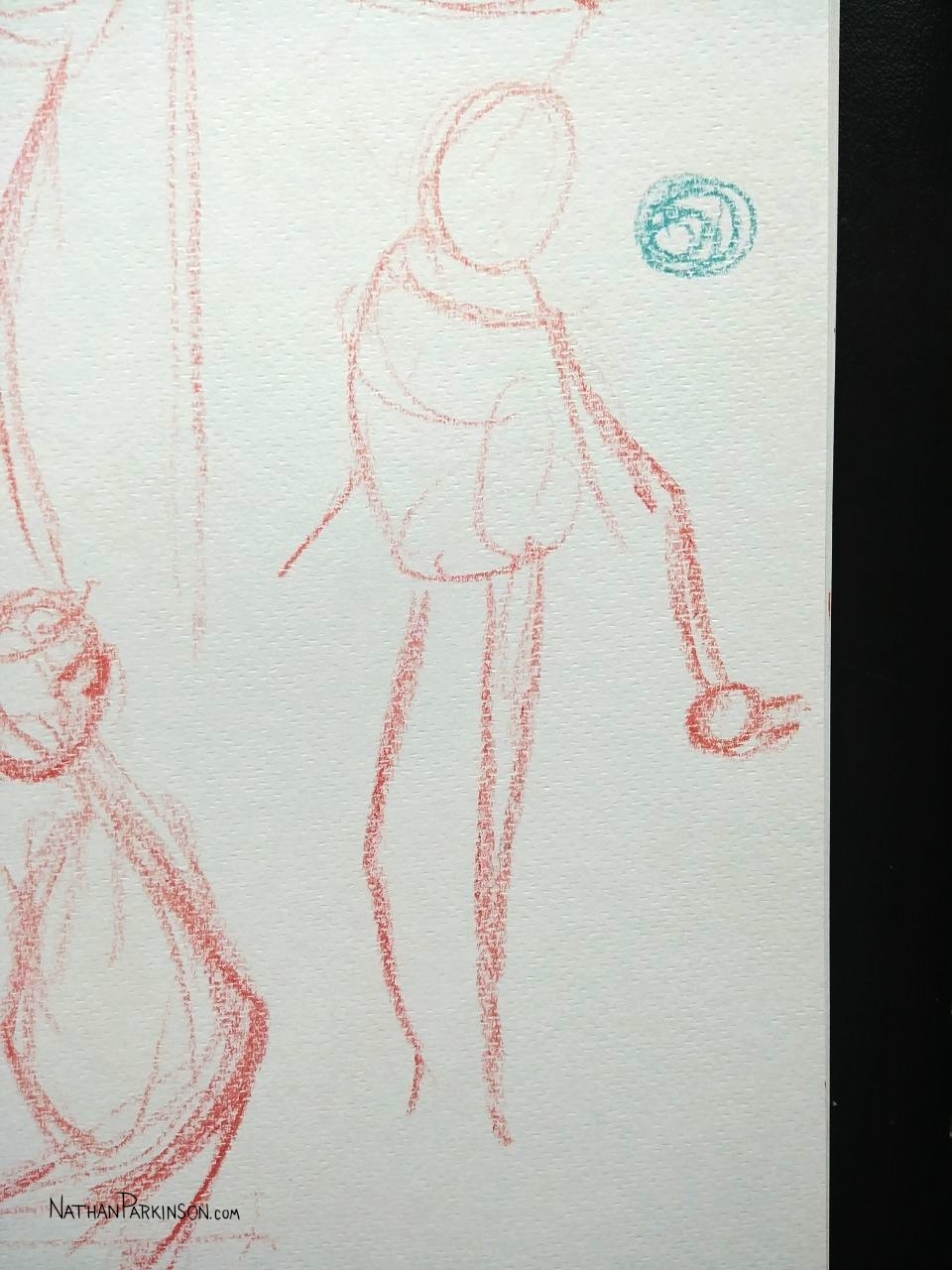
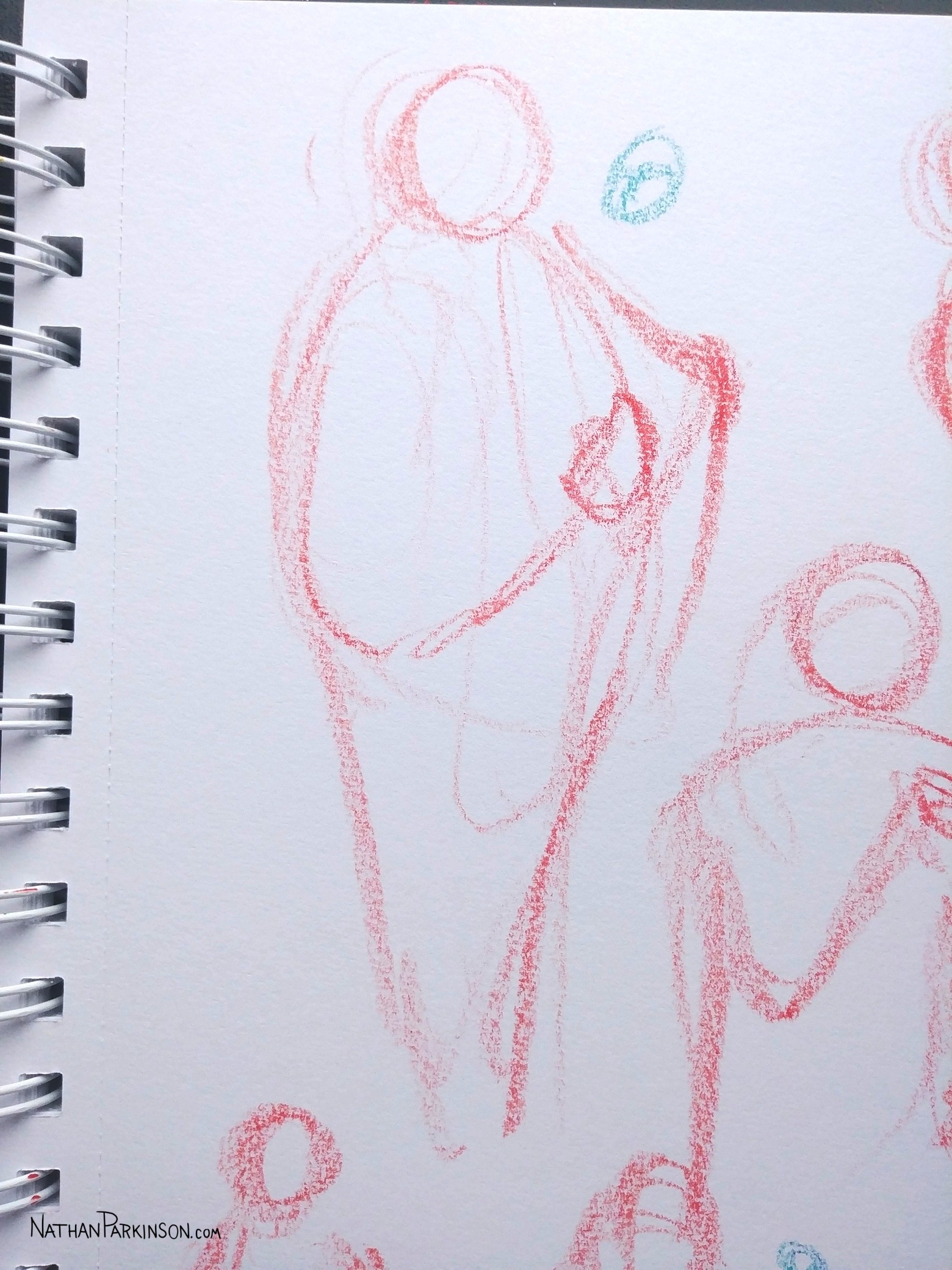
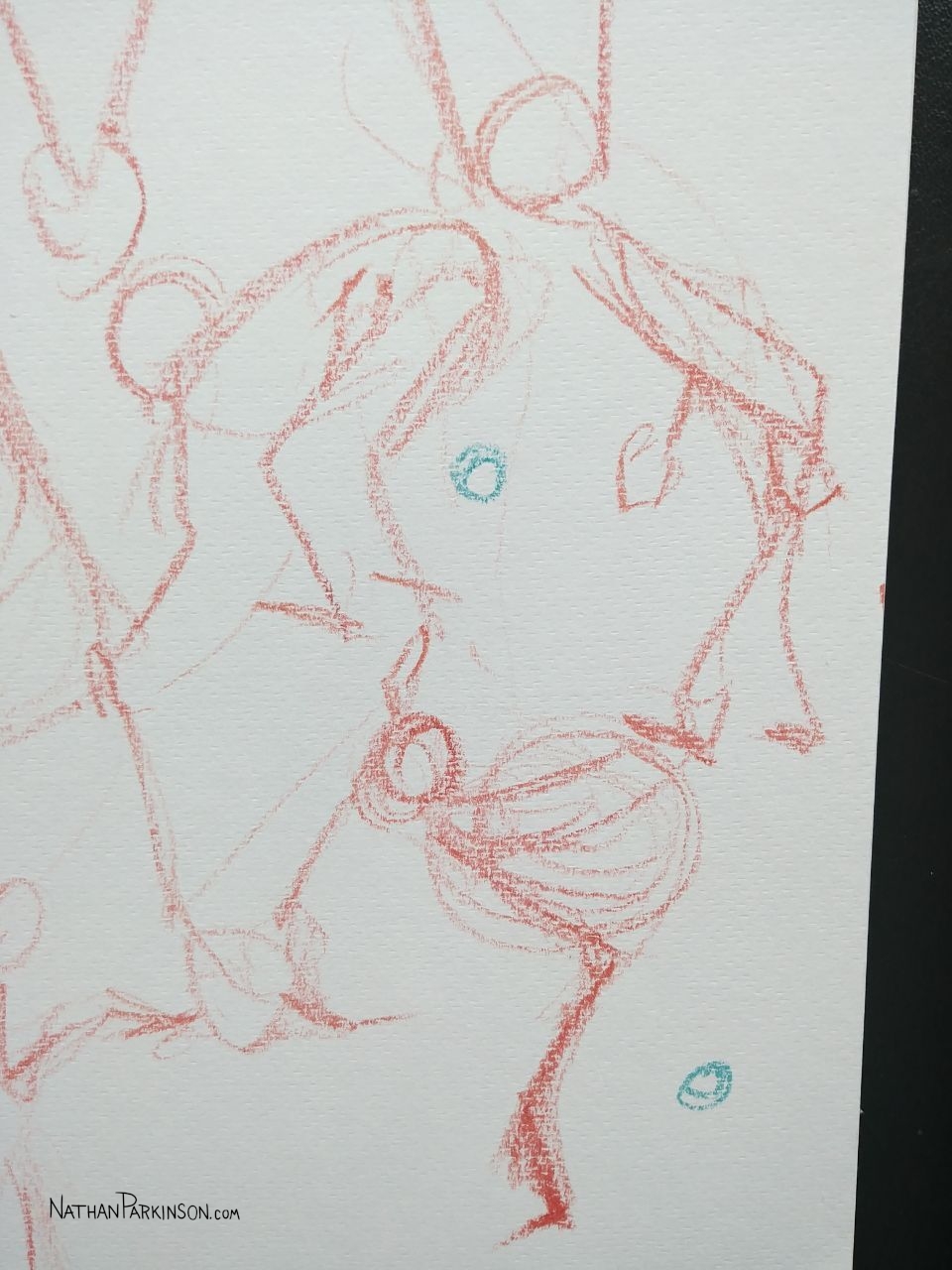
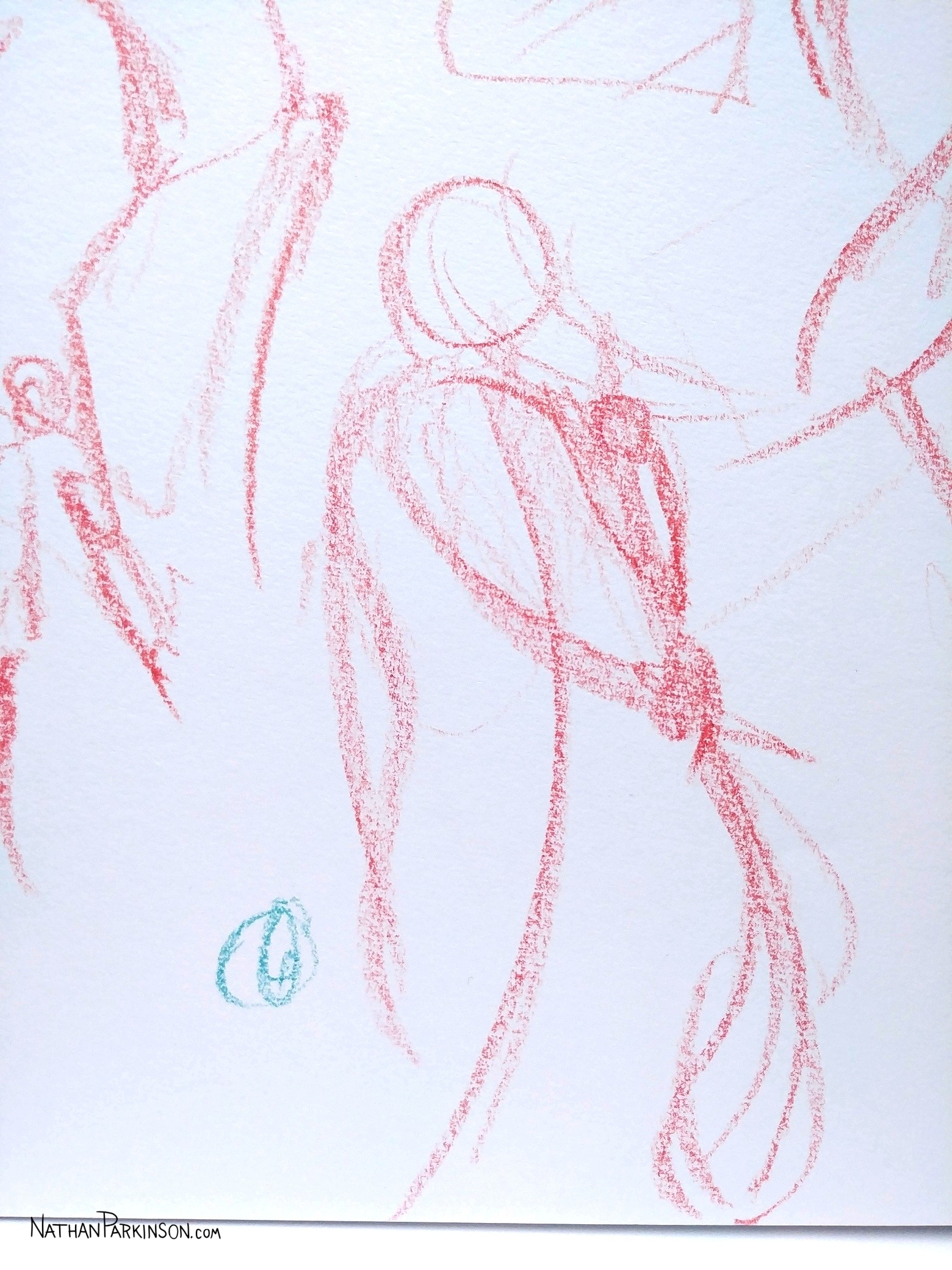
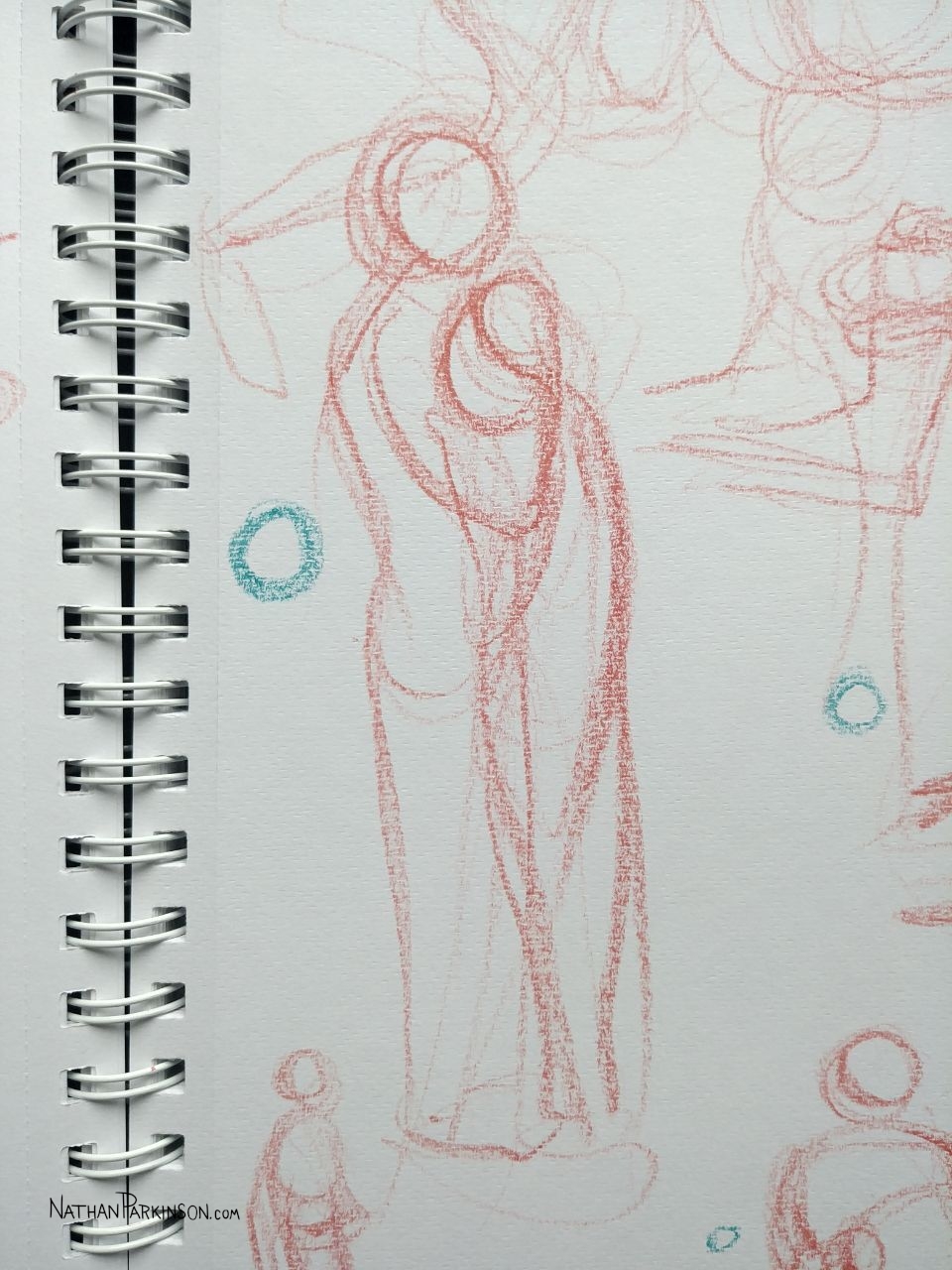
As part of my going through Joumana Medlej’s Human Anatomy Fundamentals course, I’ve been doing daily gesture drawings from movies/shows for a few weeks. I’ve been getting some wonderfully distinct characters and expressive acting and posing from Buster Keaton and the Beverly Hillbillies. They both have a lot of full-body shots (or nearly full-body).
Here’s a selection of my favourite quick sketches from 100+ pages of gestures.
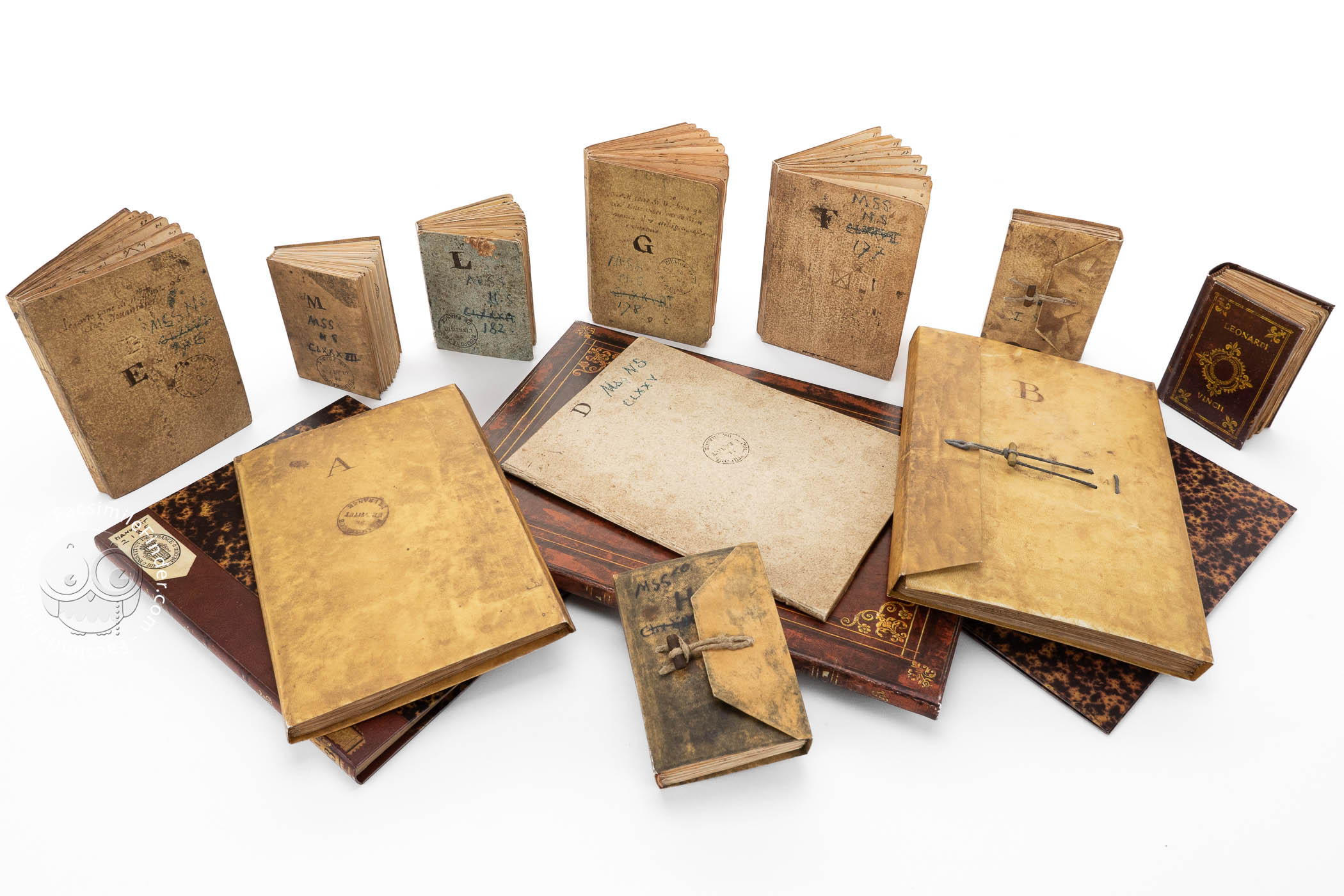
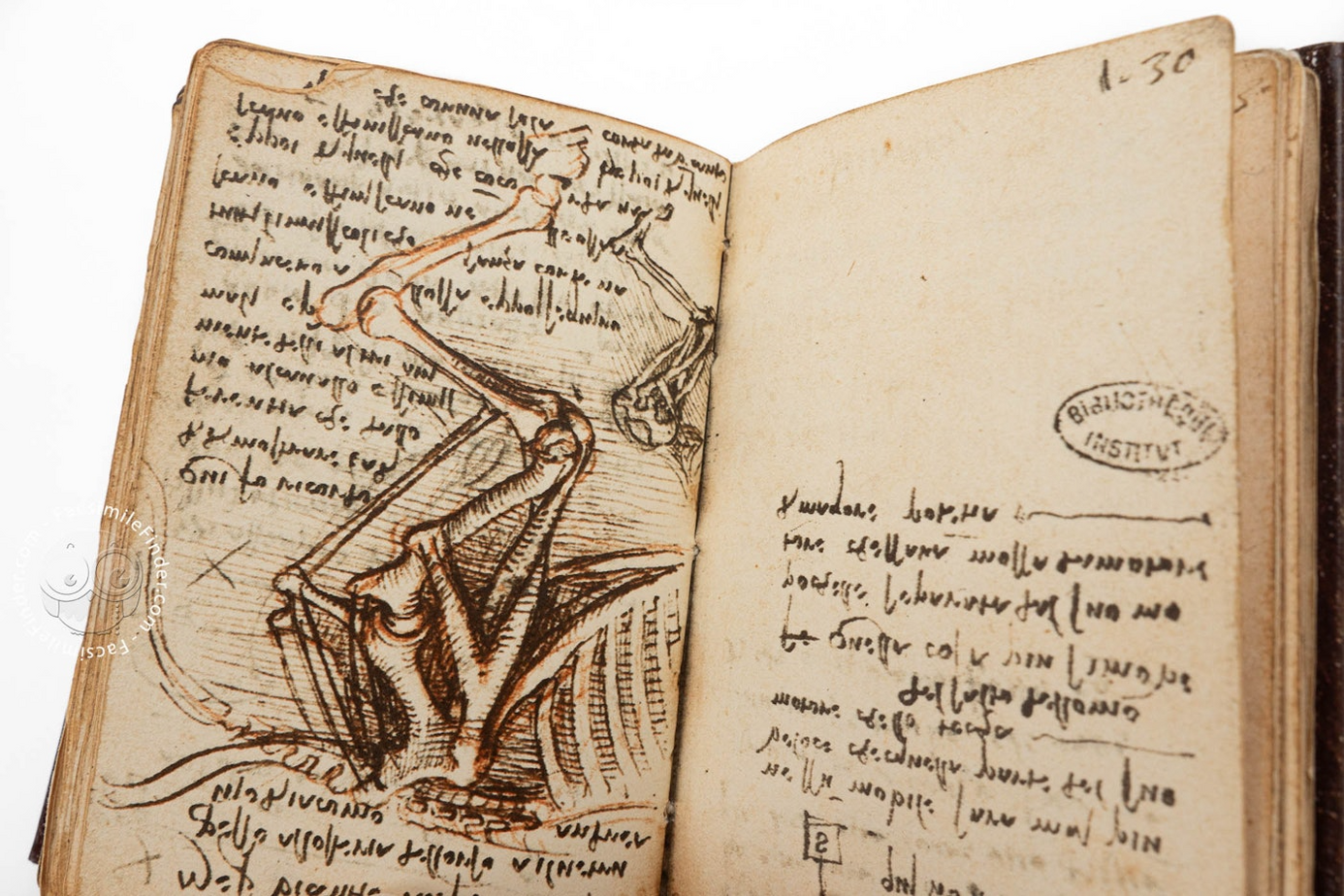
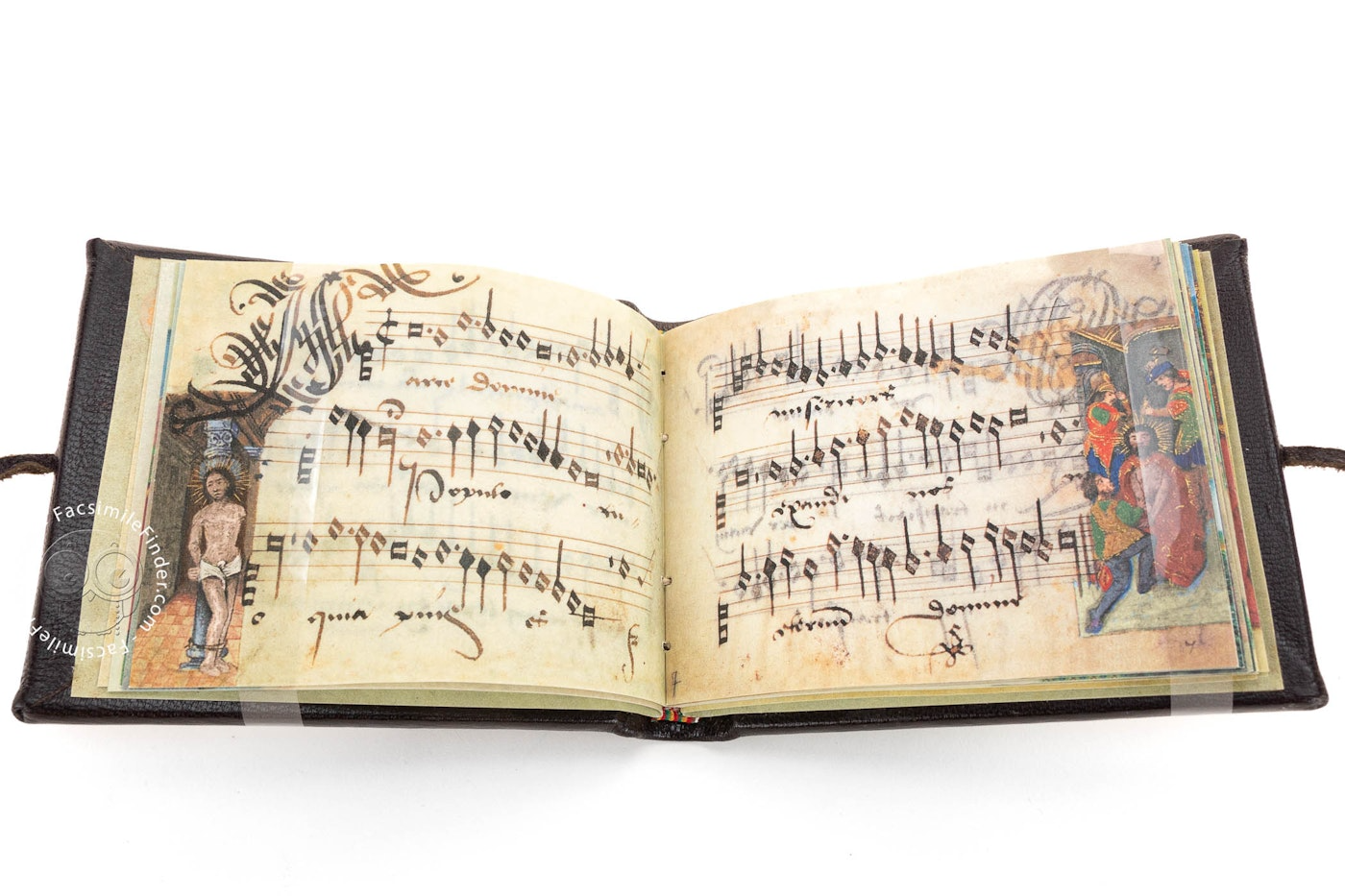
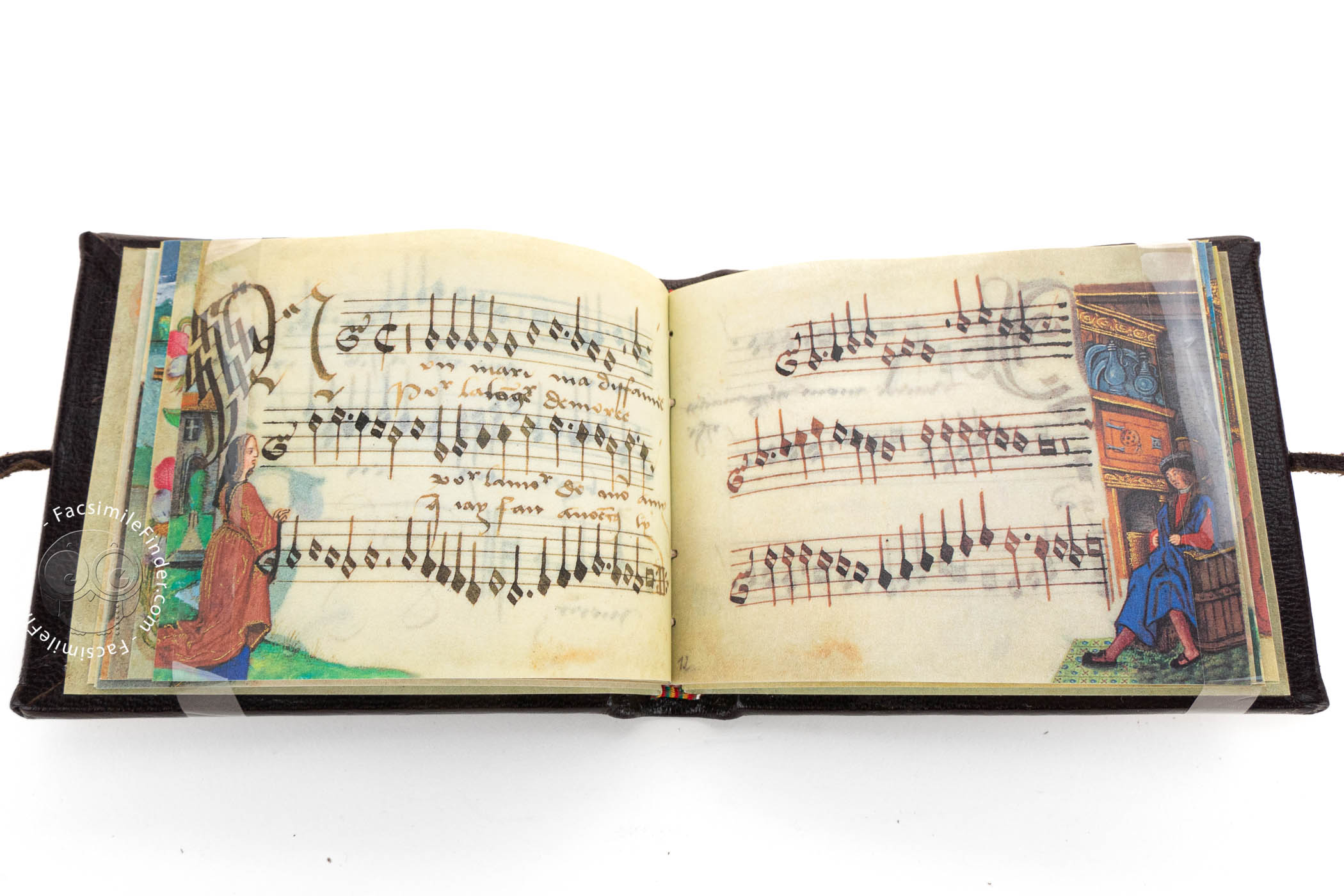
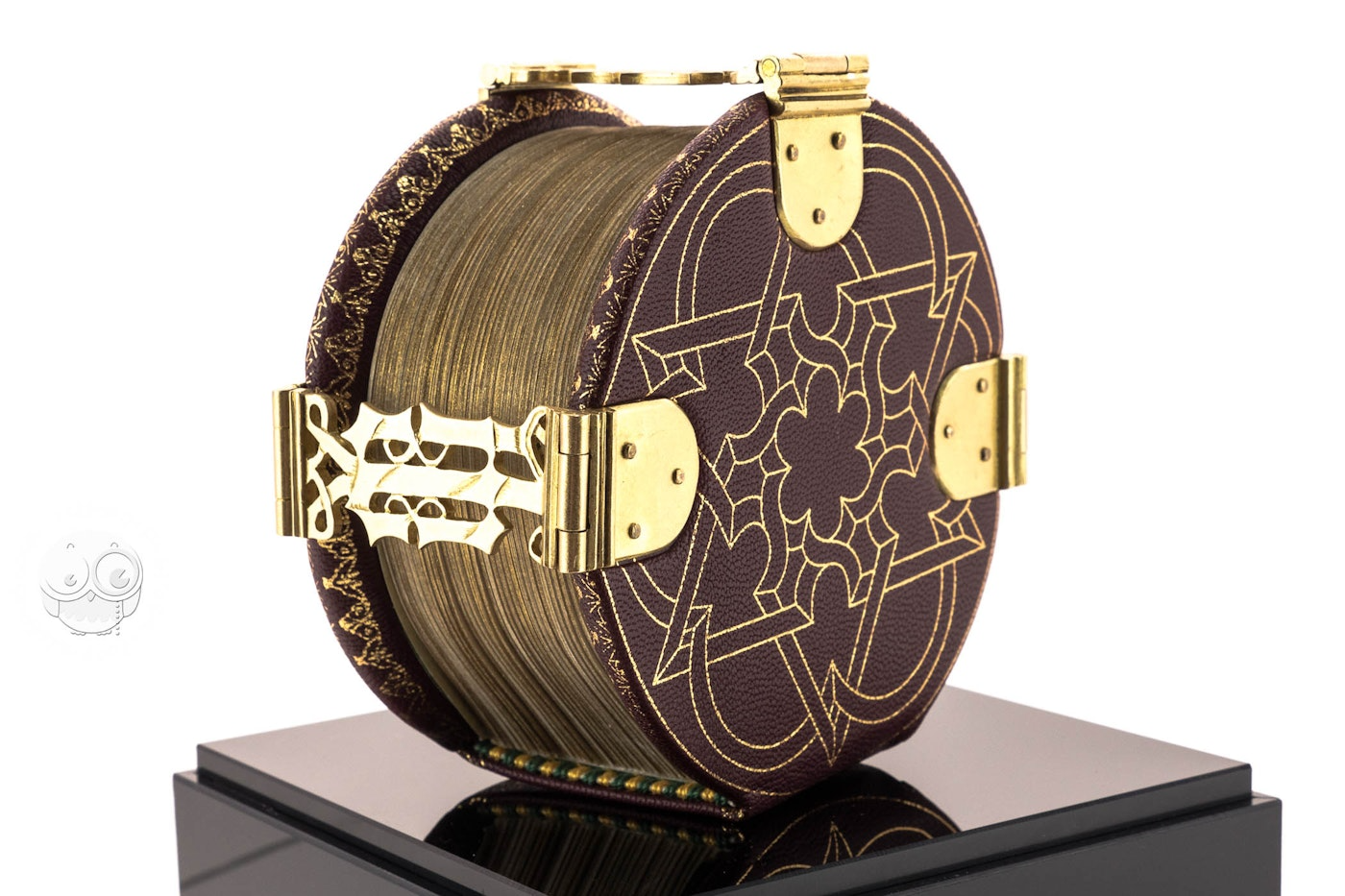
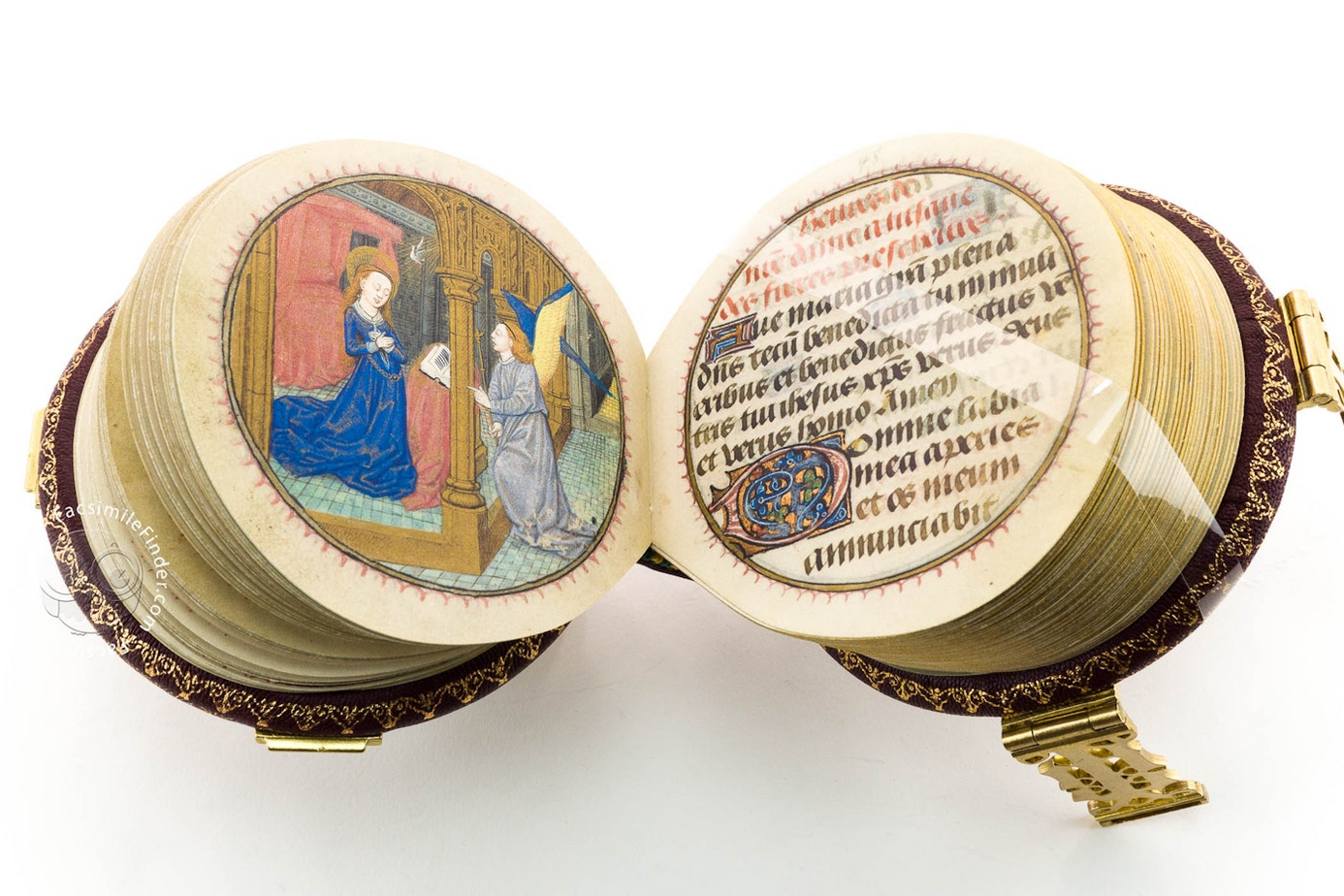
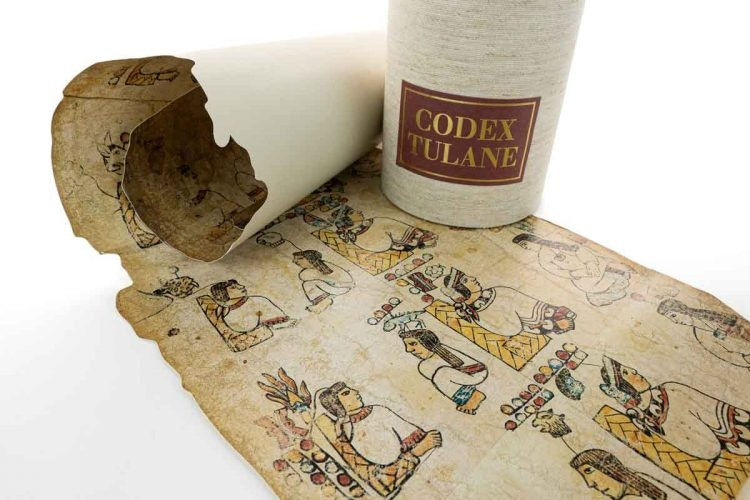
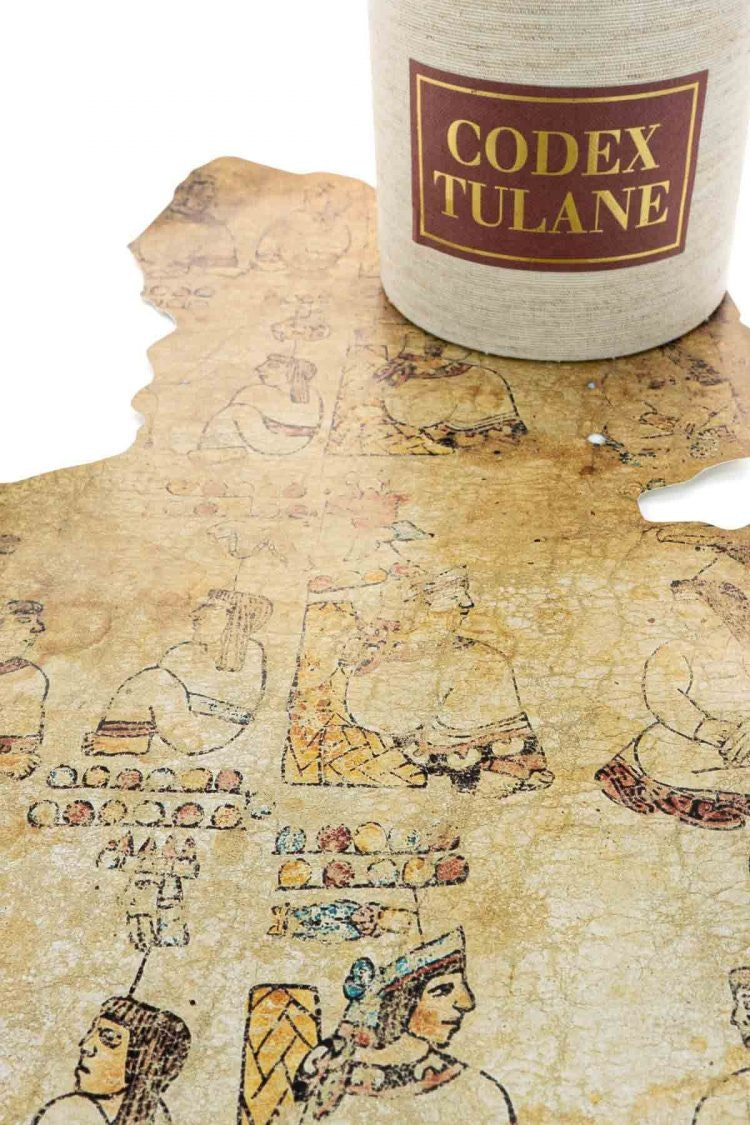
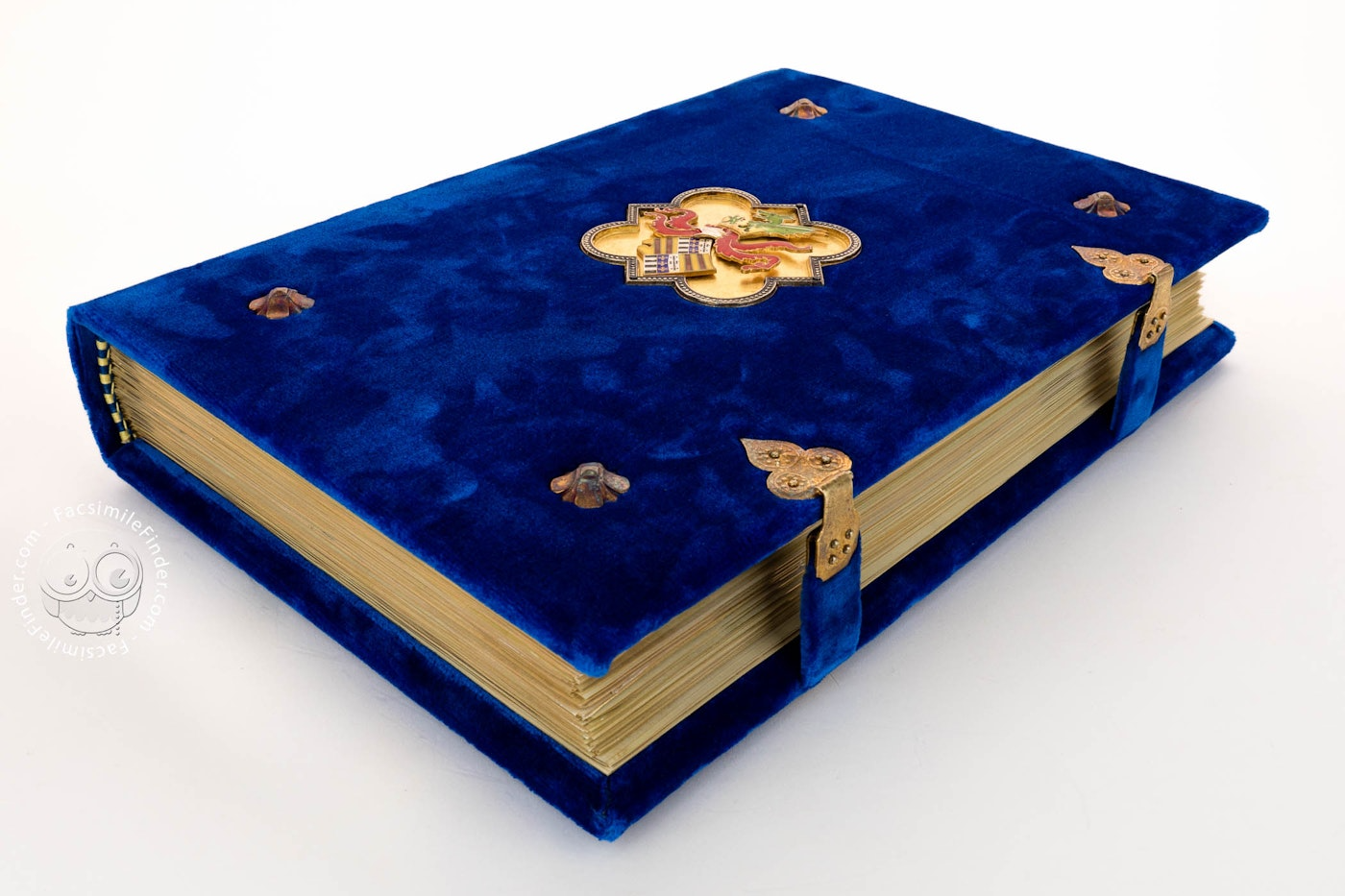
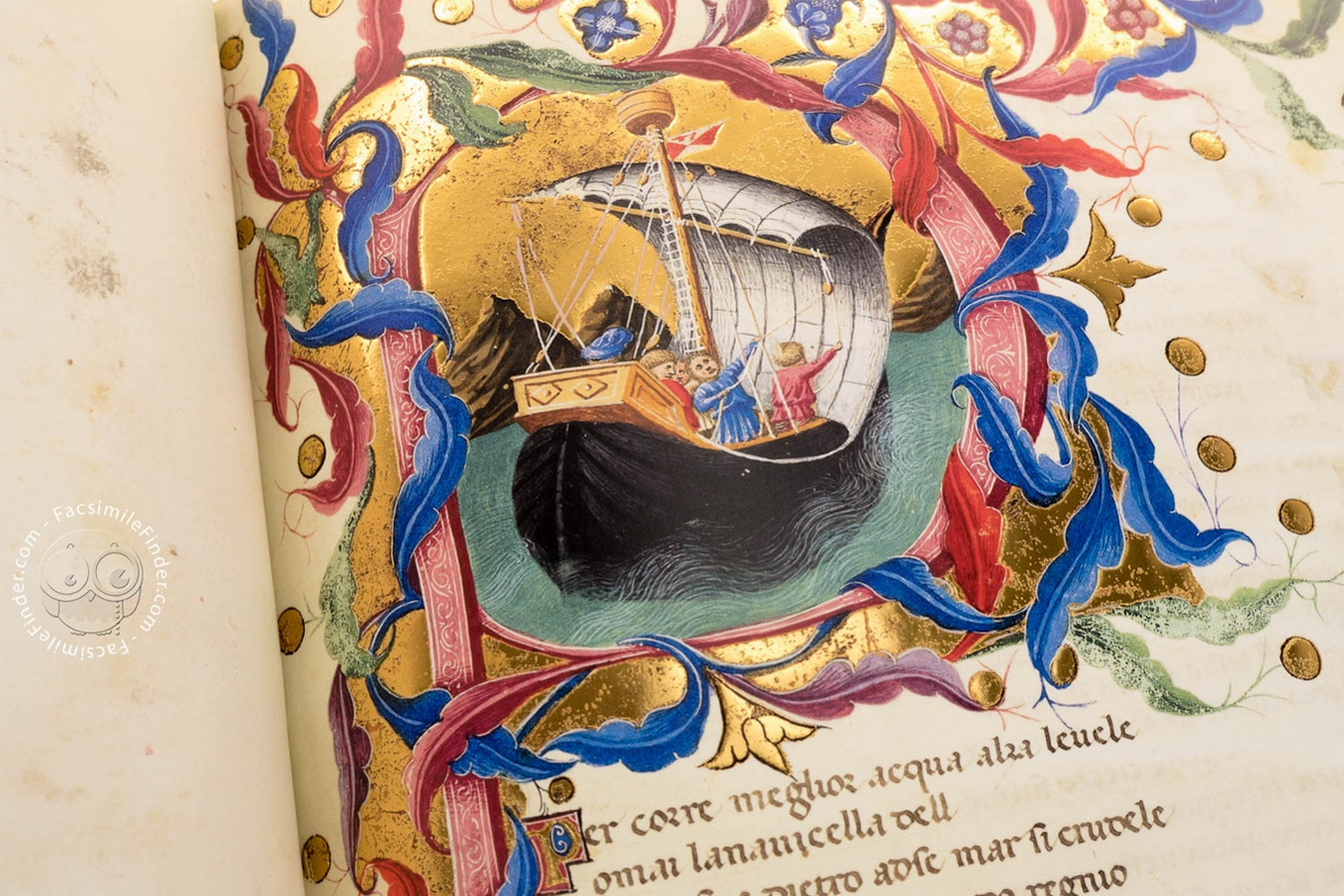
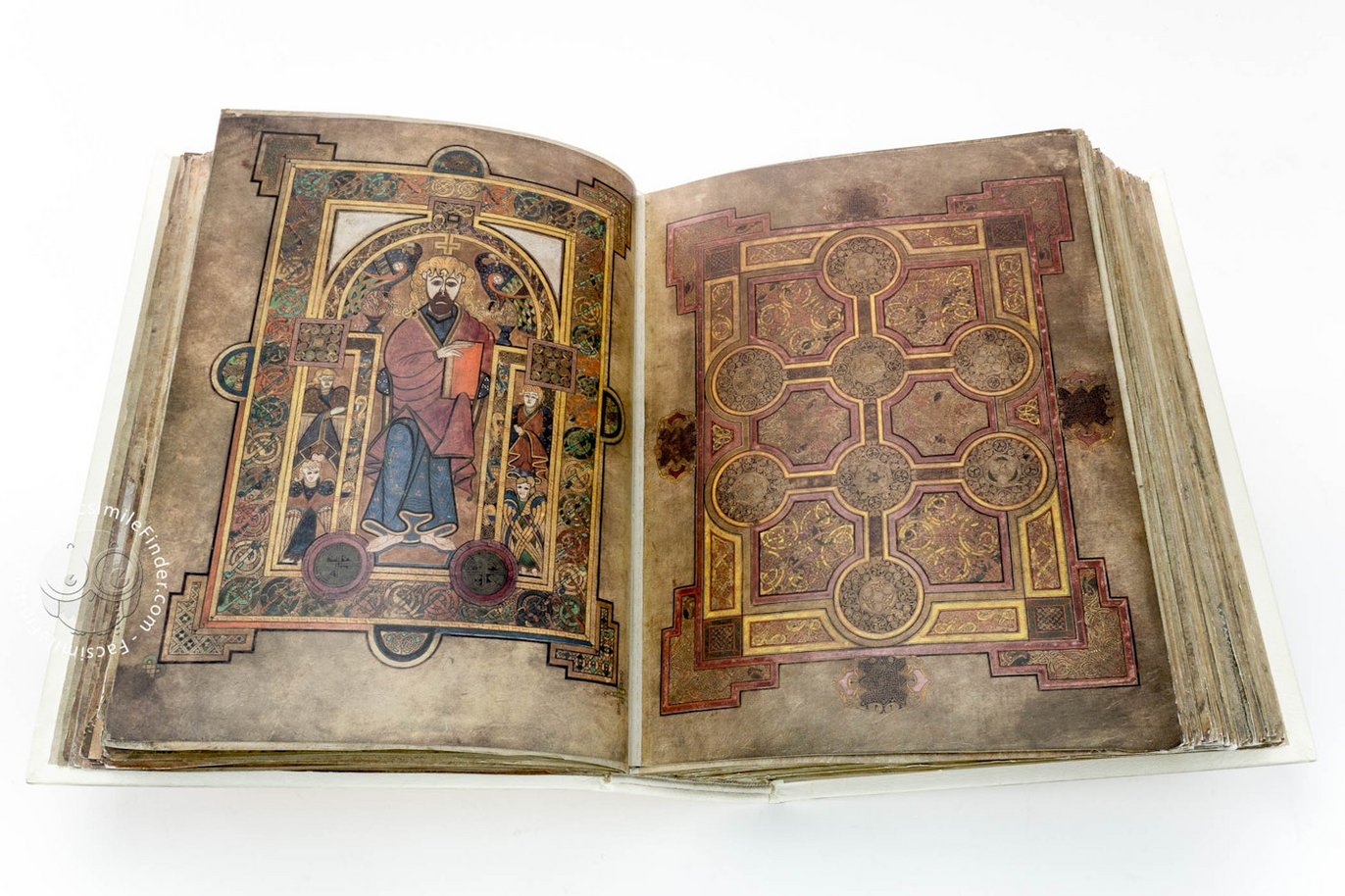
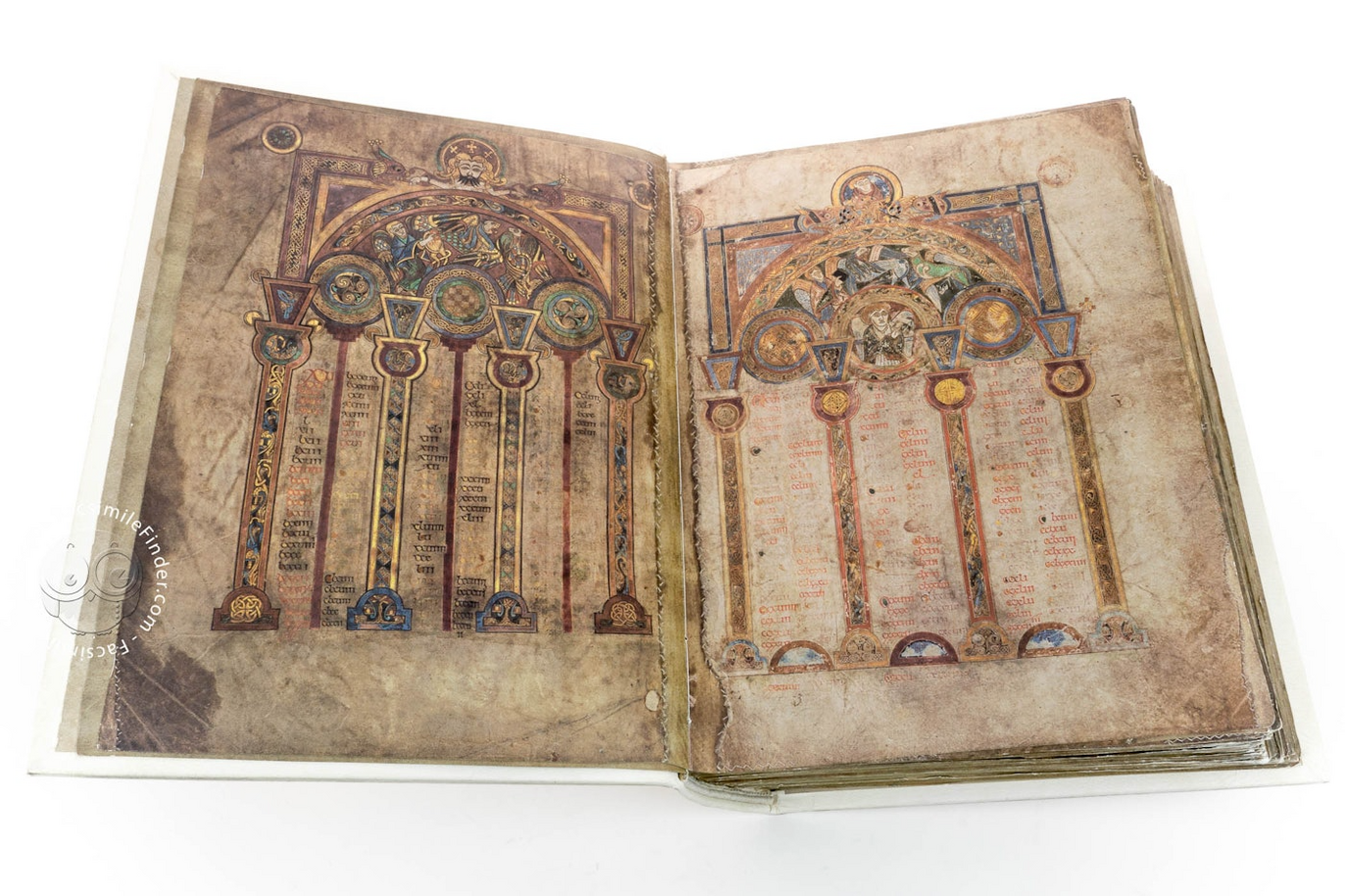
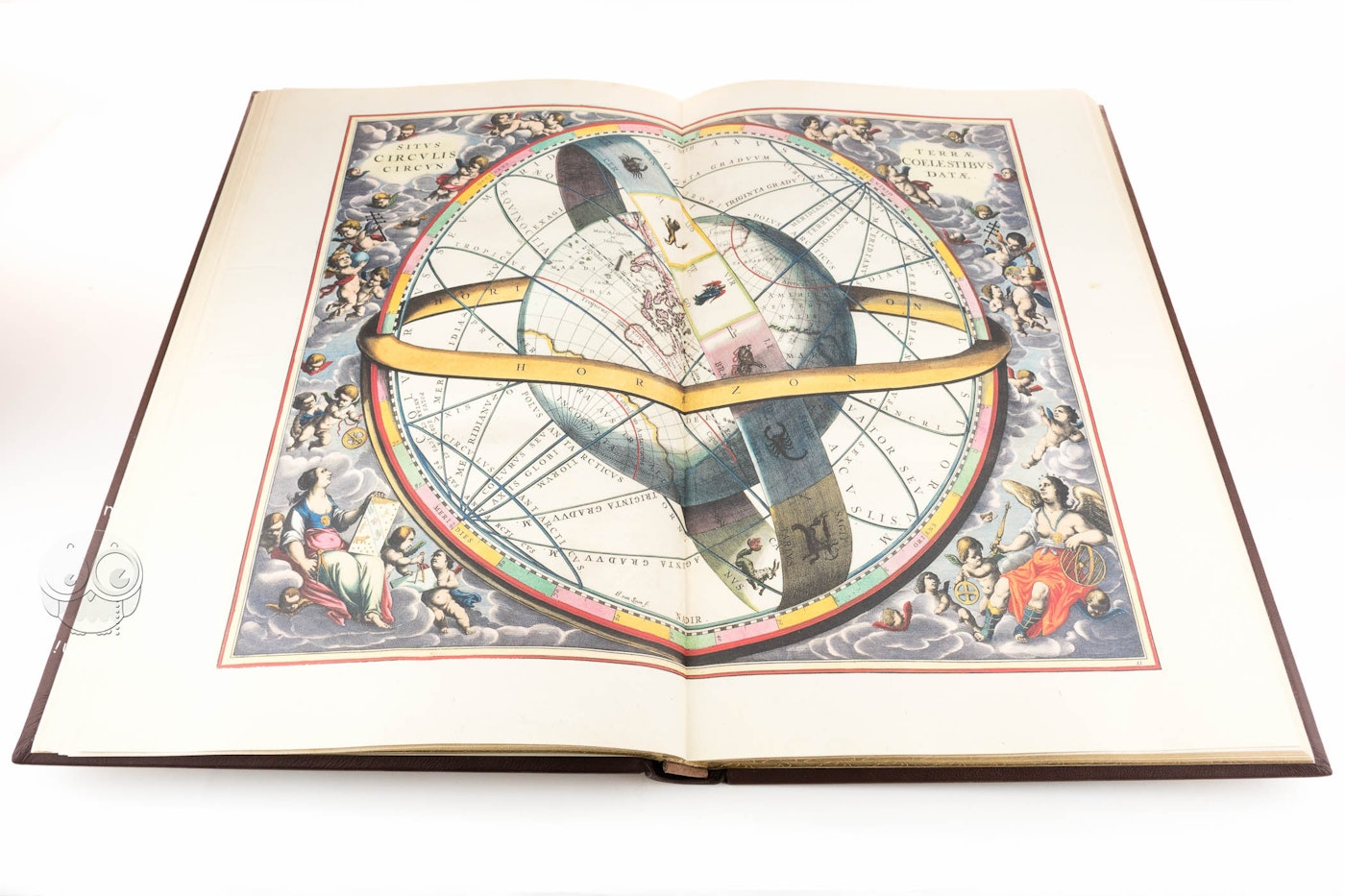
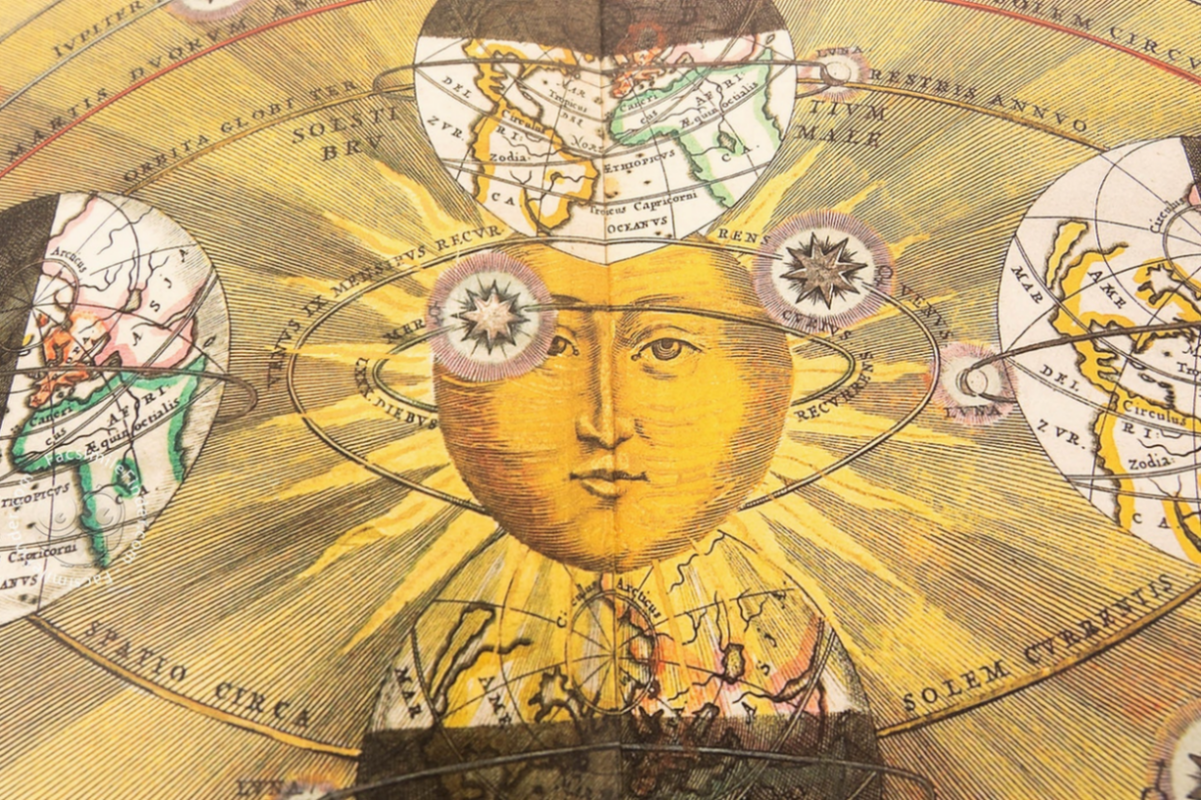
I found a really neat website that finds and sells facsimiles of old books, rolls, documents, etc. facsimilefinder.com. While the price tags are way over my head, they have some great photos and visuals. It is a lot of fun to look at the artwork and design in these relics. I’ll highlight a few I was impressed by. Keep in mind that these are replicas that you could actually buy if you had a few gold coins to spare. The artwork is just incredible . . . truly a window into the past. The following headers/titles link to the corresponding web pages.
Rob MacKillop is a guitarist with a great variety of experience, popular for playing classical music without nails.
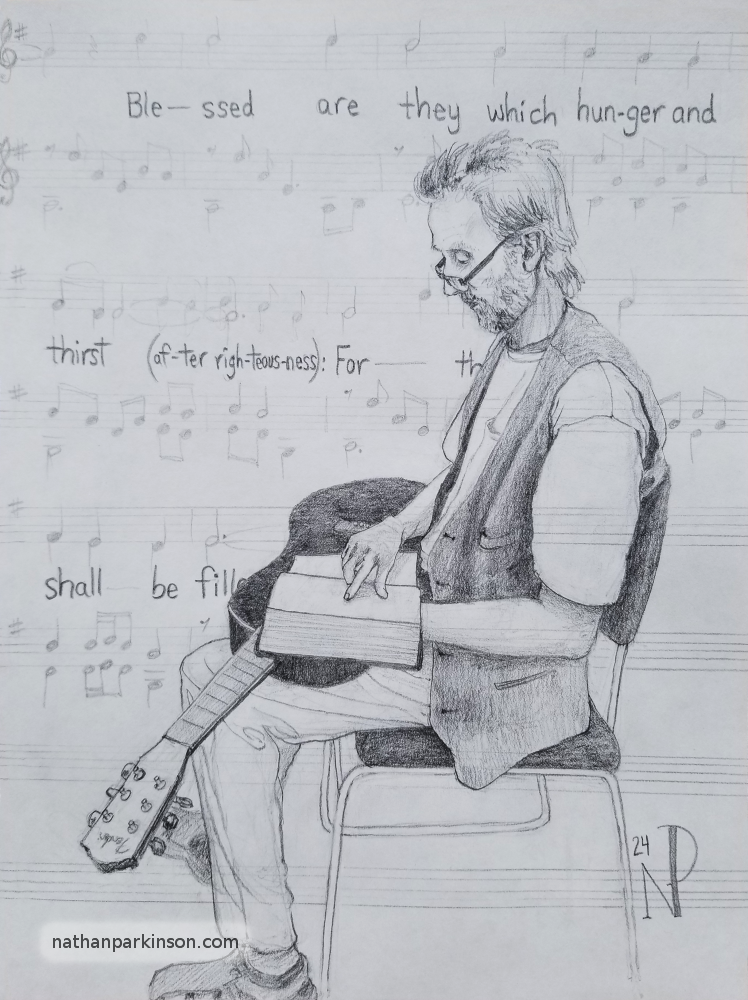
As an artist I draw inspiration from other creative fields such as writing and music. There are so many parallels between the various art forms.
MacKillop inspired me with some powerful ideas in a few interviews. I watched them several months ago and have been affected by them since. I just re-visited them and found even more good advice than I remembered finding the first time. Here are the interviews with some quotes and paraphrases of my key takeaways below, but there’s plenty more in the videos; so grab your notebook and dig in.
“You’ve got to fall in love with music and let that be your guide . . . it’s so important that you love every note you’re playing on the guitar, and if you don’t love the notes you’re playing, why play them?” (59:20)
“Just be yourself because if you’re not being yourself, who are you being?” (1:07)
“The beginning point is to find a little kernel of something that is you, not to start with technique.” (2:19)
“There’s no reason to try to convince others that what you do is great; your own voice will come through; and there are people out there who will like it.” (3:18)
“Don’t worry about making a mistake; it’s the bigger picture, the bigger story that matters.” (55:49)
“I didn’t mind the little mistakes he was making here and there because I was listening, not to the guitar so much, but to the story behind what he was playing.” (59:58)
“Learn from lots of teachers. Be prepared to disagree, but don’t fight with them. Listen and absorb it all, but develop the strength to find your own way. The big journey is actually back to yourself, not out there to other people. It’s me with this box with strings on it — how can we communicate?” (1:07:02)
“The greatest teacher you can have is the score of music. When you study technique too much you tend to coat everything in that; but if you treat the score like a unique thing in the universe and listen to what it wants, it will teach you how to play guitar.” (1:09:02)
If you’re an artist I hope you’re able to see how MacKillop’s advice strongly applies to making pictures. Artists, writers, musicians – we’re all storytellers trying to discover our identity and master our craft. Just be yourself, love what you do, and tell your story. Technique and mastery will follow.
Lastly, please do visit Rob’s personal YouTube channel and website to hear his music and learn more about him and his work.
In learning to write fiction for BREX, I discovered the concept of character-driven stories from Johnn Four’s article The 3 Line NPC Method: How to Create Story-Full NPCs Fast. Johnn writes the advice from his perspective as a Game Master for TTRPGs, but I have found his ideas to be superb for writing characters for fiction. A GM needs to be able to role-play his NPCs; a writer must also role-play his characters in abundant situations. I highly recommend reading and studying the entire article for all the goods if you think this idea may help your writing (it is lengthy), but the following link will take you to the specific section that lays out how to use the 3-Line NPC Method.
To sum it up, a 3-line NPC is a non-player character described in the following 3 lines: appearance, portrayal, and hook. Appearance is what you would first see upon encountering the character. Portrayal defines a few key role and personality traits and informs how to role-play the character. The hook is something meaningful, intriguing, exciting, etc. that can expand the plot of the story. Those 3 lines create a powerful package of details that makes writing for the character a joy because you know quite a bit about them from the start including motives and tendencies.
I like to create a bunch of characters before I need them to build up a reserve or library to draw from as the need arises for new characters. As a GM Johnn encourages introducing a new character each session to keep the story moving forward. I have adopted this mentality in my writing. I try to introduce at least one new character in each episode and so far (5 episodes in) I’m having a blast. I have had to create a couple characters to fit specific roles I had written about in my script and it felt less fun and free than writing random interesting characters and then dropping them into the story. I try to let character creation drive the story as much as possible rather than having to create a specific character to fit the story, but it does happen sometimes.
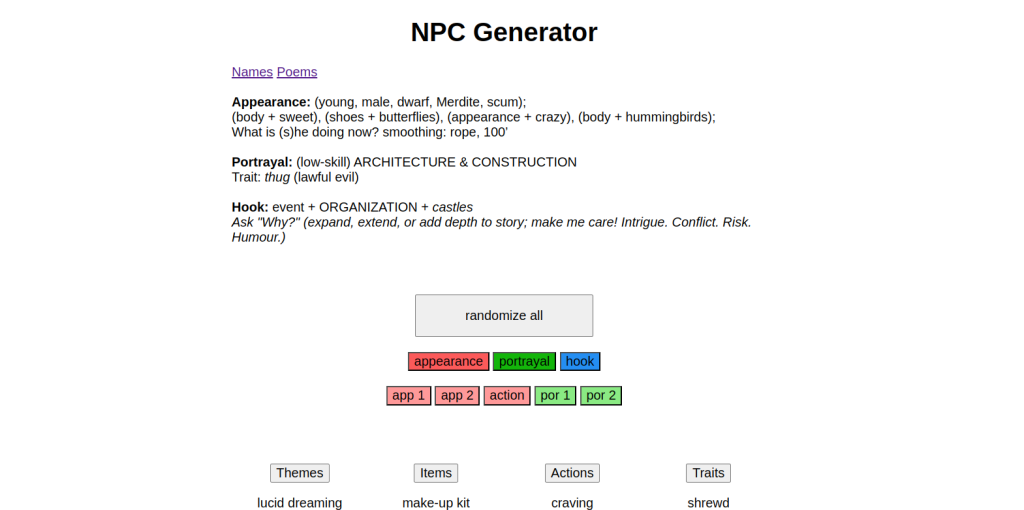
3-line NPC Generator
I was sold on the concept, but I’m very inefficient at coming up with interesting information to write characters; so I created a random generator to spark ideas which I can interpret into interesting elements. I now use this to create all the characters for my story. I still have to do a lot of the work for interpretting the details and writing the story hook, but this tool makes it so much more enjoyable. You can find and use my generator here: nathanparkinson.com/npc. You can even modify the source code and customize your own version however you’d like. I’d love to hear if you find this useful.
Example 3-line NPCs
To give a proof of concept, I will provide a few 3-line NPCs I have generated using this method. You can find explanations for each section at the bottom of the generator page.
Grithim: dwarf librarian
Appearance: (middle-aged, male, dwarf, Merdite, peasant); simple stylish hat, short beard, fiery red pants; impatiently sorting through ring full of keys to unlock something; yelling at students kissing in the library.
Portrayal: (low-skill) Librarian – administers or assists in a library. Amateur bonsai arborist; impatient; blunt; short-tempered, emotionally fragile (lawful neutral)
Hook: A former circus tamer. Due to an impatient mistake he made his son was killed in the ring by a beast. To distance himself from the memories he left the circus and took a position as a librarian. He is learning bonsai to try to improve his patience; he succeeds sometimes. He is often lost in a cloud of emotion, presented as impatience or distance, as he processes his grief; he misses his son.
Kythar: evil guild master
Appearance: (elderly, male, giant, Ursmite, wealthy); epic hair, metal-plated pants, elaborate silver flute on waist; negotiating in the market about castle business.
Portrayal: (high-skill) Guild Master – leads an economically independent producer (a “guild,” an association of craftsmen or merchants that often holds considerable bureaucratic power). Sweet odor; swift; duplicitous (neutral evil)
Hook: In jealousy he betrayed his ‘best-friend’ to death and deceived the family that he did all he could to save him. In gratitude they gave him a special family heirloom, a silver flute. It is said that the darkness of his heart corrupted the life stones in the flute, cursing it never again to play a joyful melody.
Atikel: crazy bird lady
Appearance: (middle-aged, female, human, Merdite, destitute); tattered feather dress, bird’s claw clutching strange stone hangs from neck, small birds flit around her; fighting to keep a large bird in a cage.
Portrayal: Fowler – catches or ensnares birds. She loyally served one of your relatives in a naval capacity; always smells nice/wild (chaotic good)
Hook: She needs your help to save her naive daughter from the scumbag pursuing her. She has convinced him that buying her daughter a certain bird will win her heart, but she knows it will drive them apart. She wants to use Brex as bait for the bird.
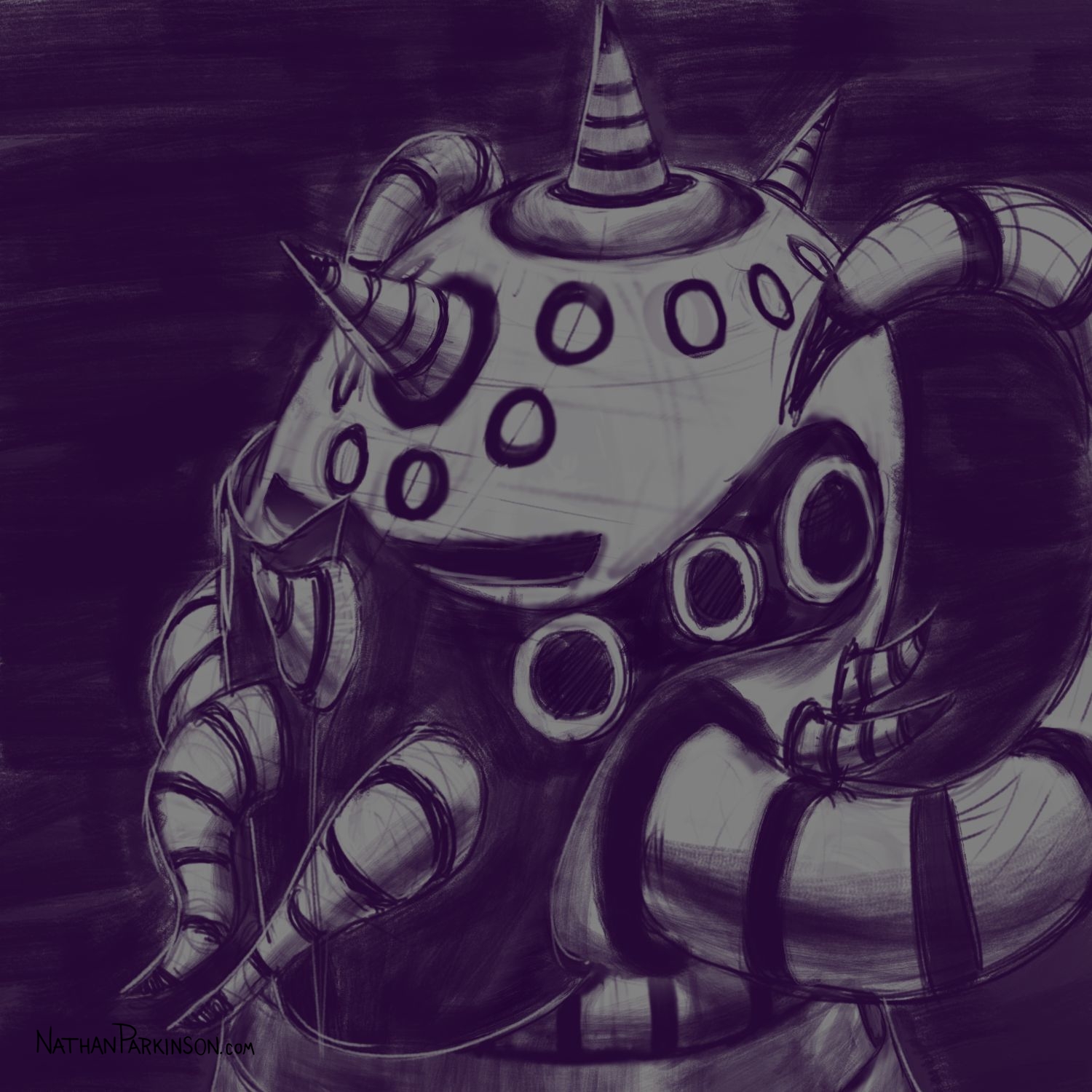
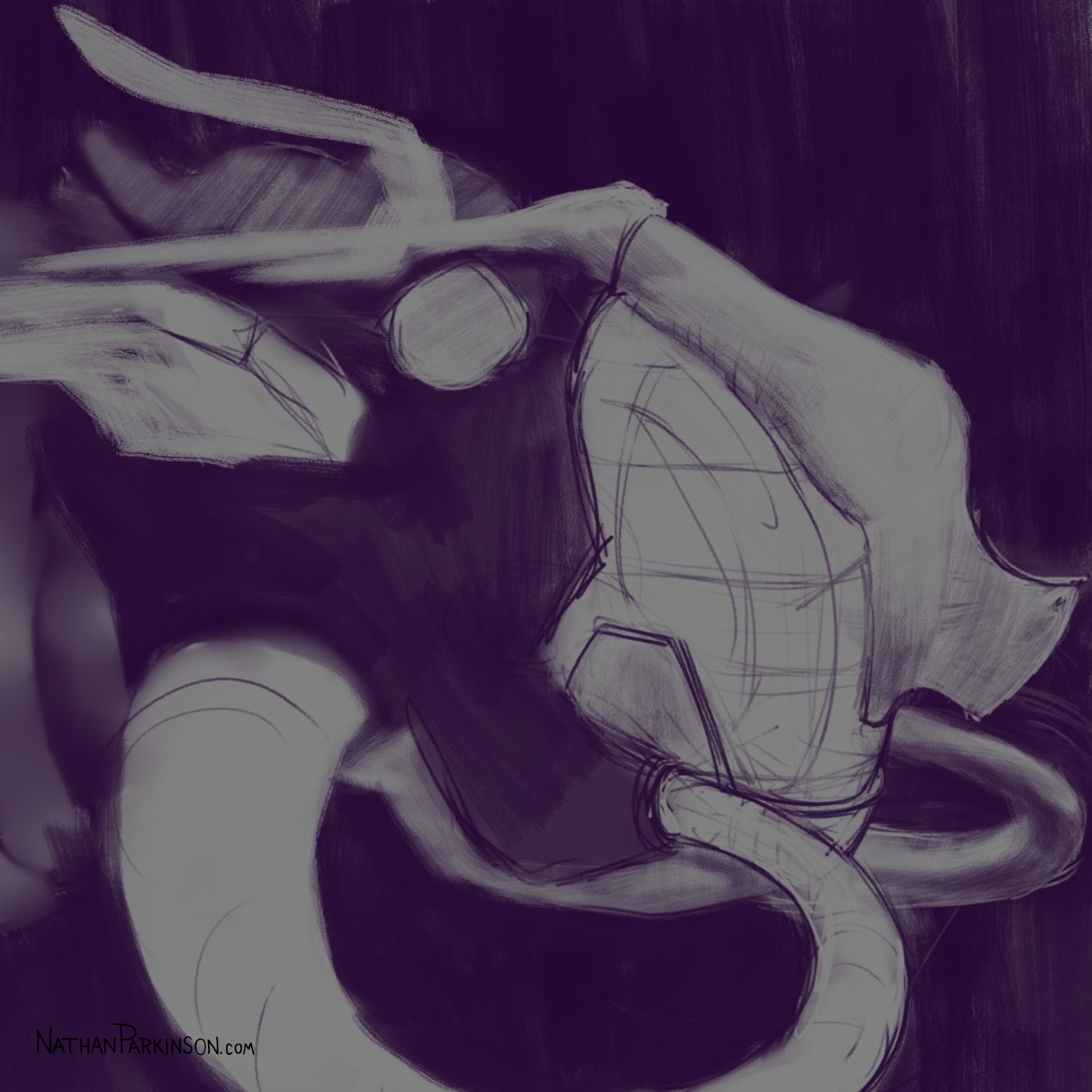
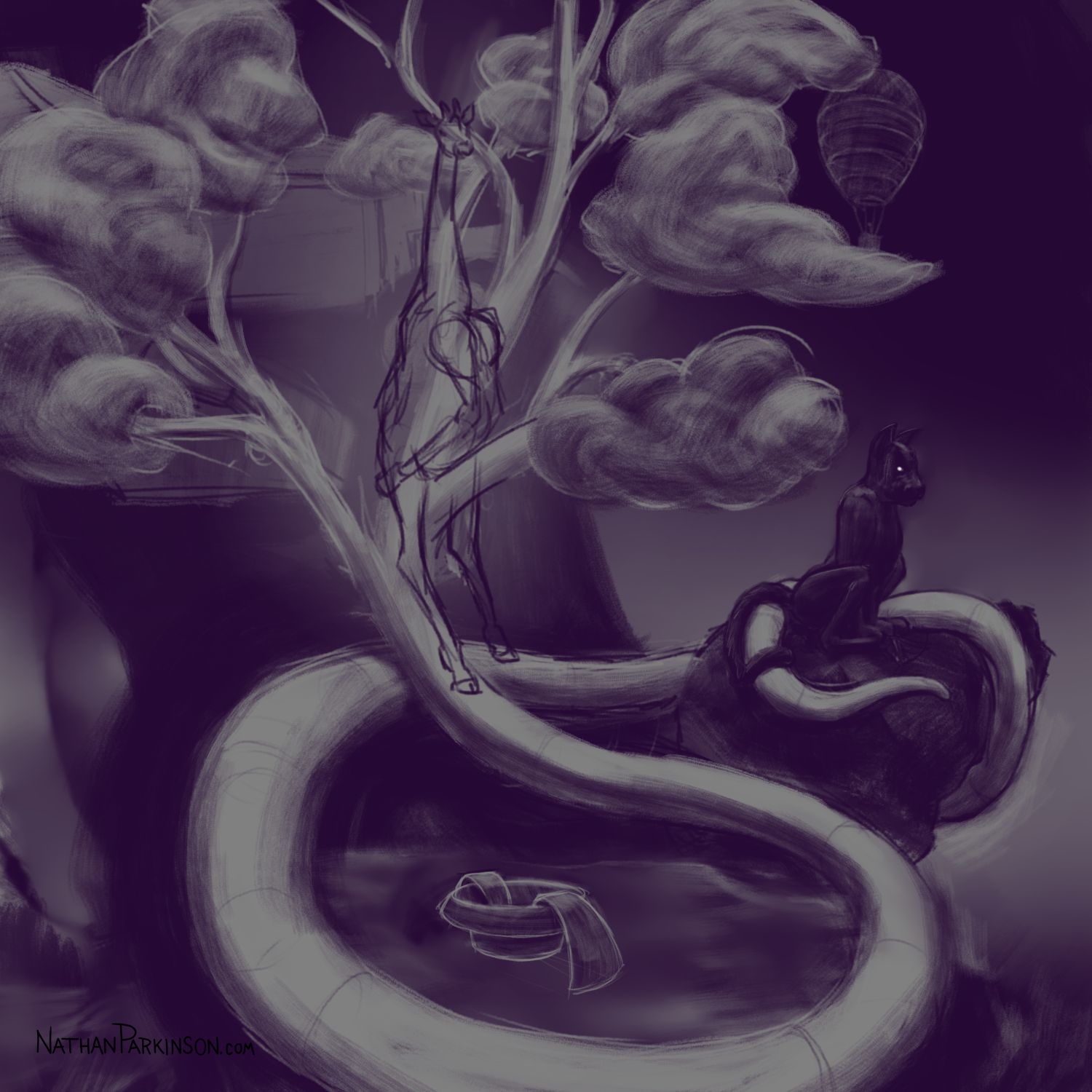
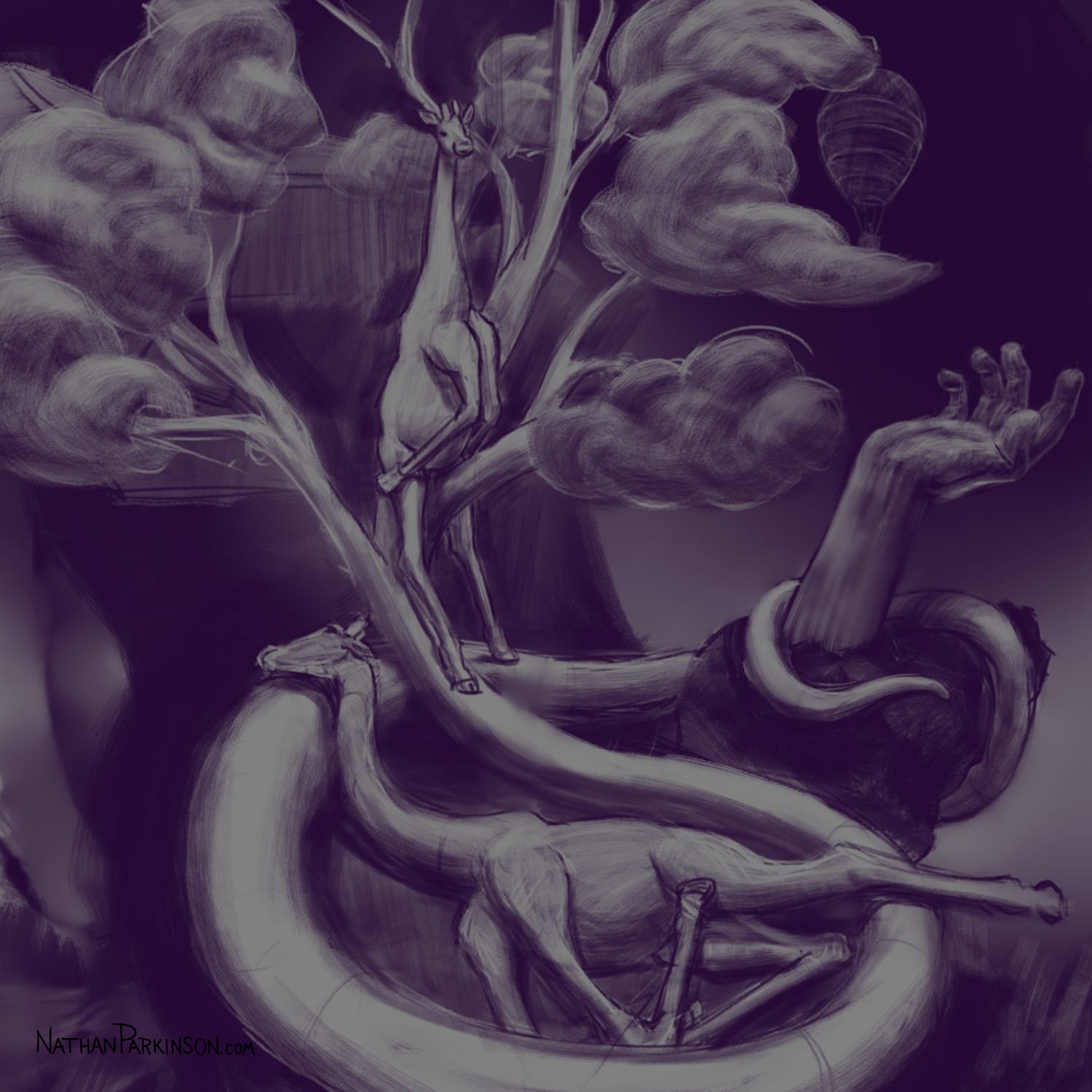
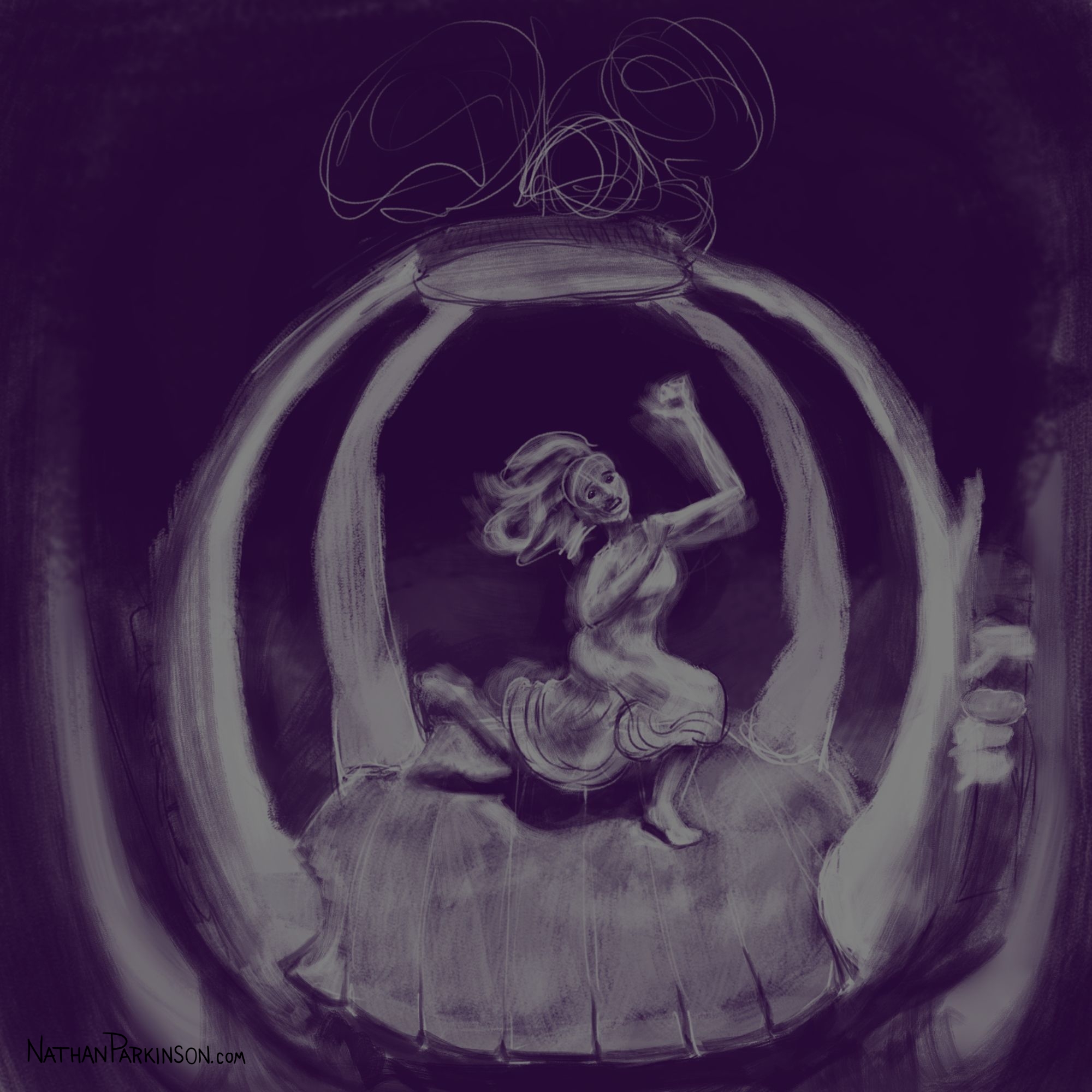
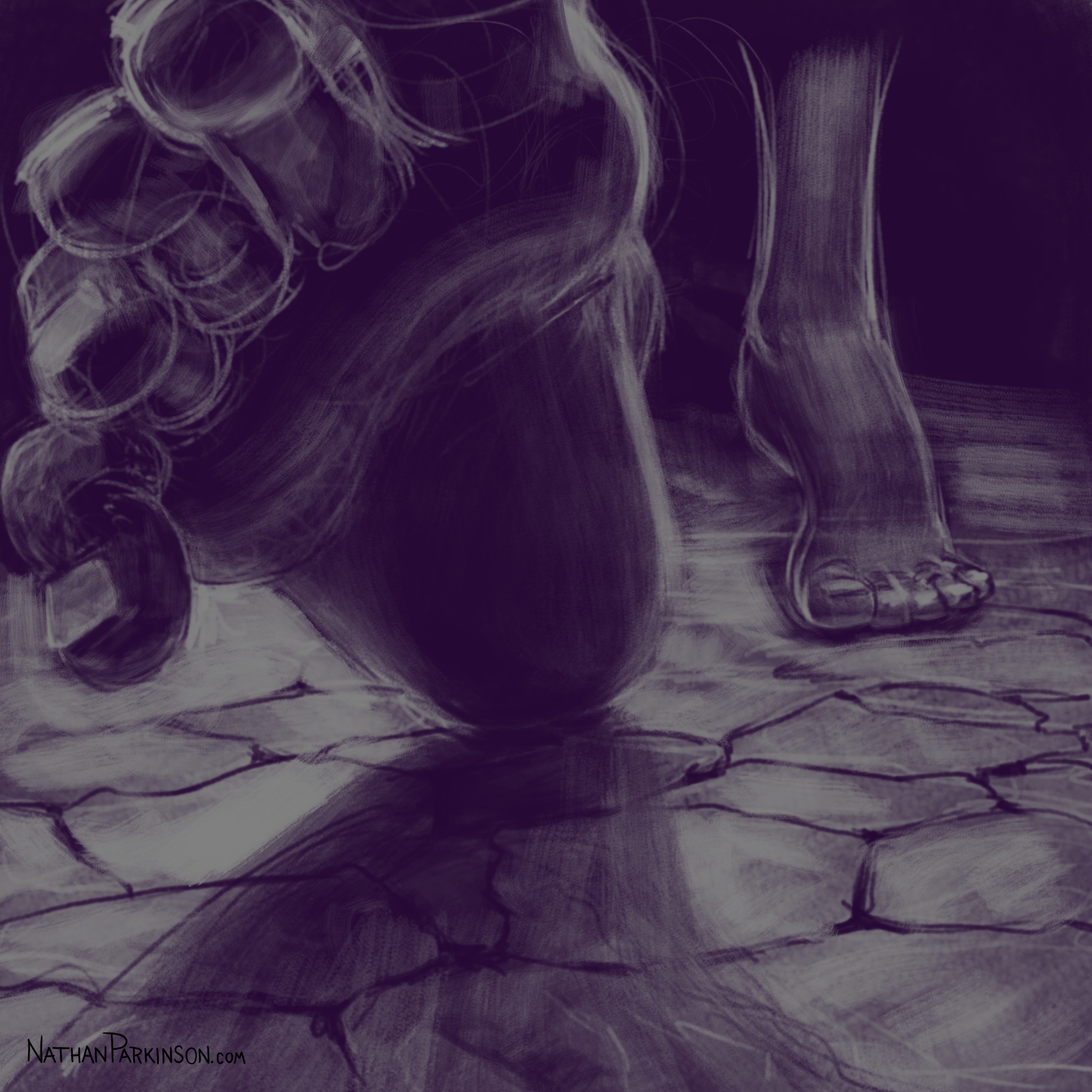
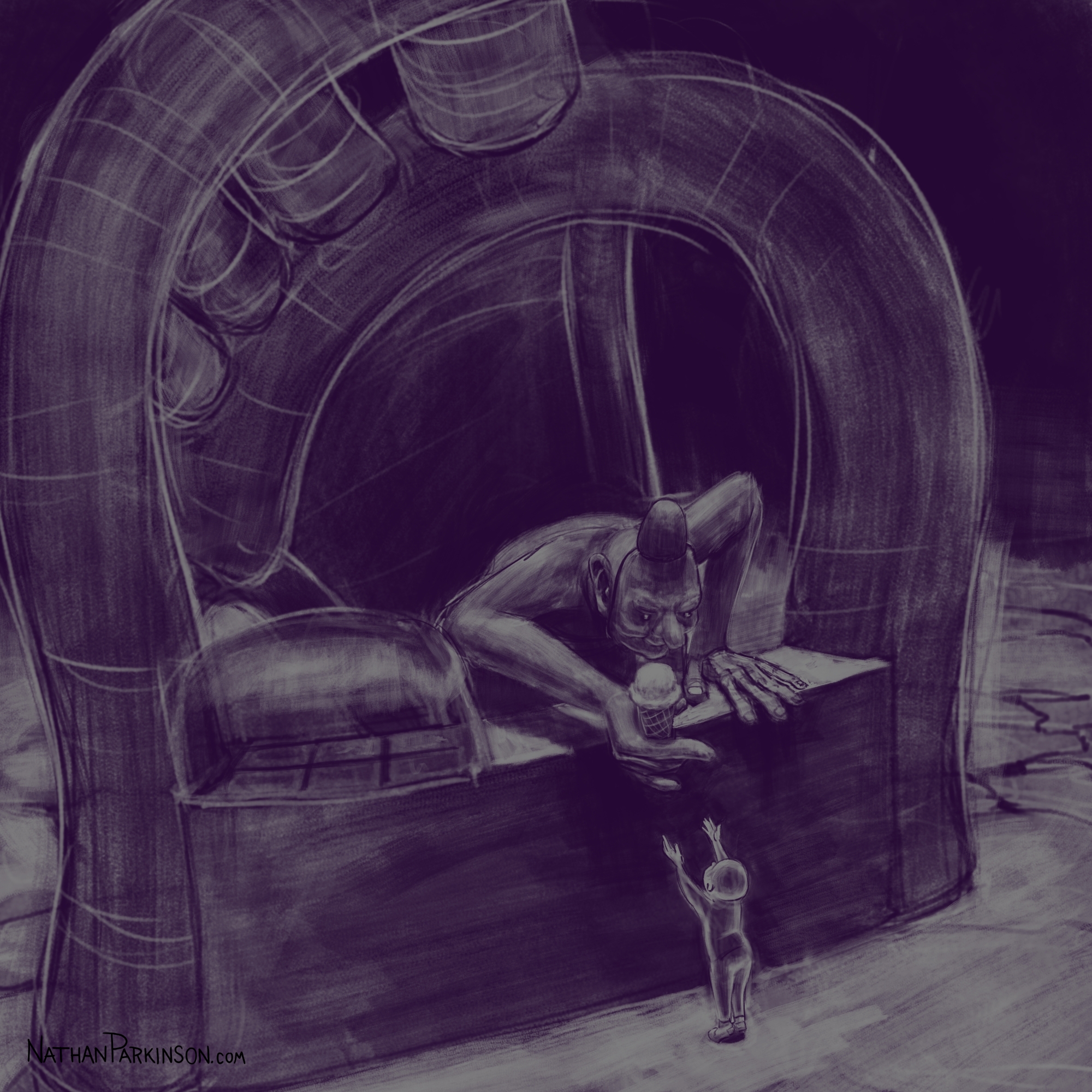
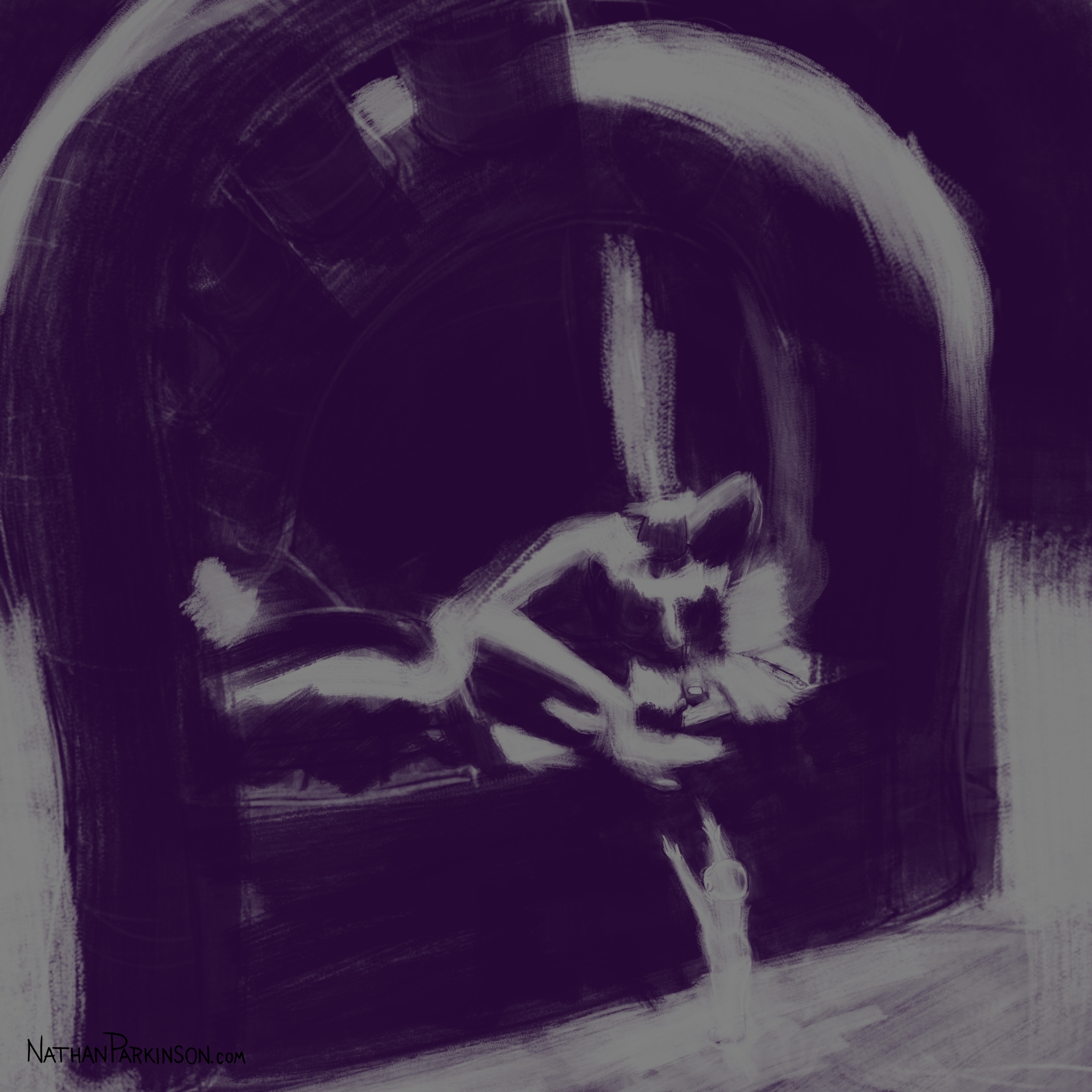
A little over a year ago I wanted to improve my digital drawing/painting, fight against my perfectionist tendencies, be less precious with my work, and work more efficiently and confidently (I was probably inspired by watching Trent Kaniuga paint).
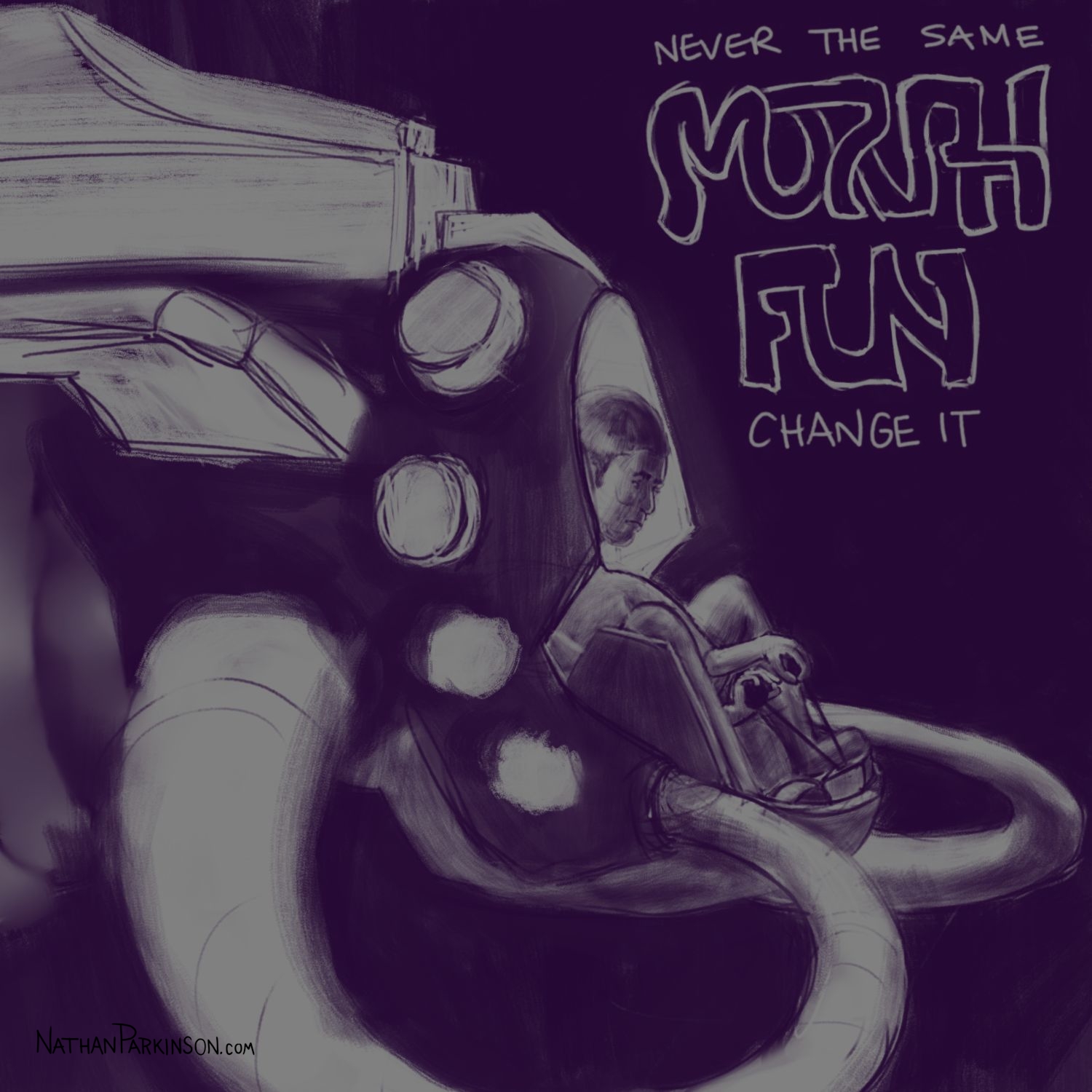
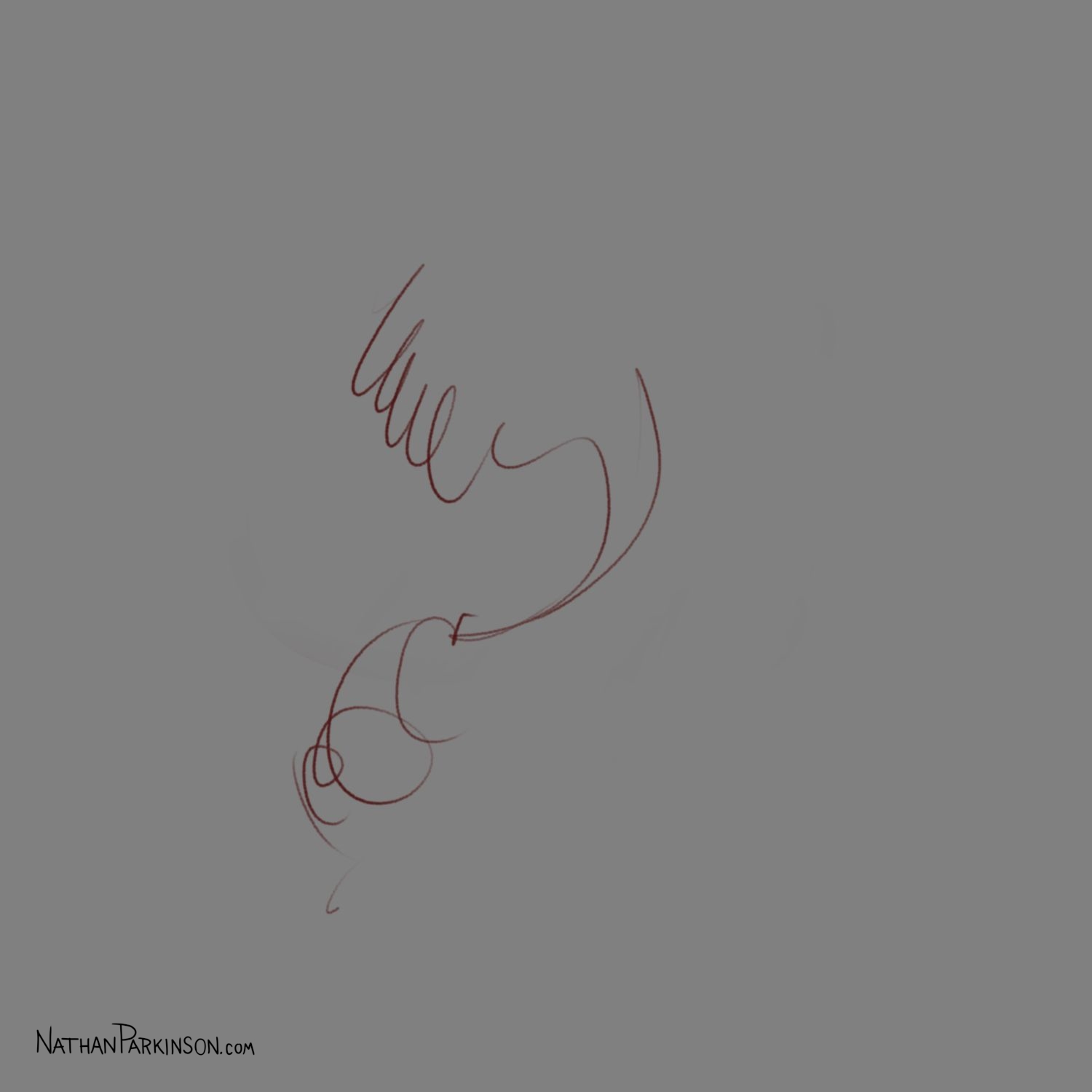
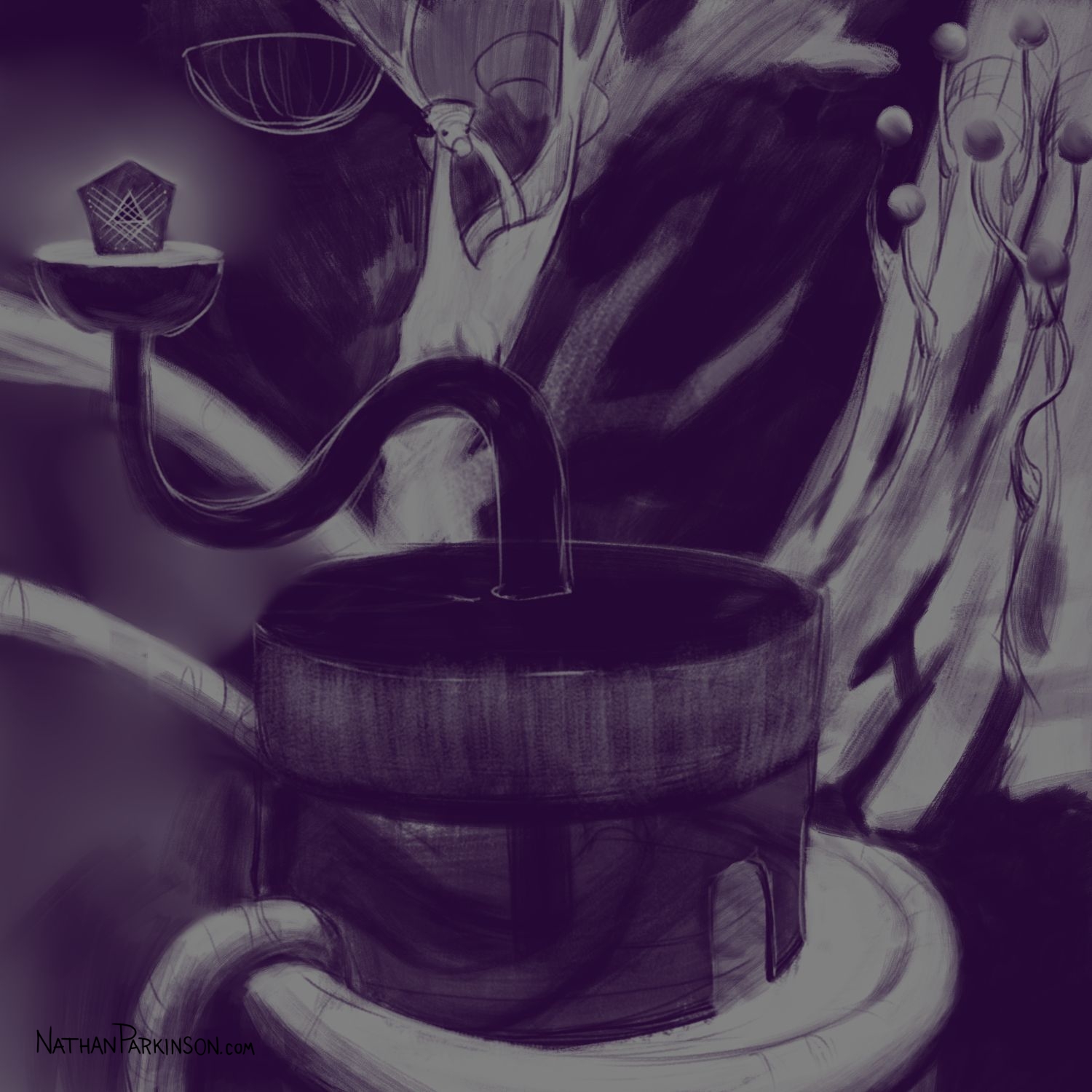
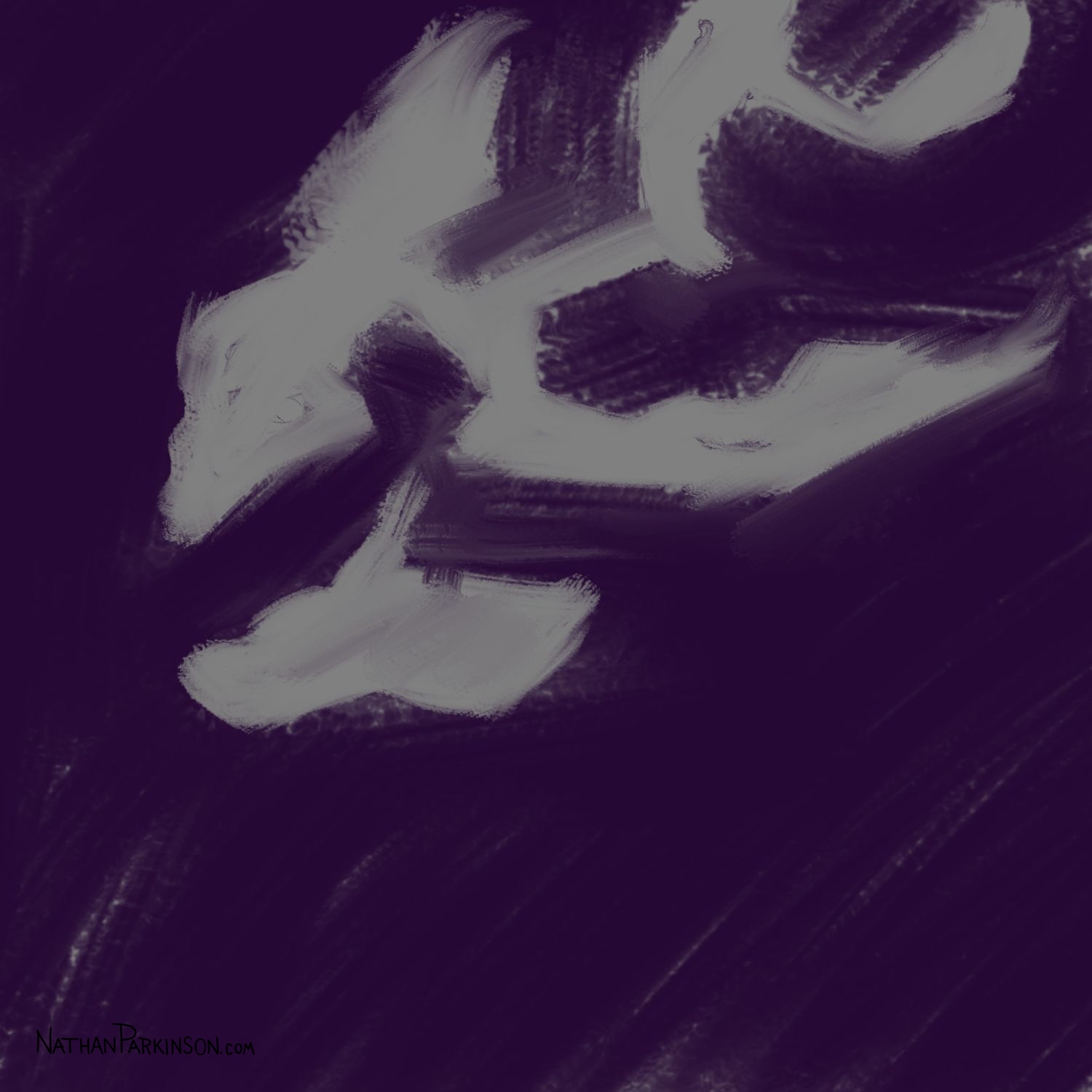
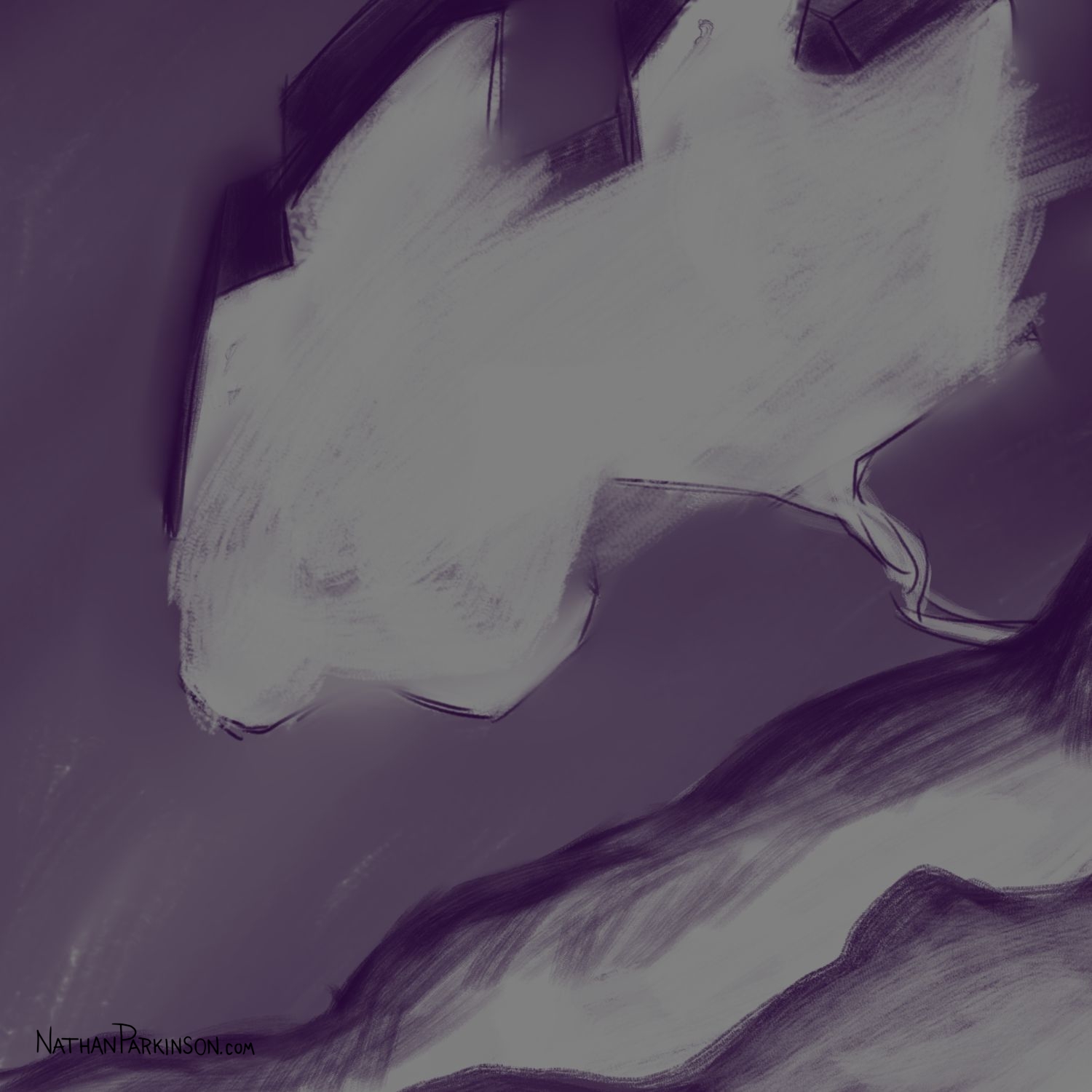
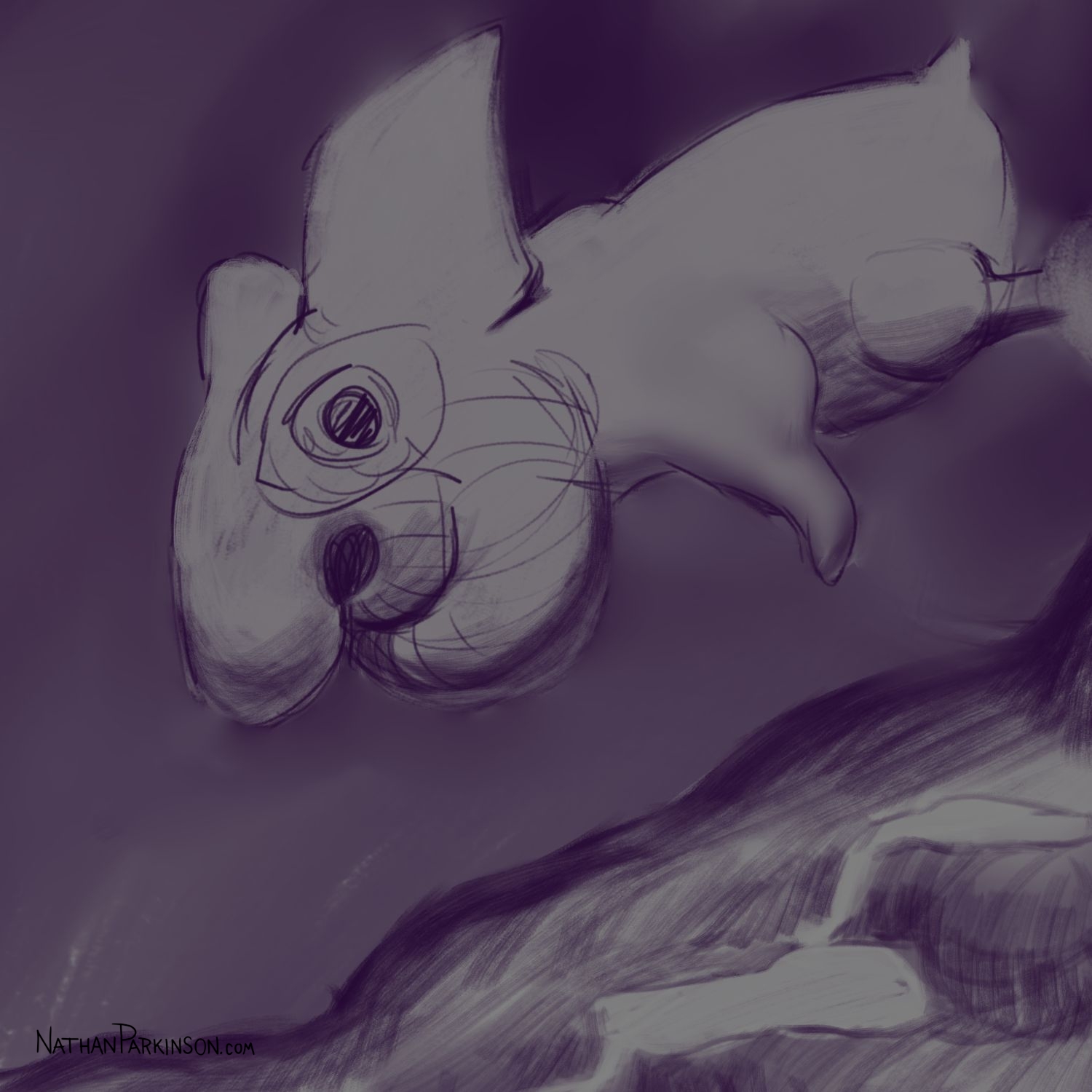
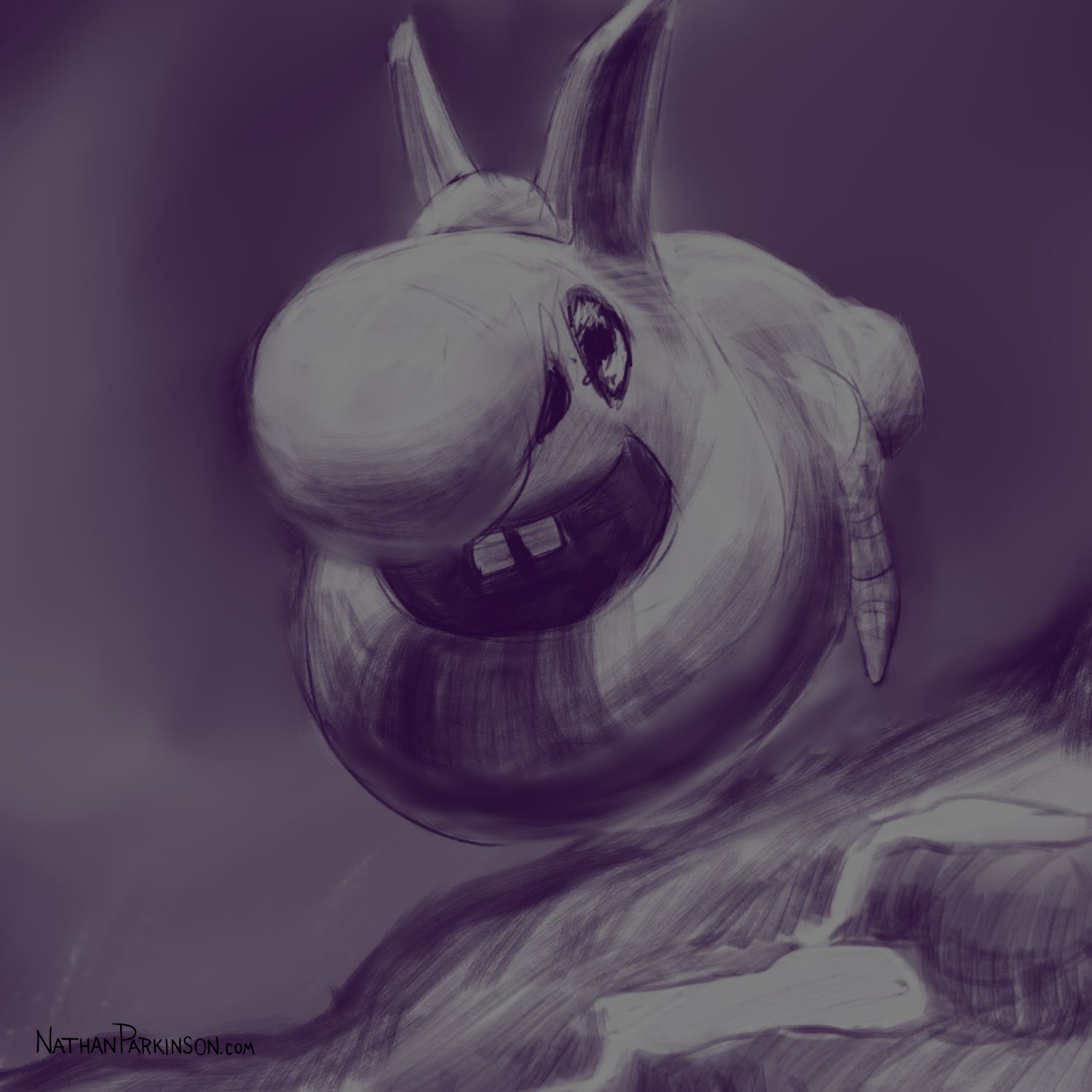
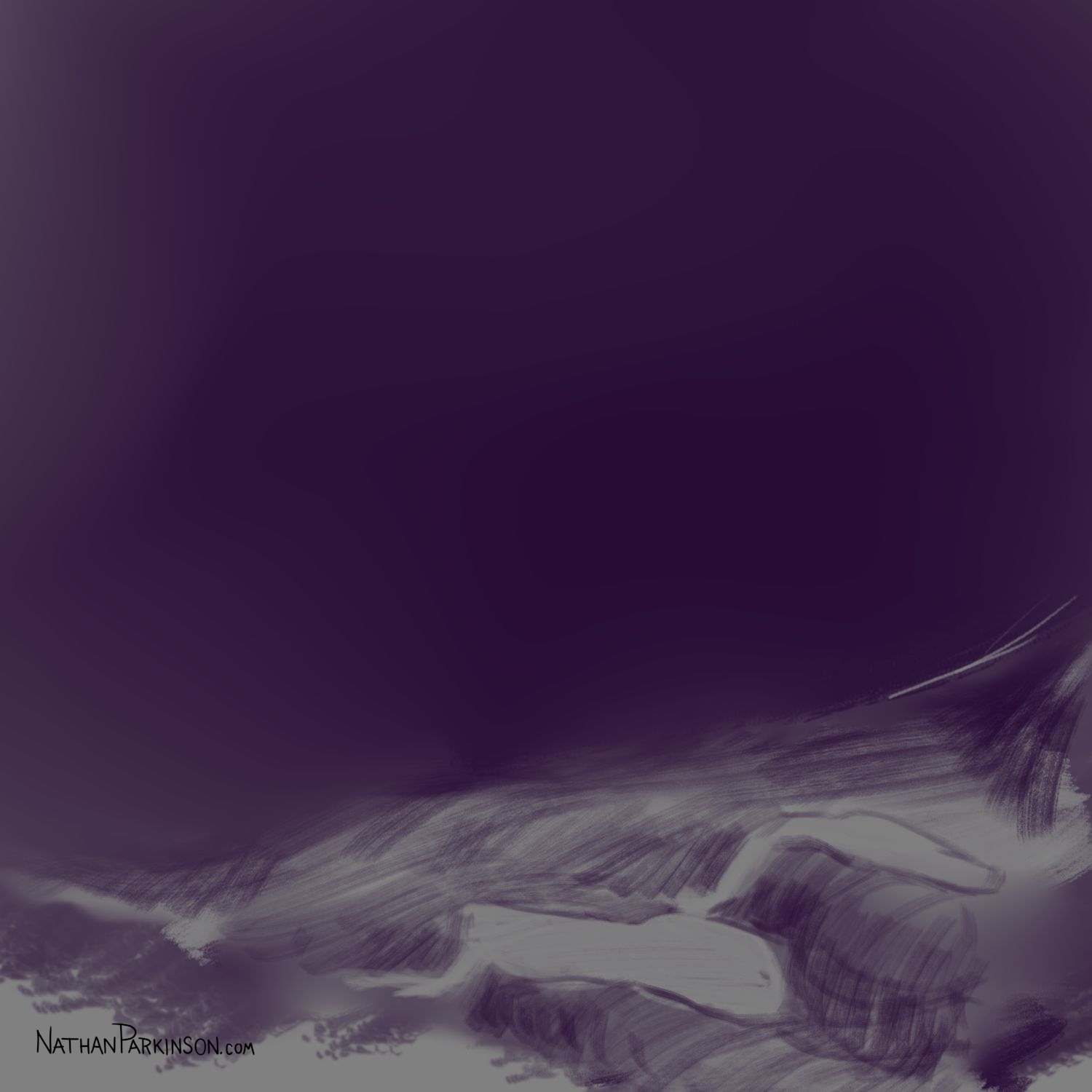
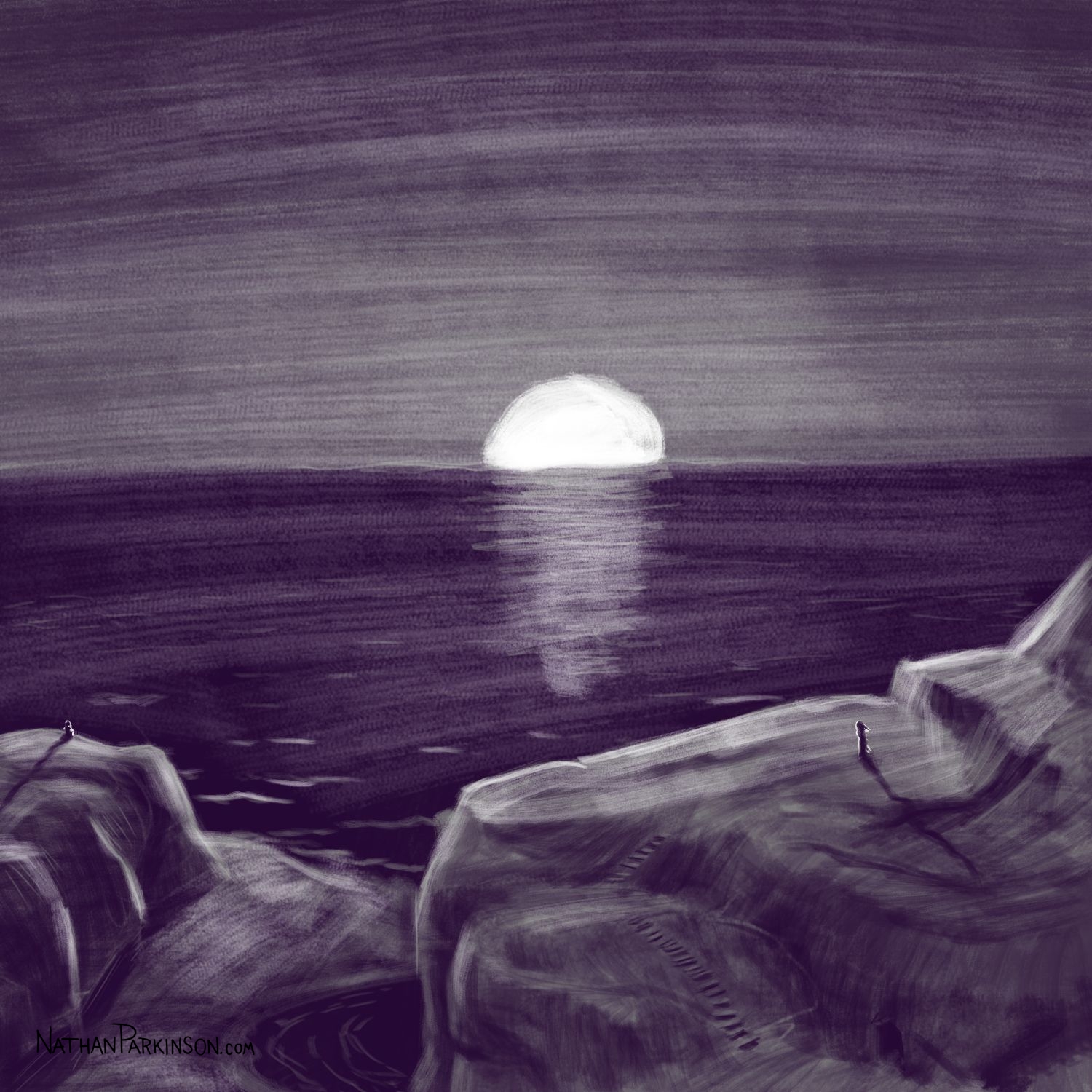
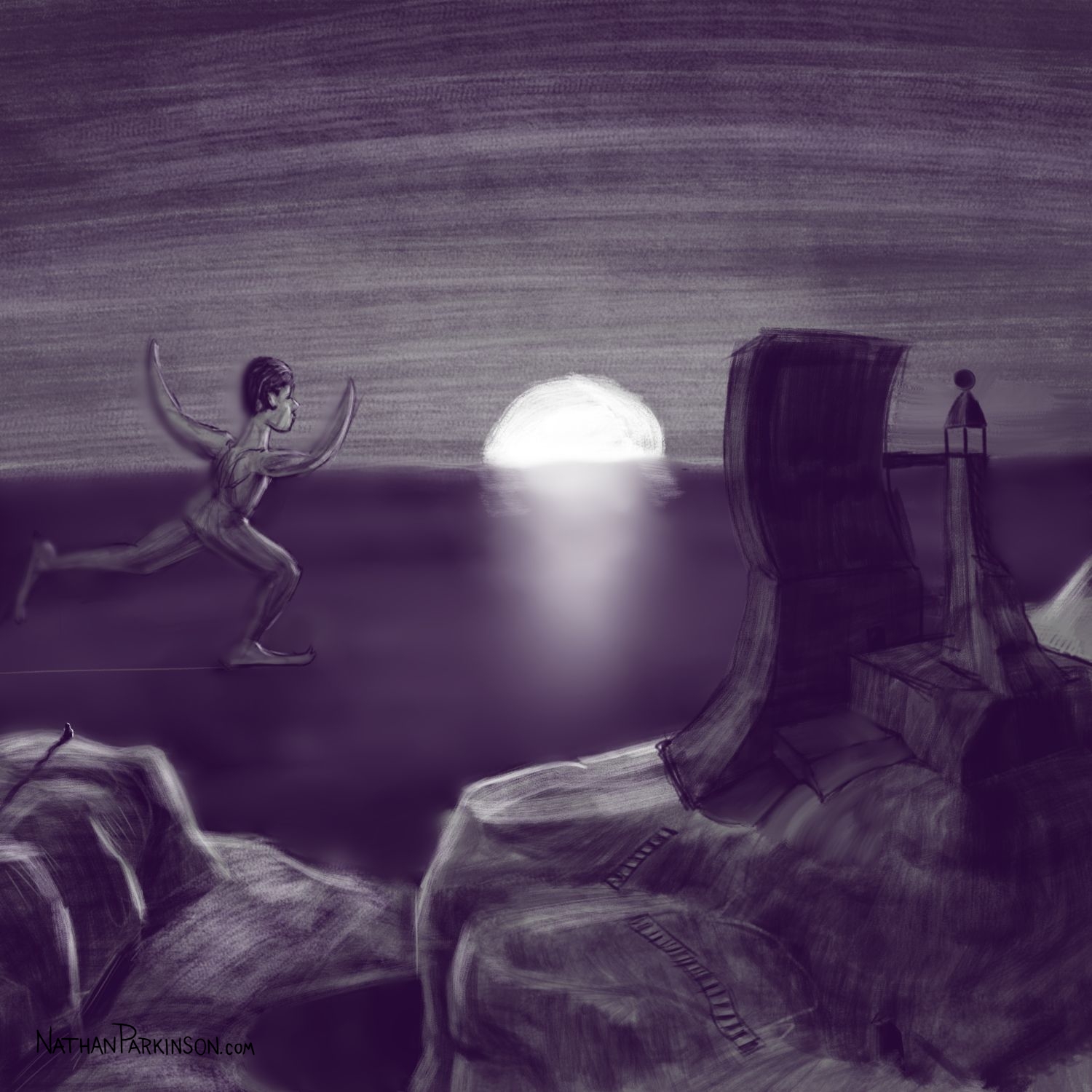
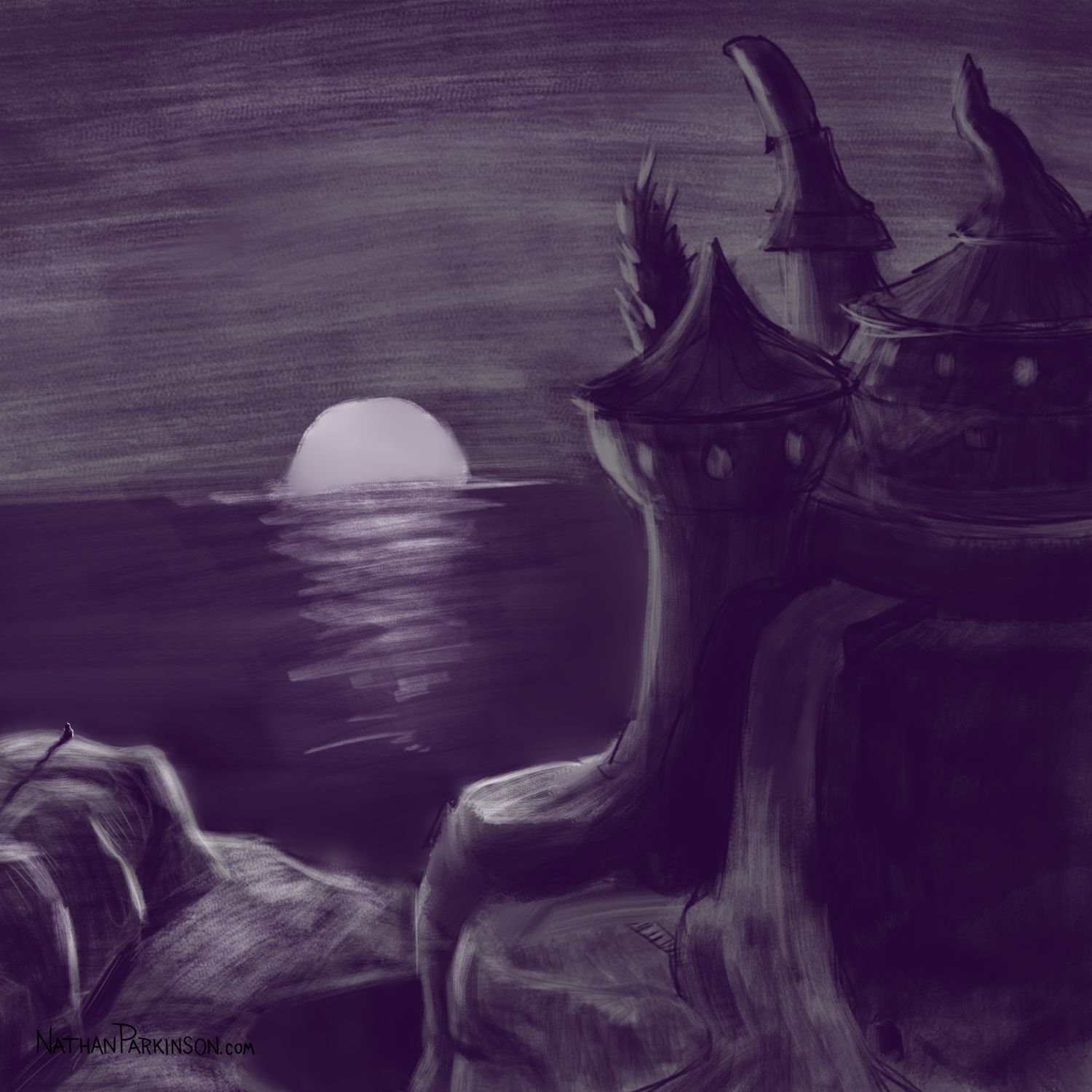
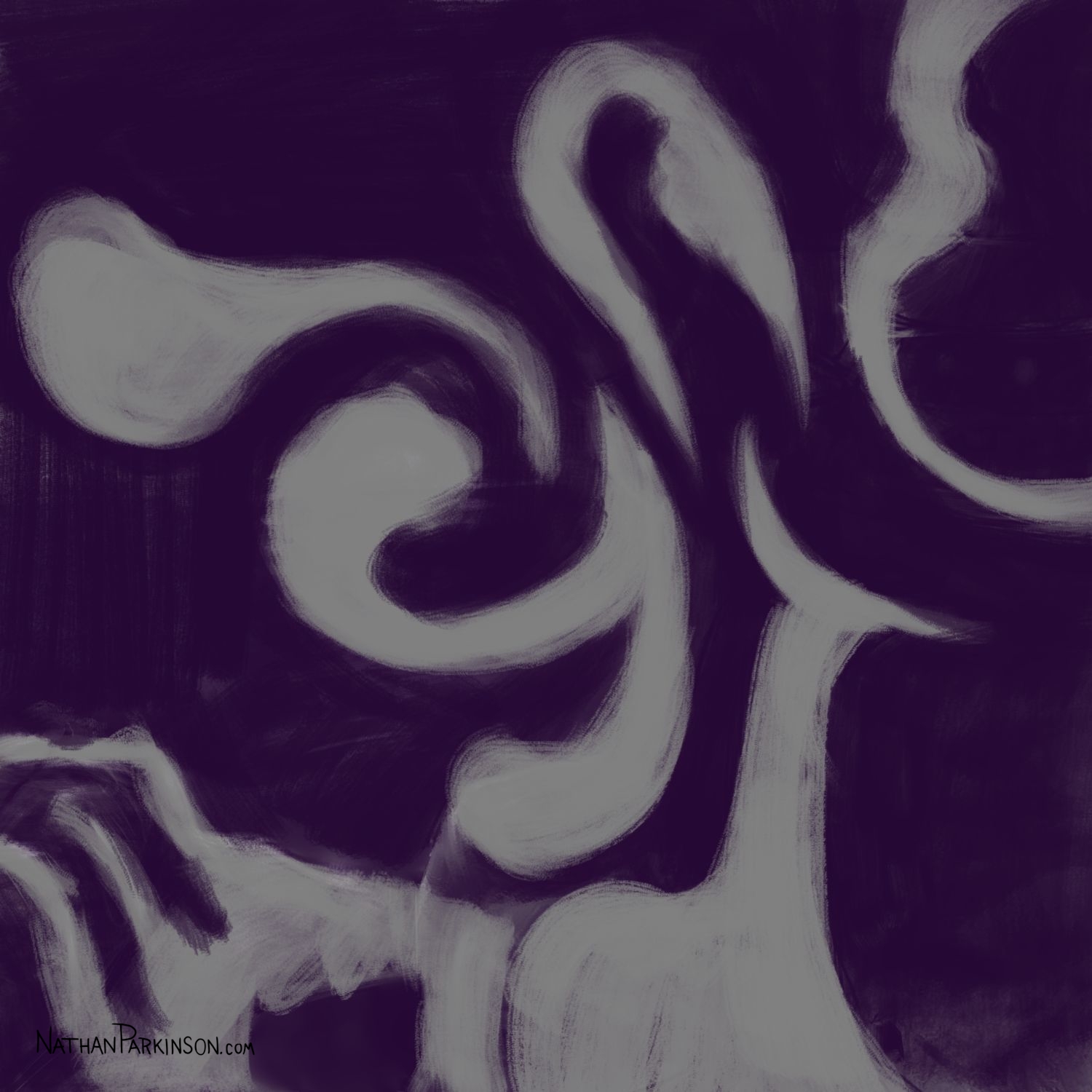
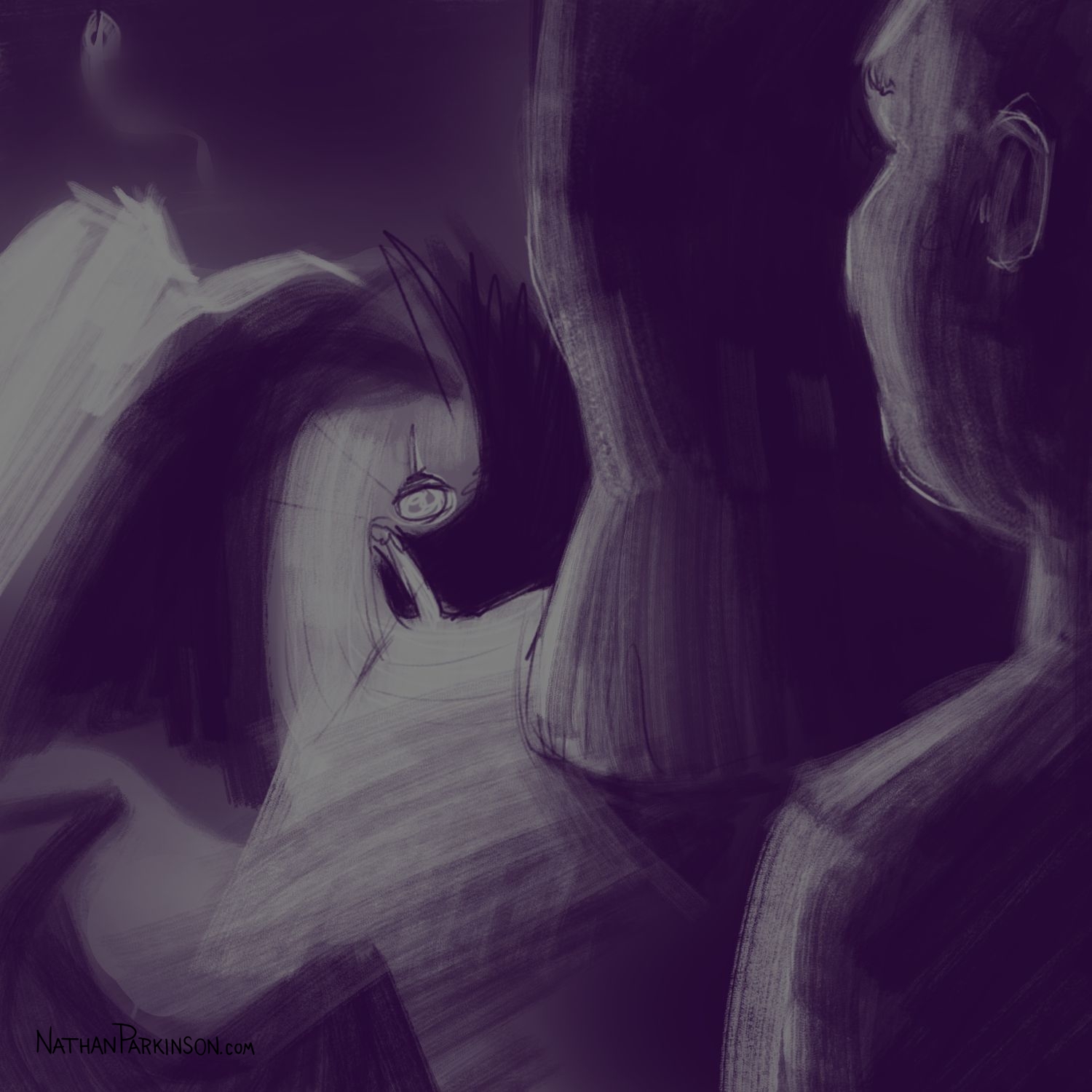
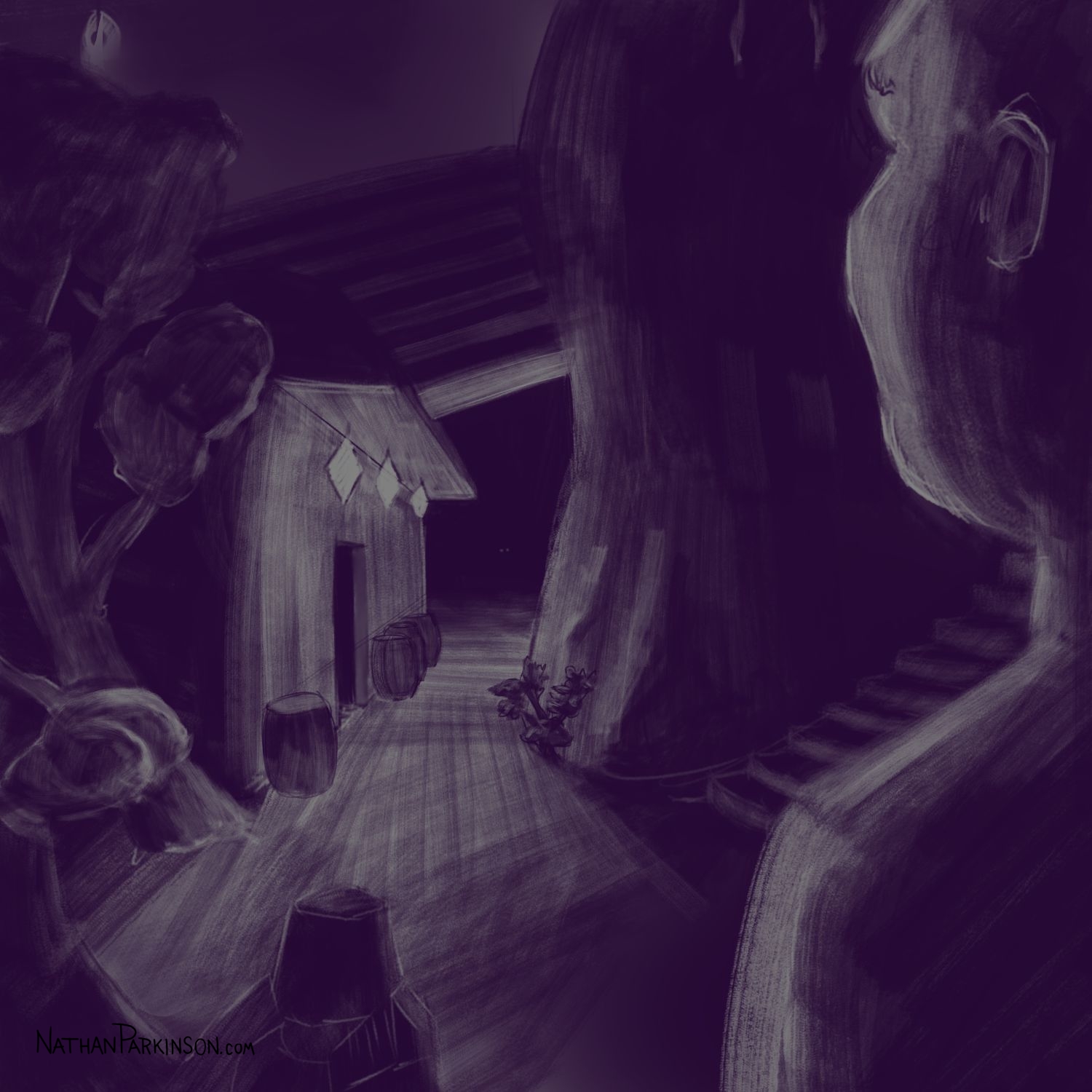
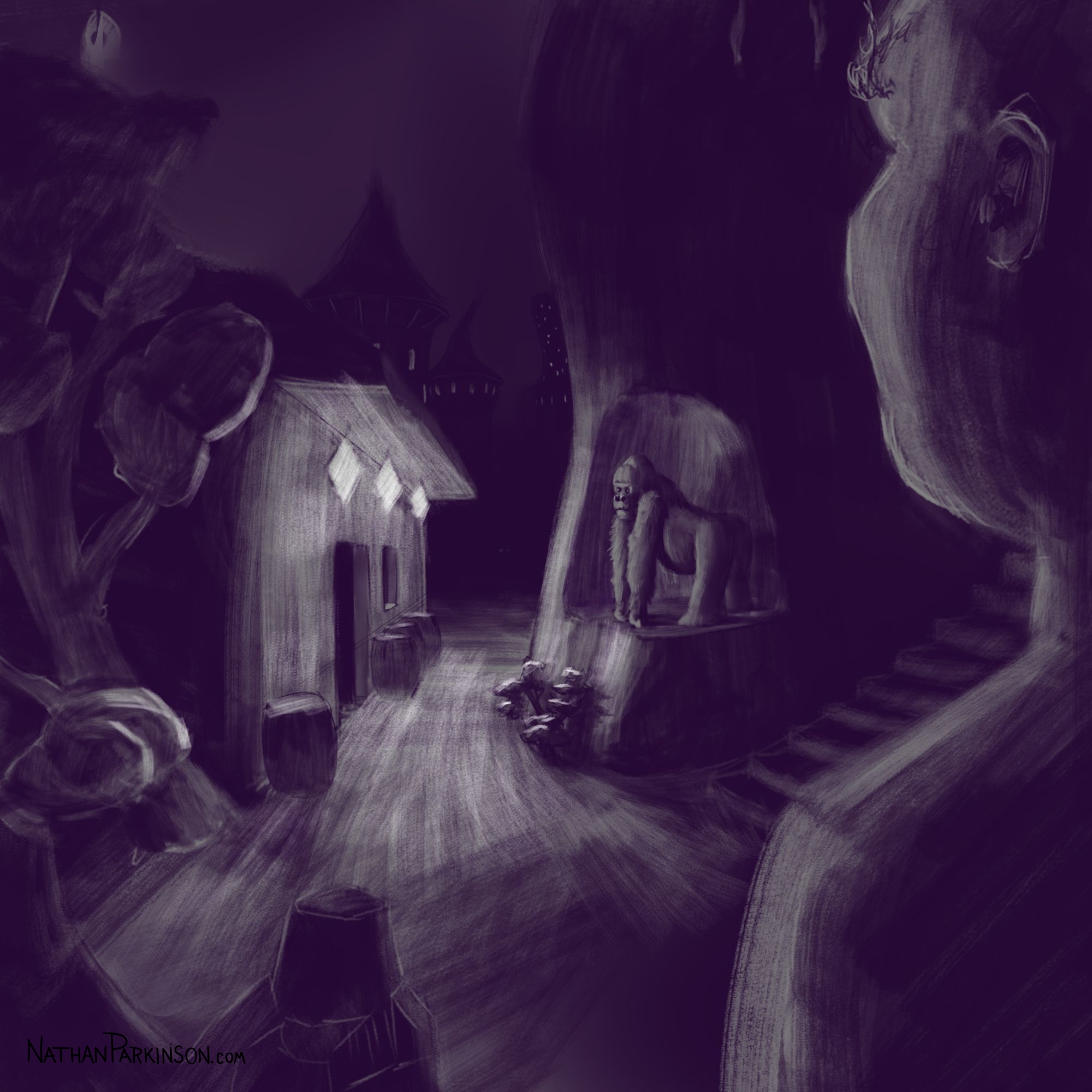
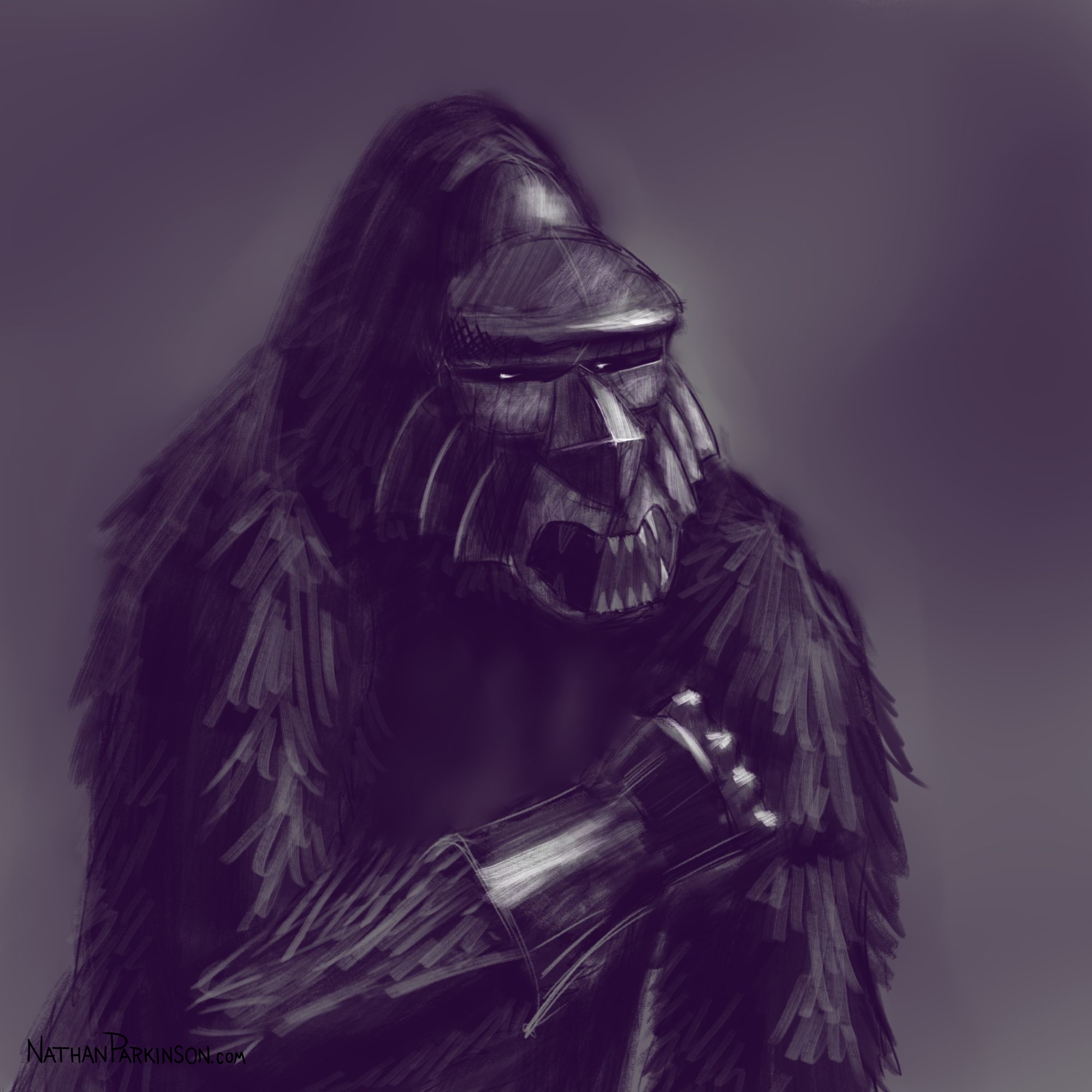
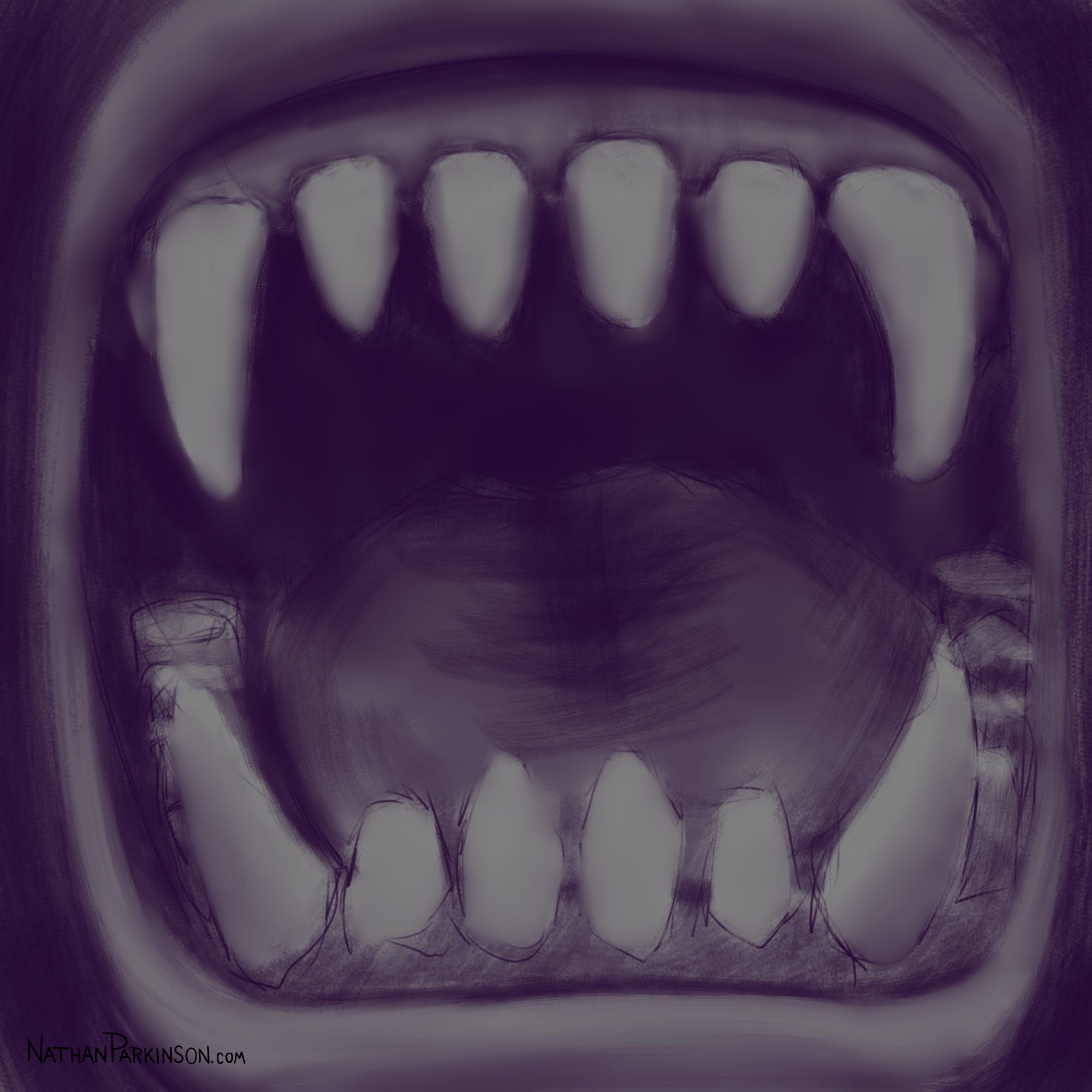
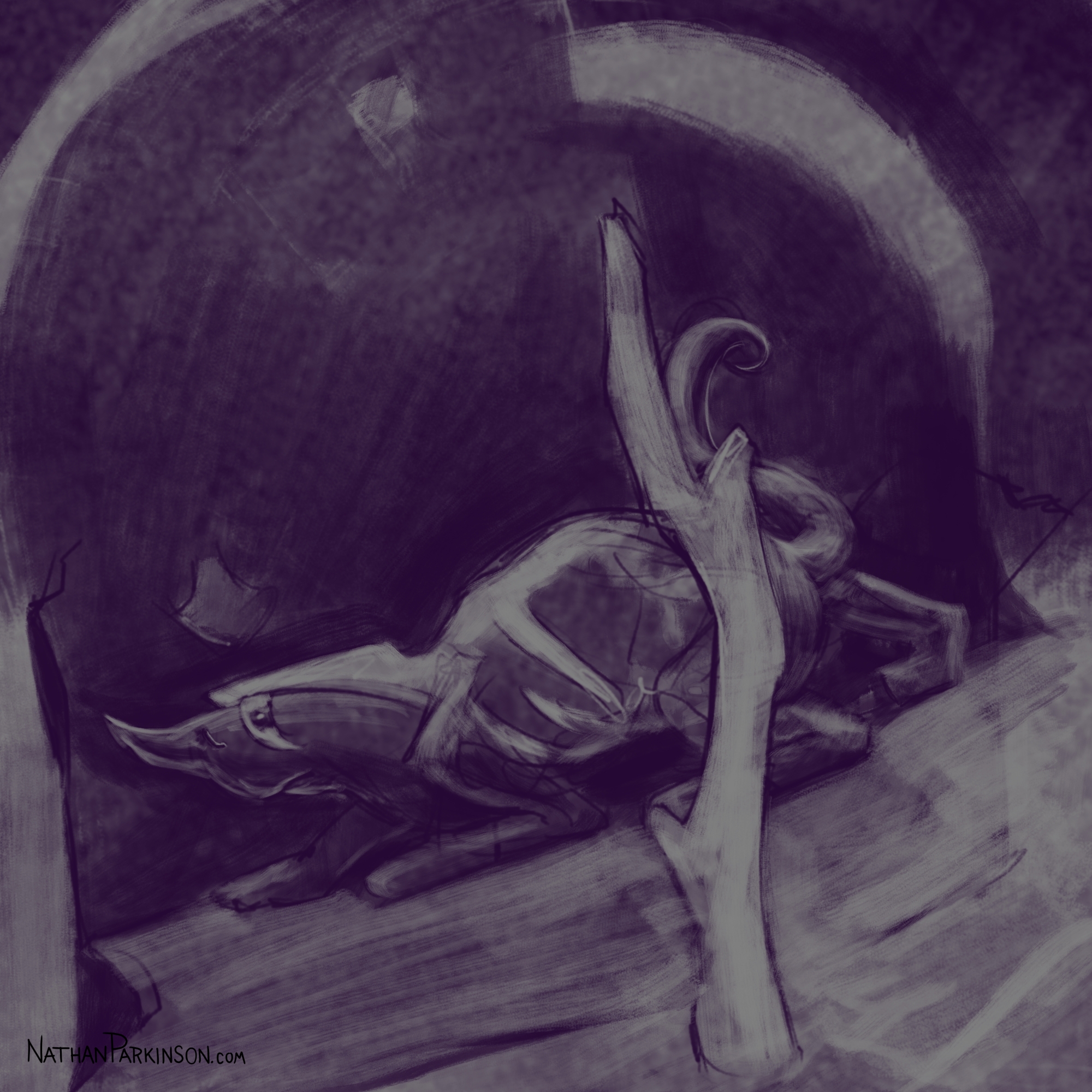
I created a square canvas with a single active layer on a gray background. I chose a pencil brush for drawing and a paint brush for painting and a single colour (I settled on dark purple). At the start of each day I spent about 30 minutes drawing on this single canvas from memory and imagination. I would take whatever was there from the day before and I would morph it into something else. I eventually began to use some white for highlights and light sources, but I only ever drew on one layer. I drew to get darker and erased to get lighter against that gray background. I came to really enjoy this process and I encourage you to try it. I got some really fun results. I think this is a great way to get back your love for drawing just for the fun of it (if you’ve lost it).
One thing I enjoyed doing was to spend 30 minutes studying some sort of reference, and then another 30 minutes drawing some “morphing art” trying to incorporate what I had just studied into the scene from memory; that was fantastic practice! My digital painting program Krita has a live recording feature which creates a new image with each brush stroke. I would save major points of change to track progress, but a couple times I saved all the images to create a time-lapse video (#MorphingCanvas). Below you will find the bigger milestones of change; there’s too many to include each step. The images are best viewed if you open them in the full-sized lightbox and use the arrow keys to flip through them. Enjoy!
The Morphing Canvas
“Change is the only constant.”
Your Turn
If you do give this a try, I’d love to see what you end up with after a month or two.
I am excited to announce a new direction for my artwork. I have a fresh artistic style consisting of hand-drawn pencil on paper with some digital enhancements. It blends the rough, sketchy look of pencil I love so much with the clean visual impact of digital processes.
I have been illustrating my own stories with delightful results, and I look forward to offering this style for commercial projects as well.
If you are interested in having your project illustrated in this style, please reach out to me via email or Upwork. You can see example illustrations in the art collection.
Barnaby Dixon develops hand puppets and brings them to life with remarkable dexterity. He is incredibly creative and has a splendid knack for humour (though a bit crude or dark at times) and a lovely blend of skills. See for yourself.
Following the client’s brief I created a coloured geologic illustration of the earth’s crust at the Southwestern Oregon coast including tectonic plates, the ocean floor, land topography, and magma flow. I had a blast learning about volcanoes and associated land formations.
Have you ever seen an underwater volcano erupting? Both terrifying and mesmerising. Check it out!
Geologic Illustration of Southwestern Oregon Coast by Nathan Parkinson, Digital, Oct 2024
“Work. Play. Death. Rest.” by Nathan Parkinson, May 2024
What is life? A gift. A joy. A tumult of trauma and emotions, desires and disappointments. A longing. An empty lock awaiting the key to set it free. Work. Play. Rest. Death. Another soul for company. The young seek out a mate. The aged filled with bitter experience have lost touch with soul feeling. What is life? A vapour that cannot last the morning. This moment. Work. Play. Rest. Death. A sunny day. The moon. The rain. Laughter. Pain. What is life? A place to stay a while before it’s time to go. What is life? A fleeting touch. A dear embrace. A cold embrace. A buried face. Ticking time. Toil and grace. Distant strangers passing by. Standing near, ones so dear. Reach into the stream of souls and pull the lost ones home. Strangers, friends in disguise. What is life? Work and play. Rest and death. Kindness shown at every turn. Empty hearts. Filled with love. Filled with pain. Longing to be filled by God. Warmed by some great glory. What is life? Wondering. Wandering. Seeking peace. Find unrest. Asking questions. Wanting more. Needing less. What is life? No answer found in life itself. Come and go. Toss and turn. An empire rises, soon to roll over into its grave. Tyrants. Saints. Fools. Sages. All is vain and fleeting. But what is life? Why is this question never satisfied? Work and play. Night and day. Rest and death. Songs of robins in the nest. Dew wet grass. Flowers. Fields. Seeds to bring tomorrow. Reflections. Friends long gone. New ones waiting to be found. One life falls. One will rise. To keep the rhythm set by time. Work. Play. Death. Rest. Loosed from life, at last I’m free to meet my Lord. Eternity. From life to life I’ve passed into the purpose planned for me. Shining sons and daughters stand. Glory wrapped. Gleaming band. We who love the Saviour welcomed near in His embrace. Forever joy. Forever bliss. Free from sin and death and pain and free at last from longing. Hope has come. Here to stay. Here at last eternal day. The hope of nations is our God. Only God. Gracious God. Made a way to save our souls and still remain all holy. What is life? This is life. The second life. The lasting life. Where death has now been laid to rest, and all our work is play. What is life? It’s all these things. The journey to eternity.
If you’ve spent much time in the art world, you’ve probably heard of “the fundamentals” and how important they are. Over the years I have studied how making art actually works and how to accurately define the many components. “Why is this useful?” By breaking a skill into its individual parts, you can practice each one more intentionally. Trying to learn everything at once or with a vague focus can make it harder to recognize your progress. For someone trying to master their craft, having a solid comprehension of the tools available is important.
The result of my efforts is the Fundamentals of Art document that I am now offering for free download.
A client commissioned me to create a victory illustration to be shown when a player wins a solitaire card game. Bonus points if you can find all the hidden suits 😀 ♦ ♣ ♥ ♠.
Victory Bunny by Nathan Parkinson, Digital, Jun 2024